

Inside Access: how Dubai’s pampered camels receive five-star treatment at a state-of-the-art facility.
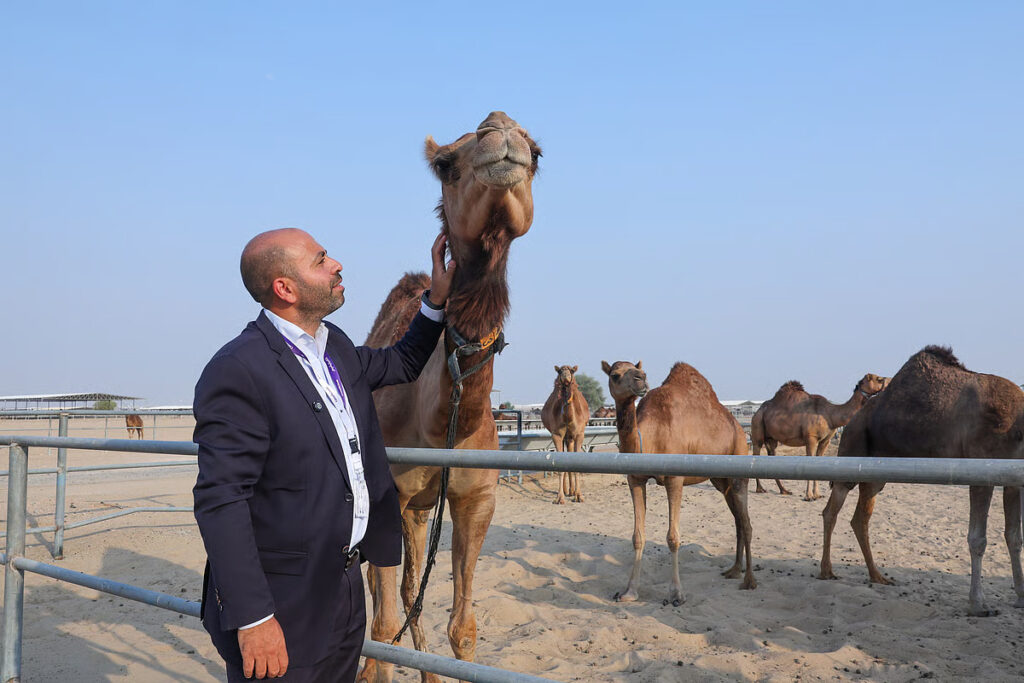
Dubai: Do camels really spit? How do their impossibly long eyelashes stay so well maintained? Is there such a thing as a camel spa? And why, in a country where camels have shaped centuries of history, culture, and survival, do so few people know what really happens behind the scenes on a camel farm?
These are some of the questions that came to mind while driving along the Al Ain–Dubai Road for the latest edition of our Inside Access series, which takes us inside places rarely seen by the public.
This time, it meant spending a morning among more than 7,000 camels, guided by Hesham Abd El Hakim, acting CEO of Camelicious. What began as a modest farm with just 23 camels has grown into the world’s largest camel dairy farm—a transformation that reflects the UAE’s own journey from desert outpost to global powerhouse.
I expected the conversation to focus on milk production, exports, and business growth. Instead, even before we had taken more than a few steps into the farm, Hesham paused to look across the herd and said, “They are our precious gemstones, and they are simply amazing.”
That single line reflected a sentiment deeply rooted in the UAE’s heritage.
Long before oil reshaped the country, camels were central to life in the Emirates. They carried Bedouin tribes across vast deserts, provided milk in times of scarcity, and became lasting symbols of resilience and survival. Today, they still hold a place of honour through racing festivals, beauty contests, and cultural celebrations. Yet despite growing up in the UAE, I realised I knew surprisingly little about these gentle giants beyond what I had seen on desert safaris.
Naturally, I began with the question everyone wants answered.
Do they really spit?
I’ll admit, I approached my first camel with some caution. Years of hearing stories about flying saliva will do that.
Instead, she calmly walked over, gently took a carrot from my hand, and wandered off without a second glance.
“They don’t spit… always,” Hesham said with a laugh, clearly amused by my hesitation.
The carrot, he explained, was just a treat. Their real diet is far more carefully managed, with balanced feed tailored to each stage of life. Pregnant camels, nursing mothers, and younger camels all receive different nutritional blends of alfalfa, wheat straw, mustard straw, and wheat bran. Some of the alfalfa is even imported from countries like Spain and Romania.
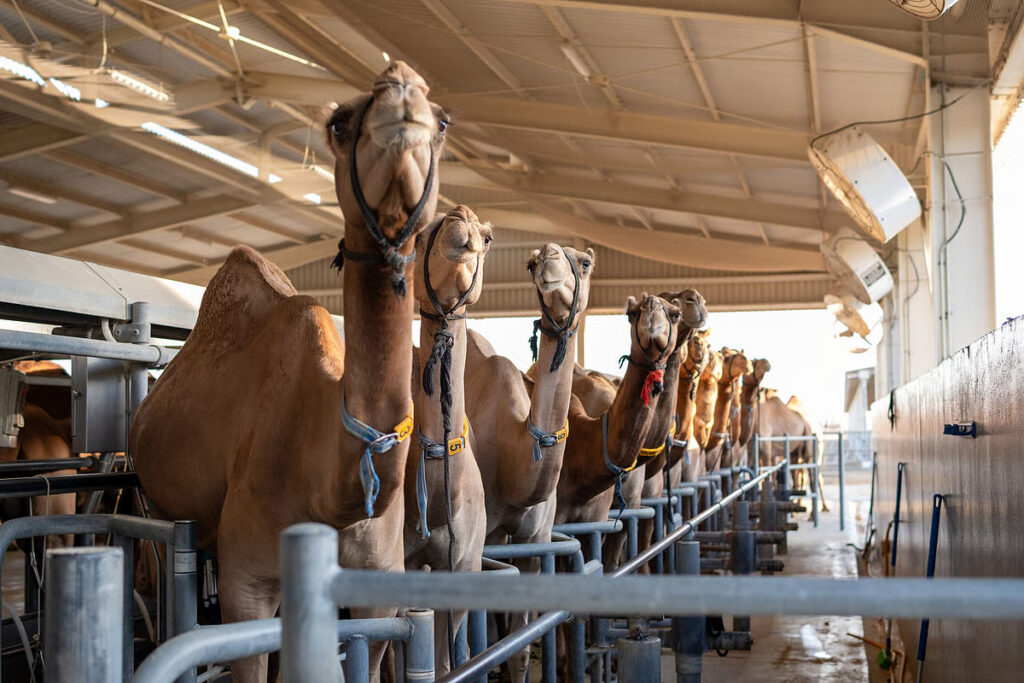
For an animal so closely associated with surviving harsh desert conditions, the approach here felt unexpectedly scientific.
As we moved deeper into the farm, another curiosity demanded attention: the eyelashes.
Standing just a few feet away, I couldn’t stop looking at them—thick, long, and perfectly curled, almost too striking to be natural.
“So… do they have a spa?” I asked, only half-joking.
Hesham laughed.
“Not a spa,” he corrected. “But we do bathe them and apply lotion.”
Each camel follows a grooming schedule, with bathing roughly once a month as part of its health routine. Their coats are carefully maintained, lotion is used to protect their skin, and every animal is tracked through an identification system that records everything from medical history to pregnancies and milk yield.
If the eyelashes made me smile, it was the mothers and their calves that quietly stole my attention.
In one section of the farm, young calves stood waiting patiently while their mothers were milked nearby. I assumed they would soon be separated, as is common in many commercial dairy systems.
The reality was very different.
“For the first month after birth, we don’t take any milk,” explained farm specialist Orsha.
“Everything goes to the calf, so it can build immunity.”
Even after that first month, the bond remains strong. Mothers and calves continue to recognise each other’s scent and calls, and once milking is finished, they are reunited before moving off together across the farm.
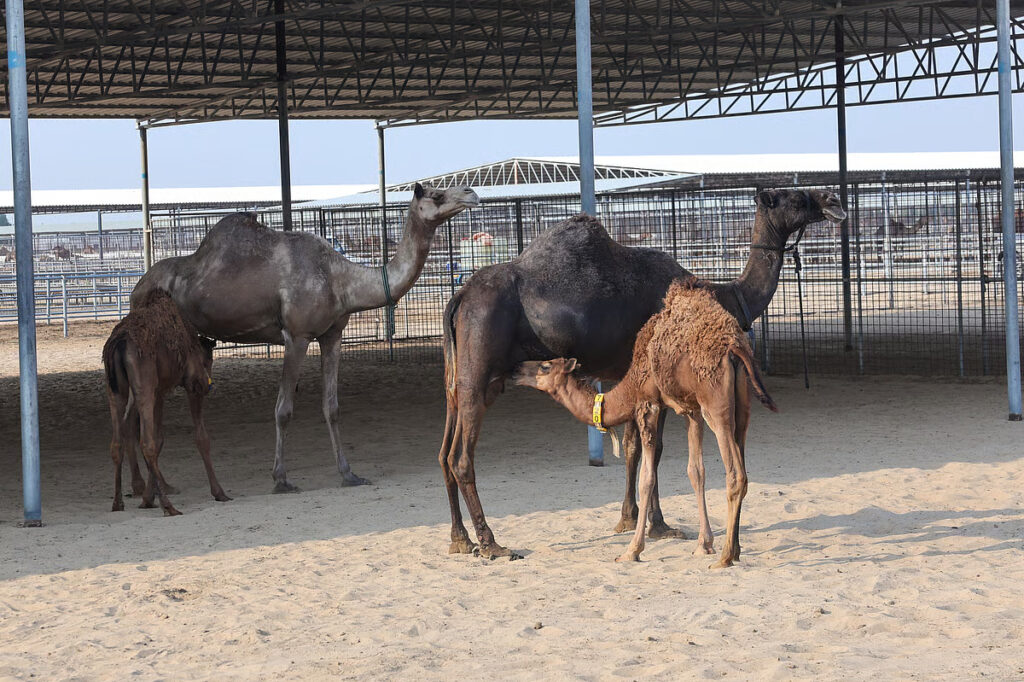
Watching those reunions unfold was unexpectedly moving. In an operation of this scale, I had expected efficiency. Instead, I found tenderness.
That same sense of care ran through every part of the farm. Each paddock has a set capacity to avoid overcrowding, every camel carries an identification tag linked to its full medical and production history, and welfare is treated not as a slogan but as part of the daily routine.
“Animal welfare is a huge priority,” Hesham told me. “It comes from every perspective — feed, medicine, water, walking, and showering.”
Another surprise came around the next corner.
Many of those feeding the camels, caring for pregnant animals, and looking after newborn calves were women.
“So this is women empowerment, baby?” I joked.
Looking around, I wasn’t entirely wrong. The female camels form the backbone of the farm, carefully supported through every stage of pregnancy, lactation, and motherhood, while males are comparatively few.
It was one of those details that might not feature in a brochure, but stays with you long after leaving.
Towards the end of the tour, Hesham insisted on introducing me to one final resident.
Standing proudly in his own paddock was the farm’s prized breeding male.
“This is our superhero,” Hesham said.
There was no disputing that. Towering over the fence with an unmistakable presence, he looked every bit the king of the herd. I offered him a carrot, confident we’d end the morning on friendly terms.
He ignored me completely.
Perhaps celebrities really are the same everywhere.
As the tour came to an end, I realised none of the questions I had arrived with quite prepared me for what I was taking back.
Yes, camels are bathed monthly. No, they don’t spend their days spitting at visitors. And their eyelashes really are every bit as striking as they appear.
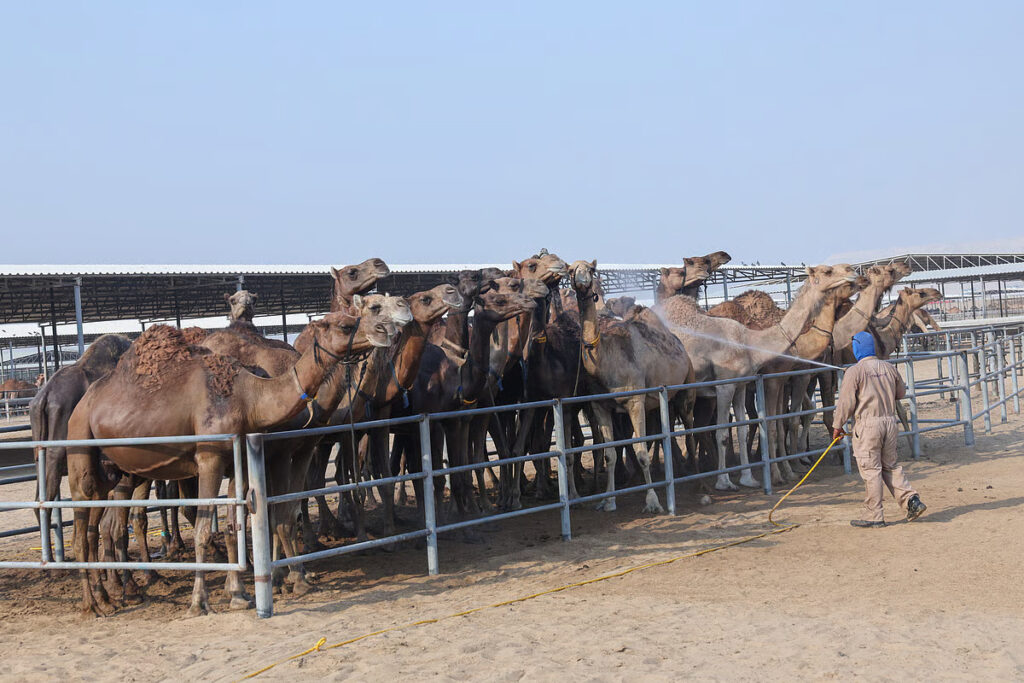
But the biggest discovery had nothing to do with grooming, diets, or even camel milk.
It came from seeing an animal so deeply embedded in the UAE’s identity through a completely different lens: not just as a symbol of the desert, but as an intelligent, gentle creature cared for with extraordinary attention to detail.
Sometimes the most rewarding part of our Inside Access series isn’t stepping through doors that are usually closed.
It’s walking back out with a completely new appreciation for something you thought you already understood.
If you’ve ever wondered what really happens behind the scenes at the world’s largest camel dairy farm, here’s your chance. The farm is open to visitors this summer—and you’ll leave knowing far more about the UAE’s most iconic animal than simply whether it spits.
