

The Dh450 passport renewal fee has come as a major shock to low-income Indian workers in the UAE.
Dubai: A sharp increase in Indian passport renewal fees has raised concerns among thousands of low-income expatriates in the UAE, who say they may struggle to afford a service they typically need only once every decade, according to community volunteers.
Across various categories, passport service charges for Indian nationals in the UAE have seen significant increases. The revised fee structure marks the first major change since 2012. While the Ministry of External Affairs (MEA) has not formally explained the hike, it is understood to reflect rising administrative, processing, printing, and security costs.
The cost of a standard passport renewal has increased from Dh285 to Dh450—an almost 60% rise. Community volunteers, along with construction workers, domestic helpers, and school transport staff, told that the new fee could consume up to half a month’s salary for some workers who already remit most of their income to families back home.
“A shock for expats”
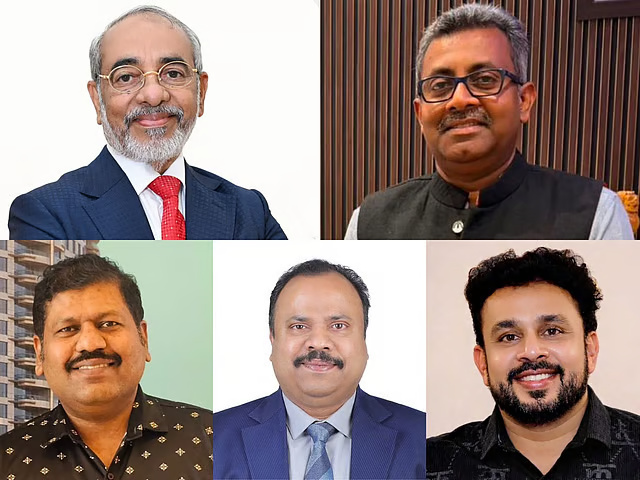
KV Shamsudheen, a long-time UAE resident and advocate for Indian expatriate welfare—particularly for blue-collar workers—said the fee hike has come as a shock to Indian workers across Gulf countries.
He estimated that around 60–70% of Indian expatriates in the UAE are low-income earners, adding that employers seldom cover passport-related expenses.
Shamsudheen highlighted the scale of remittances flowing from the Gulf to India, which total around $137 billion annually.
He noted that, unlike Indians living in Western countries, Gulf-based workers typically remit most of their earnings home rather than spending locally. He called for concessional passport rates for blue-collar workers and low-income families.
Exempt ECR category
Community organiser Vinod Nambiar, who conducts welfare programmes for workers in the UAE, said the fee increase would disproportionately affect blue-collar employees, many of whom earn between Dh800 and Dh1,200 per month.
He added that for many workers, a single passport renewal could consume nearly half a month’s salary, with most employers not covering the cost.
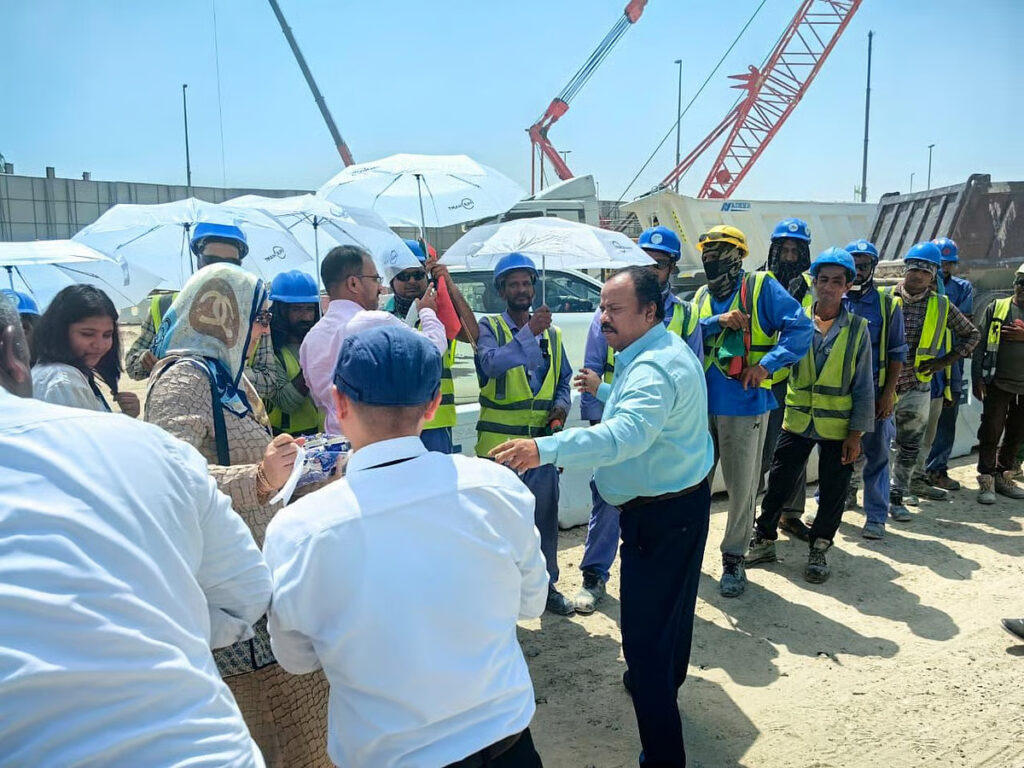
Coincidentally, the company he works for marked India’s “Chartered Accountants Day” on Wednesday by distributing umbrellas, juices, and water to several workers in Dubai.
Vinod, who has been at the forefront of the campaign, said, “You see how hard they work in this scorching summer, except for the duration of the midday ban. Reducing the passport fee for them could be the greatest gift the central government can give this section of Non-Resident Indians,” he said.
He pointed out that there is a common misconception that all expatriates are high earners, noting that the majority of the UAE’s 4.5 million Indian residents are workers rather than professionals or business owners.
He urged the government to consider reduced fees or exemptions for workers, particularly those in the Emigration Check Required (ECR) category, suggesting that Indian missions could use salary-based criteria to identify eligible beneficiaries.
Calls for a 50% cut
Praveen Kumar, a volunteer involved in assisting the repatriation of seriously ill patients, proposed that missions introduce a 50% fee concession for workers earning below Dh1,500.
He said eligibility could be verified through salary certificates, labour contracts, or bank statements, and called on the Ministry of External Affairs to treat the issue as a matter of community welfare.
Kiran Raveendran, who supports labourers in accommodation areas in Al Sajja, Sharjah, and Sonapur in Dubai, said the fee hike would hit families especially hard when multiple passports need to be renewed at the same time.
Having spent years working closely with labourers earning under Dh1,000 a month, he described how carefully many save every dirham, often while also dealing with delayed salaries or accommodation-related deductions.
He added that conditions are particularly difficult for workers in remote, desert-based jobs, and urged the government to reconsider and reduce the fee to the minimum possible.
Need faster, fairer service
Another community volunteer, Salam Kanyappadi—known for organising blood donation drives and community initiatives—said the government should focus more on improving service quality rather than increasing fees, pointing to long waiting times for renewal appointments.
He called for more passport service centres across the Gulf, simpler renewal procedures for children, multilingual helplines, extended seven-day working hours, and dedicated fast-track and emergency counters for medical cases, deaths, visa expiries, and lost documents.
He added that expatriates’ contribution to India’s economy deserved a more people-centric approach.
What workers say
For many workers, the numbers are stark.
Jagdeep Singh from Punjab, who has worked with a construction company in Dubai for 16 years, said several workers he knows earn as little as Dh690 to Dh720 per month, with overtime raising monthly pay to around Dh1,000 to Dh1,200.
A few, he said, earn more than Dh2,000. When he last renewed his passport in 2019, he claimed that additional service charges pushed the total cost to around Dh460.
He added that this means the effective cost under the new structure could be even higher today.
Amit Kumar, another construction worker from Bihar who has spent 16 years in the UAE, renewed his passport in 2018 and expects to do so again in the next two years.
Describing the new fee as “a big amount for people like me,” he said he hopes the charges are reduced before his next renewal.
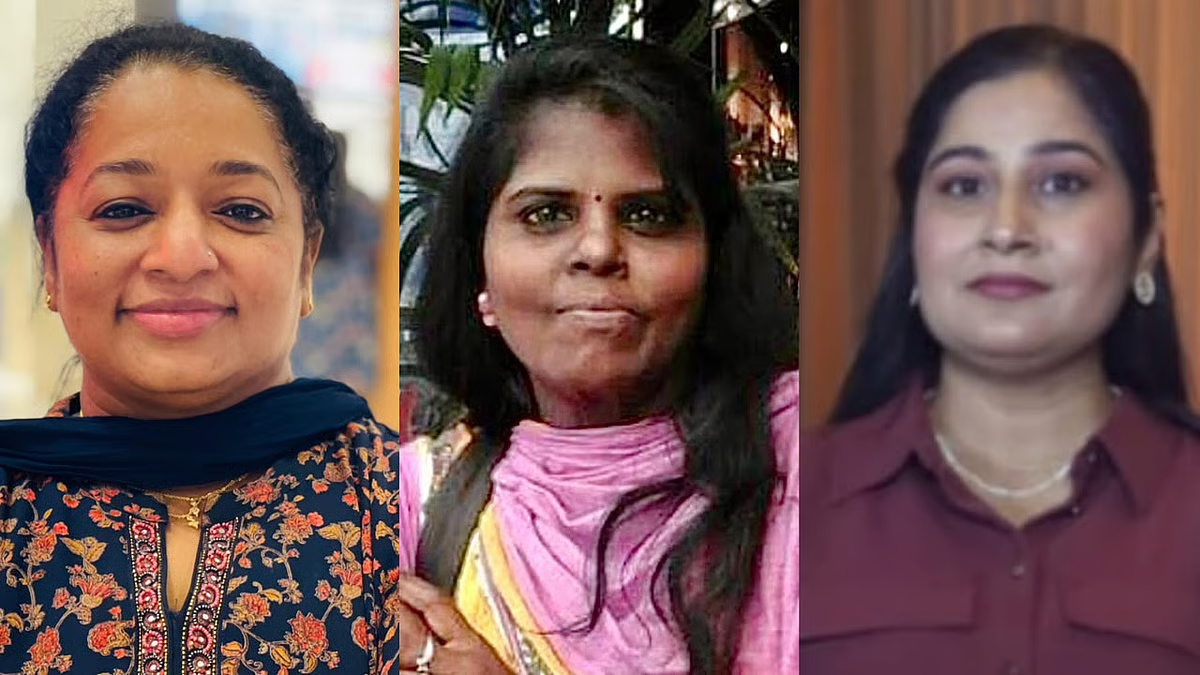
Rani Mariamma, who has worked as a school bus attendant in the UAE for 13 years, said she was initially shocked when she read about the fee increase in. Earning between Dh1,300 and Dh1,500 a month, she questioned how workers on similar incomes would manage the higher cost.
After expenses, she said many are often left with only Dh200 to Dh250 for personal needs each month, and noted that some employers do not even provide return flight tickets to India. “People back in India might think all expats are earning good salaries and living a dream life,” she said. “That’s not the reality.”
‘Everything is becoming expensive’
Another school bus attendant, Komal Rani from Punjab, echoed similar concerns, saying rising living costs have made the new fee even harder to absorb and urged authorities to reconsider the charges for low-income workers.
Domestic worker Joshi Pushparaju from Tamil Nadu, who has lived and worked in the UAE for 13 years, said she considered herself fortunate to have renewed her passport last year before the fee increase.
She recalled previously paying significantly more for an emergency passport after failing to secure an appointment during her renewal window.
When her husband, an electrician, applied subsequently, they ensured the process was completed well in advance.
“Yet, the cost still came to around Dh450,” she said. Noted it could not independently verify the exact breakdown of fees paid, as final costs vary depending on additional services used.

