

The iconic summer bloom is increasingly emerging as a lasting symbol of Dubai’s identity.
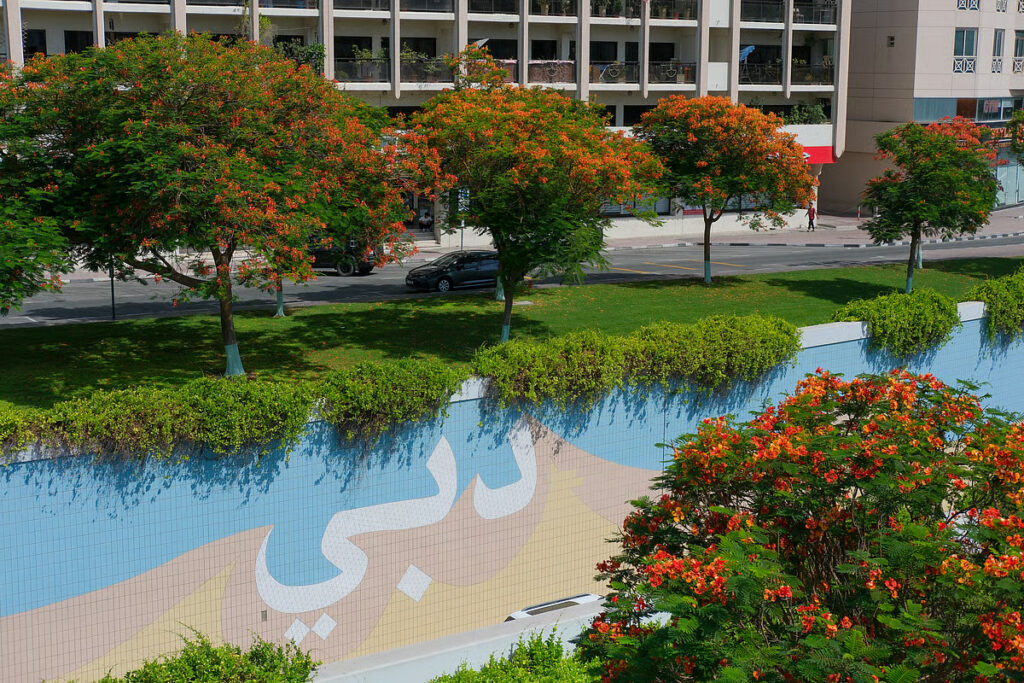
Dubai: What was once a striking summer bloom has grown into one of the city’s most distinctive cultural movements.
Driven by the vision of Sheikh Hamdan bin Mohammed bin Rashid Al Maktoum, Crown Prince of Dubai, Deputy Prime Minister, Minister of Defence, and Chairman of the Executive Council of Dubai, the expansion of Flame Tree planting across the emirate has helped transform Flame Tree Season into a unifying initiative.
The campaign has brought together government bodies, artists, businesses, and residents in celebrating a tree that has become a quiet symbol of Dubai’s resilience, innovation, and environmental sustainability.
Launched by the Dubai Future Foundation (DFF) through the Dubai Design Lab, the initiative has evolved beyond an urban greening effort into a citywide celebration encouraging people to reconnect with nature, public spaces, and their communities during the peak of summer.
Something new
In an interview, Rafia Bin Sulaiman, Project Lead for The Flame Tree Season, said the initiative builds on a tree that has long been part of Dubai’s landscape rather than introducing something entirely new.
“The Flame Tree has been part of Dubai for many years. Our goal was to encourage people to notice, appreciate, and celebrate something that has been blooming around them all along,” he said.
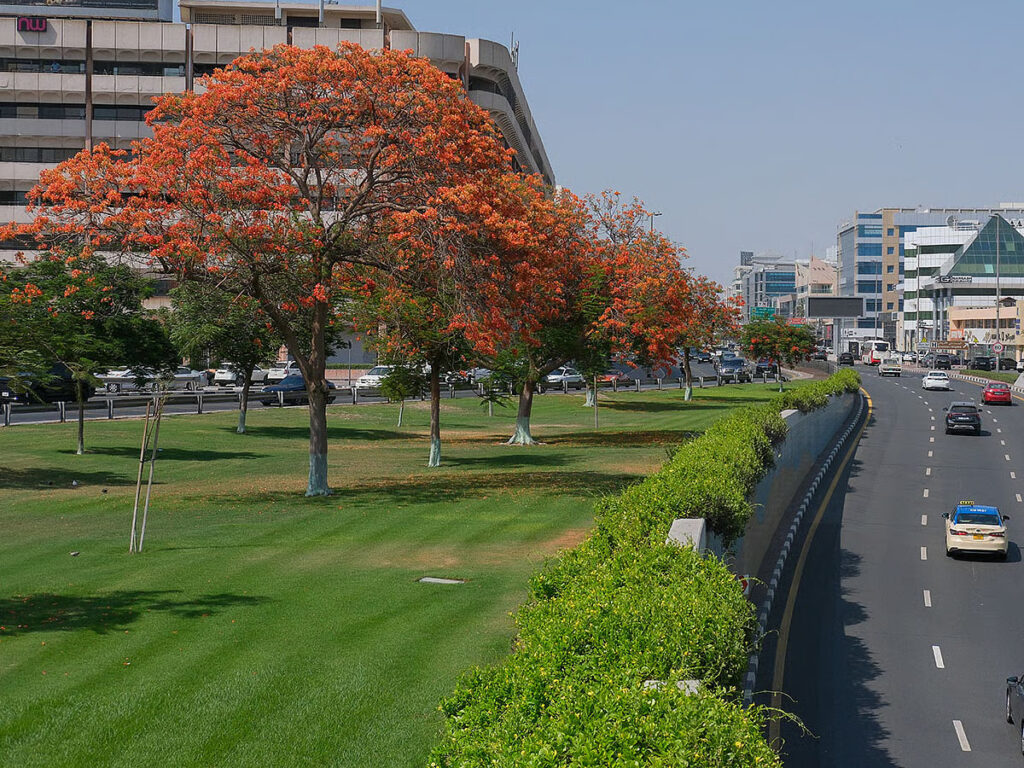
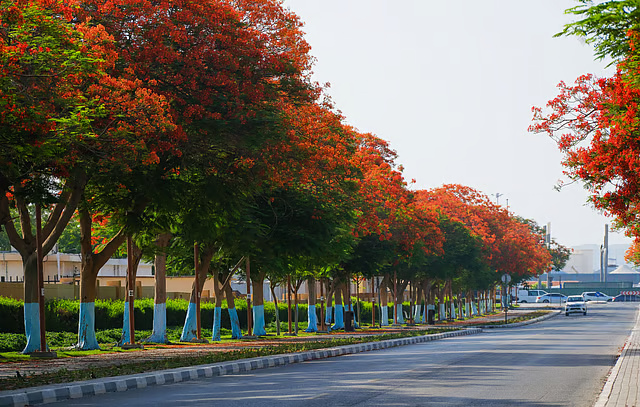
According to Bin Sulaiman, more than 50,000 Flame Trees are already planted across Dubai’s roads, parks, and public spaces, making them one of the city’s defining seasonal features.
More shaded spaces
The initiative gained additional momentum following Sheikh Hamdan’s directive to expand Flame Tree planting across Dubai. Future planting will follow sustainable landscape planning and environmental considerations to ensure the trees continue to strengthen the emirate’s green identity while also creating more shaded and welcoming public areas.
She explained that the Dubai Future Foundation’s role is to support this expansion by raising public awareness and encouraging community involvement.
“The objective is not only environmental but also cultural, creating a shared seasonal experience for everyone in Dubai,” she said.
Dubai climate
The Flame Tree is particularly well suited to Dubai’s harsh climate. Its vivid orange-red blossoms bloom during the hottest months of the year, while its wide canopy provides valuable shade and helps cool surrounding surroundings.
Research shows that tree canopies can lower surface temperatures by up to 5°C, making outdoor spaces more comfortable during the summer.
Residents are also being encouraged to join the initiative by planting Flame Trees at home. Saplings are being distributed through community events and public activations organised by the Dubai Future Foundation in collaboration with its partners.
The trees thrive best in sunny, open areas with well-drained sandy or loamy soil. They need regular watering during their early growth stage to establish properly, after which they become highly resilient to the local climate.
Expectations
Bin Sulaiman said public engagement has exceeded expectations, with residents sharing photos of blooming Flame Trees, attending community events, requesting saplings, and discovering trees in neighbourhoods they had overlooked for years.
“One of the most rewarding moments is hearing people say they have lived in Dubai for years without ever noticing the Flame Tree,” she said. “Once they recognise it, they start seeing it everywhere.”
Beyond enhancing the city’s visual appeal, the trees also support a more sustainable urban environment by providing shade, reducing temperatures, and encouraging greater use of public spaces during the summer months.
Collaboration
The initiative has also driven an unprecedented level of cross-sector collaboration, bringing together government entities, Emirati artists, cultural institutions, restaurants, businesses, and community organisations under a shared theme.
Rather than focusing on a single partnership, Bin Sulaiman said the most significant achievement has been the collective participation.
“The season has become much bigger than any one organisation. Everyone has contributed their own interpretation while staying connected through a shared narrative.”
Looking ahead, the Dubai Future Foundation hopes the Flame Tree Season will become a recurring annual feature on the city’s cultural calendar.
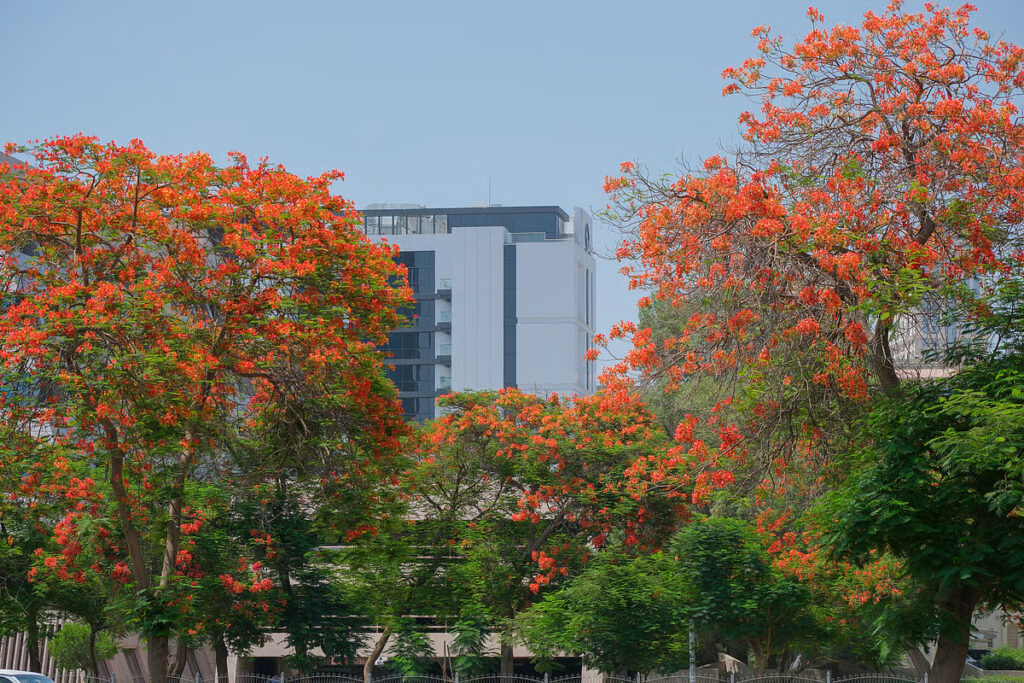
“The bloom already exists. What we are creating is a shared experience around it through participation, storytelling, and community engagement,” she said.
She added that the long-term ambition is for future generations to inherit the tradition, making Flame Tree Season a lasting part of Dubai’s identity and its seasonal rhythm.

