

The clarification came after remarks from the Ministry of External Affairs triggered political reactions.
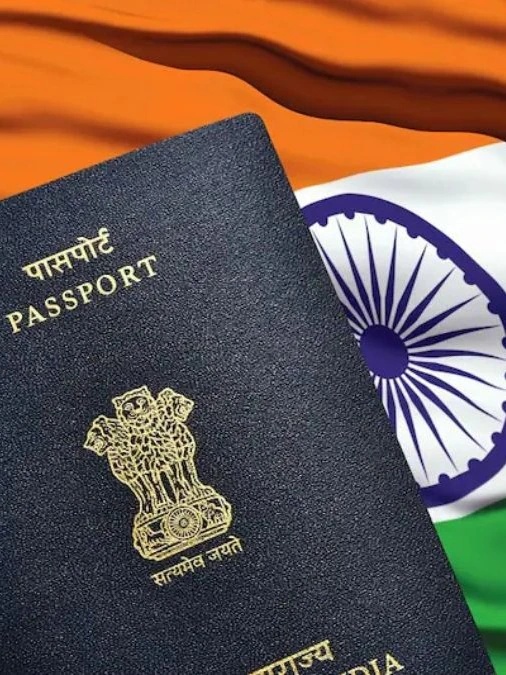
The Government of India on Thursday clarified that a passport has never been considered conclusive proof of citizenship. It also said there has been no recent policy change or any such decision in the past 12 years.
The clarification comes amid a political debate triggered by recent remarks from the Ministry of External Affairs (MEA), which said a passport is primarily a travel document and not proof of citizenship.
The government also cited Section 20 of the Passports Act, 1967, noting that passports or travel documents may, in certain cases, be issued even to non-citizens if deemed necessary in the public interest.
The provision states that the government may issue such documents “notwithstanding” other rules governing passports, reinforcing that holding a passport alone does not establish citizenship.
Officials also referred to earlier court rulings, including a 2013 judgment of the Bombay High Court, which held that possession of a passport cannot, by itself, be treated as proof of citizenship.
The Ministry of External Affairs (MEA) clarification issued on Wednesday had triggered political reactions, with Opposition leaders questioning what documents would then be accepted as proof of citizenship.
Rajya Sabha MP Kapil Sibal raised concerns on social media, asking what document citizens should rely on if a passport is not considered valid proof, and warning that uncertainty over citizenship could have implications for voter rights.
His comments added to a broader debate on how citizenship is verified and which documents carry legal weight in such matters.
BJP leader Amit Malviya said the government had introduced no new policy and that the Ministry of External Affairs had only reiterated an established legal position. He stated that Indian citizenship is governed by the Citizenship Act, 1955, and is not determined by any single document. He also noted that courts, including the Bombay High Court, have repeatedly held that a passport is not conclusive proof of citizenship.
Malviya explained that citizenship is established through a range of documents, including birth records, school certificates, electoral rolls, land records, and other official papers. He said a passport may support a claim to citizenship but cannot, on its own, establish it.
He also pointed out that the Passports Act allows passports to be issued to non-citizens in certain circumstances, reinforcing that possession of such a document does not automatically confirm nationality.
The government reiterated that citizenship is defined by the Constitution and the Citizenship Act, 1955. It said a passport remains an important identity and travel document, but not definitive proof of nationality.
The clarification aimed to emphasize that there has been no change in law or policy, and that the legal position on the issue has remained consistent for years.

