

Sri Lanka considers CEPA the next phase in strengthening trade, investment, and employment ties with the UAE.
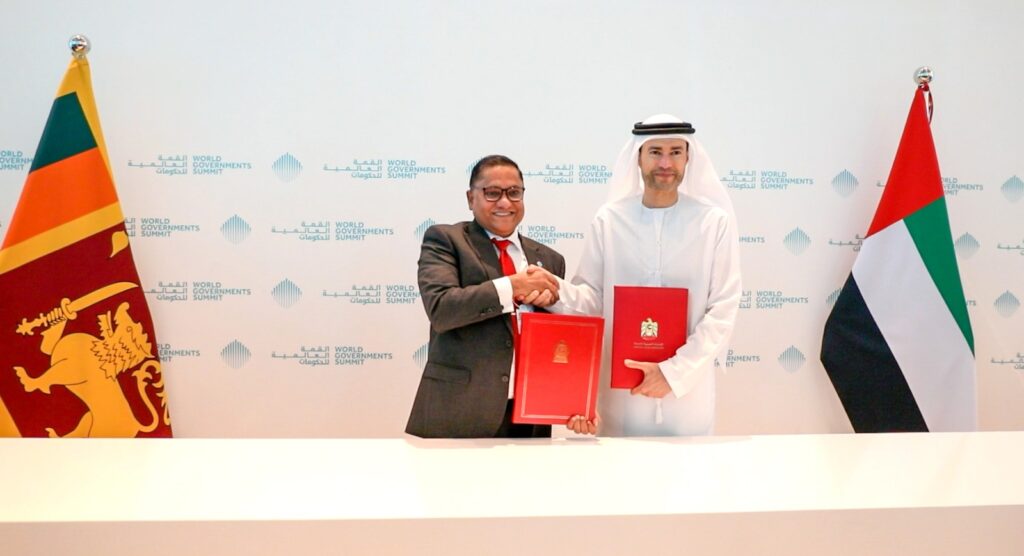
Dubai: The United Arab Emirates and Sri Lanka could finalise a Comprehensive Economic Partnership Agreement within a year once formal negotiations begin, paving the way for stronger trade, investment, and services flows between the two countries, according to Alexi Gunasekera.
Speaking at the “Globalisation and the Sri Lankan Opportunity” event held at the Ritz-Carlton DIFC on Thursday, Alexi Gunasekera said that Sri Lanka had already expressed interest in advancing CEPA discussions following talks earlier this year between Sri Lanka’s Trade Ministry and Thani bin Ahmed Al Zeyoudi.
Gunasekera said that during Sri Lanka’s Trade Minister’s visit in January for Gulfood, discussions were held with Thani bin Ahmed Al Zeyoudi on CEPA, during which Sri Lanka expressed its interest in signing the agreement.
“Once it starts, I am quite sure within a year we will be able to finalise everything,” he said.
The proposed deal would build on the investment protection and promotion agreement signed last year, which Sri Lanka views as a key foundation for attracting greater United Arab Emirates investment into sectors such as infrastructure, agriculture, logistics, ports, technology, and professional services.
Trade ties enter next phase
The United Arab Emirates is already the eighth-largest export destination for Sri Lanka, with annual exports valued at around $350 million. However, Alexi Gunasekera said the relationship must now move beyond traditional trade toward a broader investment-driven and value-chain partnership.
He noted that the long-standing relationship between the two countries has been strengthened by a large expatriate community, saying more than 260,000 Sri Lankans live in the UAE, contributing to strong labour, services, business, and family ties.
Gunasekera added that the UAE’s position as a regional hub provides Sri Lankan businesses with access to wider markets across the GCC, Africa, and Europe.
He said the next phase of cooperation lies in leveraging both countries’ ports, logistics networks, and investment platforms to create stronger two-way economic flows.
“We always consider the UAE as a hub to enter other GCC countries, as well as Africa and Europe,” he said.
CEPA could unlock investment flows
Sri Lanka is seeking investment from the United Arab Emirates in sectors including construction, infrastructure, ports, shipping, logistics, transport, agriculture modernisation, IT, BPO, and artificial intelligence, with a particular emphasis on R&D centres aimed at creating skilled jobs and retaining talent.
“We want the UAE to invest in the infrastructure sector, construction infrastructure, then IT, BPO, AI—Sri Lanka wants to digitalise its economy,” said Alexi Gunasekera.
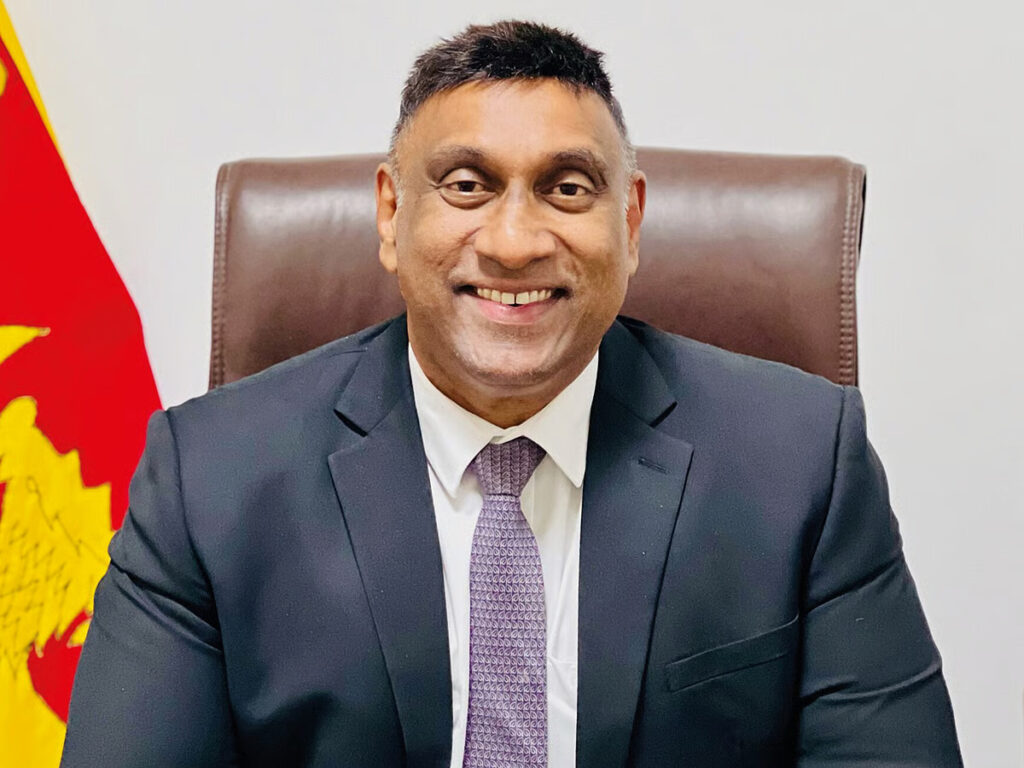
He added that the investment protection agreement had helped address key concerns among UAE investors, particularly regarding the protection of capital in Sri Lanka following the country’s recent economic crisis.
“They [UAE investors] were initially uncertain about whether their investments in Sri Lanka would be protected, but that confidence has now been established. The next step is to translate that assurance into tangible outcomes,” he said.
A Comprehensive Economic Partnership Agreement (CEPA) would provide the broader trade framework needed to make such investments more effective. It would enable UAE investors to channel capital into Sri Lanka’s agriculture, logistics, and manufacturing sectors and export goods back to the UAE, while also allowing Sri Lankan businesses to use the UAE as a base for value addition and regional distribution.
“If CEPA is in place, you can export back to the UAE. If you manufacture something here, you can export to Sri Lanka. It’s a win-win situation,” he said.
Services may move first
Alexi Gunasekera said the services sector is likely to see the earliest gains within the next 12 to 18 months, as Sri Lanka already has a strong professional workforce in the United Arab Emirates.
He pointed to the presence of Sri Lankan quantity surveyors, bankers, chartered accountants, doctors, hospitality workers, pilots, and IT professionals in the country, noting that this talent pipeline could be expanded more quickly than capital-intensive industries.
“Manufacturing sector, it takes time, but services sector won’t take time,” he said, adding that professional services—such as banking, healthcare, accounting, and other specialised fields—could see faster integration and growth.
He added that manufacturing, construction, and renewable energy remain part of the investment agenda, but these areas would require longer timelines for structuring and execution.
Confidence returning after crisis
Sri Lanka is continuing efforts to rebuild investor confidence following its recent currency and economic crisis, with Alexi Gunasekera saying the country is showing signs of resilience and improving political stability.
He noted that confidence is gradually returning among the public and investors. “You have the political confidence, the stability is there. The government is very well, very powerful government,” he said. “The people are slowly getting to have this confidence in Sri Lanka. That’s why we are having this.”
Gunasekera added that the recent UAE–Sri Lanka Joint Commission—held after a 12-year gap—marked an important step in restarting structured economic dialogue and converting political goodwill into investment outcomes.
“We have now put the ball on rolling, and in two, three years’ time, it will start moving,” he said.
Food and labour links remain active
Sri Lanka continues to strengthen its food security partnership with the United Arab Emirates, with efforts to increase exports of fresh fruits, vegetables, and other perishables despite logistical challenges linked to regional disruptions.
Alexi Gunasekera said that while exporters face certain logistical constraints, shipments to the UAE continue to grow. “Trying to send more and more food, but there are some logistical issues as well,” he said. “All these fresh fruits and vegetable perishables all come into the UAE, but there are some challenges, but still people are exporting.”
Labour mobility remains another key pillar of the relationship, with Sri Lanka maintaining open channels for its workforce to travel to the UAE. He added that there is sustained demand among Sri Lankans seeking employment opportunities in Dubai and other emirates, reinforcing long-standing people-to-people and economic ties.
“The target is, you said, 63,000 Sri Lankans to the UAE. Last year we achieved 53,000, so we have not stopped,” he said. “That means we are supporting the UAE. If they need manpower, if they need human capital, we are providing it.”
He added that Sri Lanka is seeking to mirror this flow in the opposite direction by attracting greater investment from the United Arab Emirates. He said the proposed CEPA is expected to serve as a key mechanism for further strengthening trade, capital flows, and talent exchange between the two countries.

