

Recycling initiative worth Dh50 million converts used meal trays into new items.
Dubai: Emirates has recycled more than 88 tonnes of onboard plastic waste over the past year, converting discarded meal trays, bowls, and dishes into new inflight service items as part of a Dh50 million investment in circular economy initiatives.
Ahead of World Environment Day on 5 June, the Dubai-based carrier said it has repurposed over 88,000 kilograms of plastic from Economy Class meal service items since launching its closed-loop recycling programme in June 2023.
The initiative allows used serviceware to be collected, processed, and remanufactured in the UAE before being returned to service on thousands of flights across the airline’s global network.
The programme forms part of Emirates’ wider efforts to cut waste and enhance environmental sustainability across its operations.
Damaged and unserviceable Economy Class trays, casseroles, snack dishes, and bowls are collected after flights and transported to a specialist recycling facility in Dubai, where they are cleaned, inspected, and converted into new inflight service items containing up to 25% recycled material.
The recycled products are then supplied back to Emirates Flight Catering and reintroduced into service, forming a closed-loop manufacturing system that helps reduce plastic waste sent to landfill while also lowering emissions linked to transporting materials overseas for processing.
With millions of trays, bowls, and dishes used each year across its global network, Emirates said the programme plays an important role in advancing circular economy principles within the aviation sector.
The initiative is carried out in partnership with deSter FZE UAE, a leading aviation serviceware provider focused on closed-loop manufacturing. The company, part of the CE100 circular economy network, operates a facility designed with sustainability features such as solar power, efficient water management systems, and waste reduction practices.
Beyond inflight serviceware, Emirates has broadened its sustainability initiatives across several areas of the passenger experience. The airline’s latest children’s bags and plush toys contain at least 50% recycled content, while unnecessary plastic wrapping has been removed from children’s items and blankets.
The carrier has also replaced plastic packaging for First Class bedding with reusable bags made from recycled polyester and introduced headset packaging made entirely from recycled low-density polyethylene.
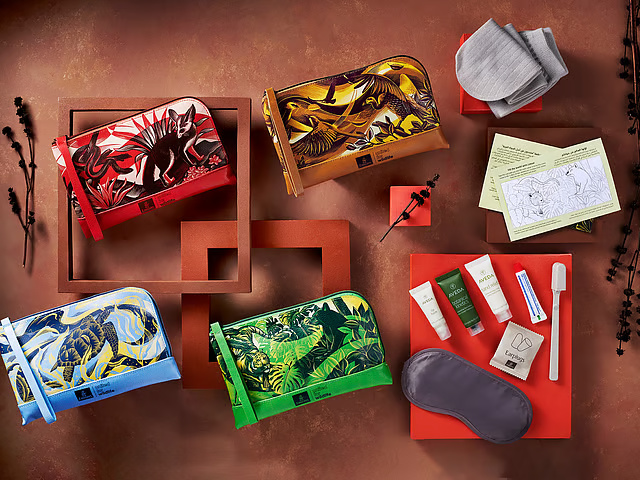
Amenity kits across First, Business, Premium Economy, and Economy Class now increasingly use recycled and bio-based materials, while paper straws have replaced single-use plastic alternatives throughout the onboard experience.
In another environmental initiative, Sir David Attenborough’s 100th birthday is being marked by making 100 episodes from the Attenborough Collection available on Emirates’ ice inflight entertainment system throughout June and July, highlighting some of the world’s most remarkable ecosystems and natural environments.
Additional measures include onboard recycling programmes for glass and plastic bottles on selected flights arriving in Dubai, the use of responsibly sourced paper for menus across all cabin classes, and ongoing efforts to reduce packaging waste in collaboration with suppliers.
Emirates said these initiatives reflect its long-term commitment to environmental stewardship and its goal of embedding sustainability across every stage of the customer journey, while also supporting the UAE’s broader sustainability objectives.

