

IndiGo, Air India, Emirates and Lufthansa are among global carriers reducing flights as rising costs put pressure on operations.
Dubai: UAE, Indian and several global airlines are entering what analysts describe as one of the most unpredictable summer travel seasons in recent years, as the Iran conflict, rising fuel prices, and continued airspace disruptions force carriers to reassess capacity during the industry’s peak travel period.
Airlines including Emirates, Air India, IndiGo and Lufthansa are among those trimming schedules or adjusting operations, as higher operating costs and rerouted flight paths add pressure on profitability during the busy summer season.
The developments come as the ongoing regional conflict has disrupted key air corridors, pushing up fuel consumption due to longer flight routes and contributing to broader uncertainty across global aviation networks.
The crisis is no longer confined to smaller or financially weaker airlines, with disruptions now affecting carriers on a global scale.
Industry estimates indicate that airlines worldwide have cut more than 75,000 flights from their summer 2026 schedules.
Alongside Emirates, carriers such as Lufthansa, KLM, IndiGo, Air India, and Norse Atlantic Airways have all reduced services or suspended certain routes.
Operational stability
Emirates—widely regarded as one of the world’s most resilient long-haul carriers—has reduced operations as the regional conflict continues to reshape aviation economics.
According to an AGBI report citing data from aviation analytics firm Cirium, Emirates has cut its June 2026 flight schedule by up to 16%, removing roughly 480,000 to 500,000 seats from the market.
While analysts note that Emirates remains better positioned than many competitors due to its large widebody fleet, extensive codeshare partnerships, and secured fuel supply arrangements through 2028, the reductions highlight the broader impact of the conflict on global airline planning.
The wider takeaway for the industry is increasingly clear: airlines are prioritising operational stability and cost control over aggressive expansion in an uncertain environment.
“This is a season of disciplined consolidation, not growth,” said Linus Benjamin Bauer. “The smart carriers are protecting their core network and schedule integrity rather than chasing frequency.”
Summer travel economics
The ongoing conflict has turned what is typically a peak summer recovery period for airlines into a phase dominated by crisis management and operational caution.Airlines are now facing a threefold set of pressures: rising jet fuel costs, sudden airspace restrictions, and significantly longer flight paths around conflict zones.
According to Linus Benjamin Bauer, avoiding high-risk airspace is adding up to five hours to certain routes, sharply increasing fuel consumption and disrupting aircraft utilisation patterns.
“In peak season that’s doubly painful — you’re burning more fuel per rotation at the exact moment you’d normally be maximising aircraft utilisation,” he said.
He added that longer routing also creates crew duty-time complications and reduces the number of flights airlines can operate daily with the same aircraft.
Jet fuel prices have surged to around $4.50–$4.90 per gallon, nearly double pre-conflict levels, amid concerns over supply stability linked to shipping flows through the Strait of Hormuz.
That rising cost burden is now pushing airlines to scale back marginal and long-haul routes first.
IndiGo’s Europe ambitions slow
IndiGo, which has expanded rapidly into international markets over the past two years, is among the airlines adjusting capacity amid rising operational pressures.
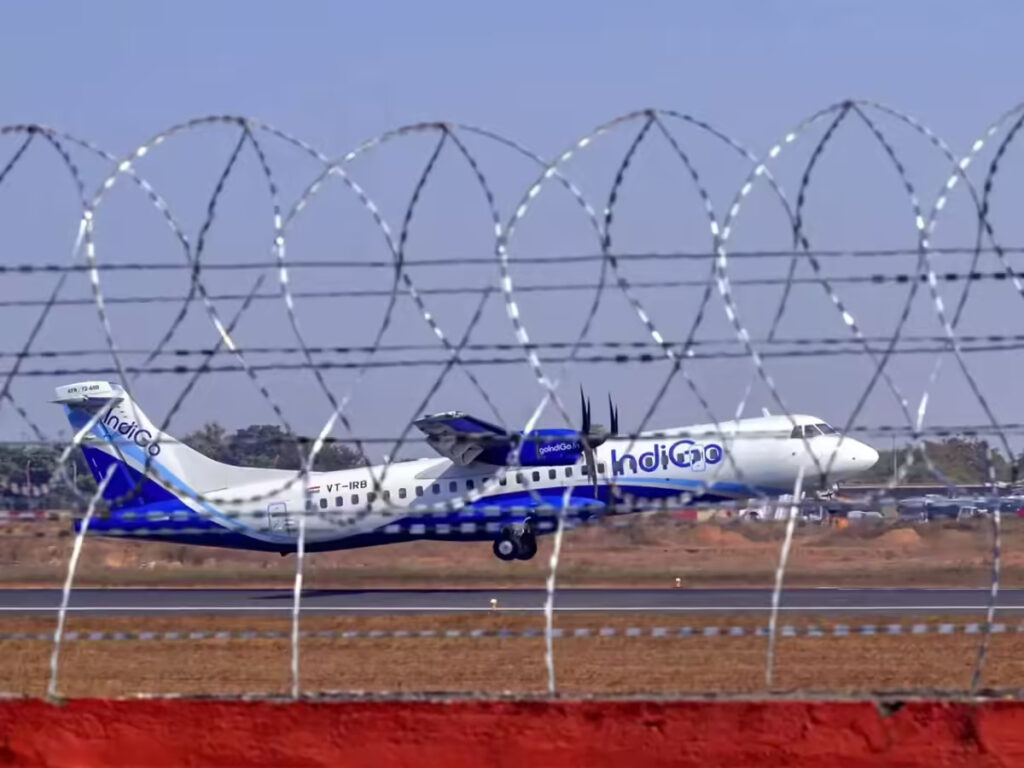
This week, the carrier announced temporary suspensions on six international routes—including Langkawi, Krabi, Ho Chi Minh City, Hong Kong, Shanghai, and Siem Reap—between July and September.
The move follows IndiGo’s earlier decision to discontinue its Manchester service from August 31 and return one of its leased Boeing 787-9 Dreamliners to Norse Atlantic Airways.
The airline had leased the aircraft to fast-track its entry into long-haul European markets ahead of deliveries of its own Airbus A350 fleet beginning in 2027. However, the economics of long-haul operations have deteriorated significantly since those plans were initially made.
IndiGo cited geopolitical tensions, rising aviation turbine fuel prices, foreign exchange volatility, and severe airspace constraints, stating that operating costs have become “considerably higher than originally envisaged.”
Despite the adjustments, IndiGo is expected to continue operating more than 1,800 international flights per week.
Air India also scaling back
Air India is also reducing capacity, trimming its international operations by 27% and cutting up to 22% of domestic flights between June and August.
Services to destinations across North America, Europe, Australia, and Asia are being reduced or temporarily suspended as longer flight routings and higher fuel costs weigh on profitability.
The airline said the adjustments are aimed at improving “network stability” and reducing last-minute disruption for passengers.
The carrier will, however, continue operating more than 1,200 international flights each month.
Global aviation under pressure
Linus Benjamin Bauer said the key challenge for the industry is no longer isolated disruptions, but their increasing frequency.
“The industry has the muscle memory to absorb individual shocks, but a collapsing ceasefire raises the frequency of those shocks — and frequency, not severity, is what erodes a summer schedule,” he said.
For passengers, this suggests the upcoming peak travel season may continue to see schedule adjustments, reroutings, and cancellations across multiple regions as airlines adapt to ongoing instability.
What about demand?
Passenger demand took a hit in April, according to the International Air Transport Association (IATA), which is holding its annual general meeting this weekend. Its April–May passenger demand report pointed to weak forward bookings amid ongoing uncertainty.
“The 46.6% fall in demand for carriers in the Middle East due to war in the region was so acute that it dragged overall demand down -3.4%,” said Willie Walsh. “The situation for air transport remains highly volatile. The cost of jet fuel more than doubled in April, which is pushing airfares up. Forward schedule data is showing a reduced offering in the coming months, indicating that airlines are balancing high fuel costs and weaker demand.”
Travel agents also note that while demand has recovered from the immediate shock seen after the conflict escalated in late February, summer bookings remain relatively subdued. Some agents say more travellers are choosing to remain in the United Arab Emirates, opting for local staycations instead of international trips.

