

Dubai has remained open throughout the conflict period and is now preparing for its next phase of growth, according to the Dubai Department of Economy and Tourism (DET).
Dubai said it is continuing to push ahead with a packed calendar of mega events, new global tourism campaigns, infrastructure upgrades, and aviation expansion as it moves beyond disruptions linked to the earlier US–Israel–Iran conflict.
At the Dubai Department of Economy and Tourism’s (DET) first stakeholder meeting of the year, Issam Kazim, CEO of the Dubai Corporation for Tourism and Commerce Marketing, said Dubai’s long-term tourism and economic strategy remains unchanged despite the regional crisis.
“We remain focused on our D33 goals. That’s unchanged,” Kazim said. “The path remains the same, which is ambitious.”
The conflict, which escalated on February 28, created uncertainty across regional travel markets and temporarily affected tourism demand in United Arab Emirates.
Several luxury hotels in Dubai, including Burj Al Arab, Armani Hotel Dubai, Park Hyatt Dubai, and Anantara World Islands Dubai Resort, underwent refurbishment-related closures during the period of slower demand.
The United States and Iran later agreed to a conditional ceasefire on April 7, which was extended indefinitely on April 21 to allow negotiations to continue. Since then, travel demand across United Arab Emirates has been gradually recovering.
According to Kazim, Emirates has restored 96 per cent of its network, now serving 138 destinations across 73 countries and operating around 1,300 weekly flights. Meanwhile, flydubai has resumed nearly 80 per cent of its network, covering 100 destinations in 50 countries with more than 1,750 weekly flights.
Kazim’s remarks came a day after Sheikh Hamdan bin Mohammed bin Rashid Al Maktoum said the emirate will continue strengthening its economy and tourism sector through “practical measures, enhanced facilitation, and innovative solutions” aimed at boosting resilience and future growth.
In a post on X, he emphasised closer public–private sector collaboration to support investment and maintain Dubai’s global competitiveness.
Sheikh Hamdan bin Mohammed bin Rashid Al Maktoum said that during a review of the Department of Economy and Tourism’s operations and plans to strengthen economic resilience and accelerate growth, he highlighted the importance of integrating public and private sectors to drive investment, support economic growth, and enhance Dubai’s global competitiveness.
The next phase
Dubai is now focusing on its next growth phase through major events, new visitor experiences, improved connectivity, and expanded global marketing campaigns.
Issam Kazim said events will continue to be one of the city’s strongest tourism drivers. The emirate is preparing a packed summer calendar featuring esports competitions, retail promotions, gastronomy-focused campaigns, and entertainment programmes aimed at boosting visitor engagement.
Dubai Festivals and Retail Establishment CEO Ahmed Alkhaja said Dubai added new events and promotions to its calendar during the slowdown period to support key sectors including hospitality, retail, and restaurants.
The city is set to host its largest-ever edition of the GameExpo esports event at the Dubai World Trade Centre this weekend, while Dubai Summer Surprises will return with expanded retail promotions and hospitality offers.
Officials also announced a new retail campaign allowing shoppers to enter weekly draws to win a home in Dubai over a 12-week period by spending Dh500 at participating malls and outlets.
Dubai Festivals and Retail Establishment continues to roll out major seasonal campaigns including Dubai Summer Surprises, Back to School, and the Great Dubai Summer Sale across Dubai.
The city is also advancing major infrastructure and transport projects despite earlier disruptions. Issam Kazim highlighted ongoing road network upgrades and the development of air taxi stations previously announced by Dubai authorities.
“There’s been no stop on infrastructure,” he said.
A wider audience
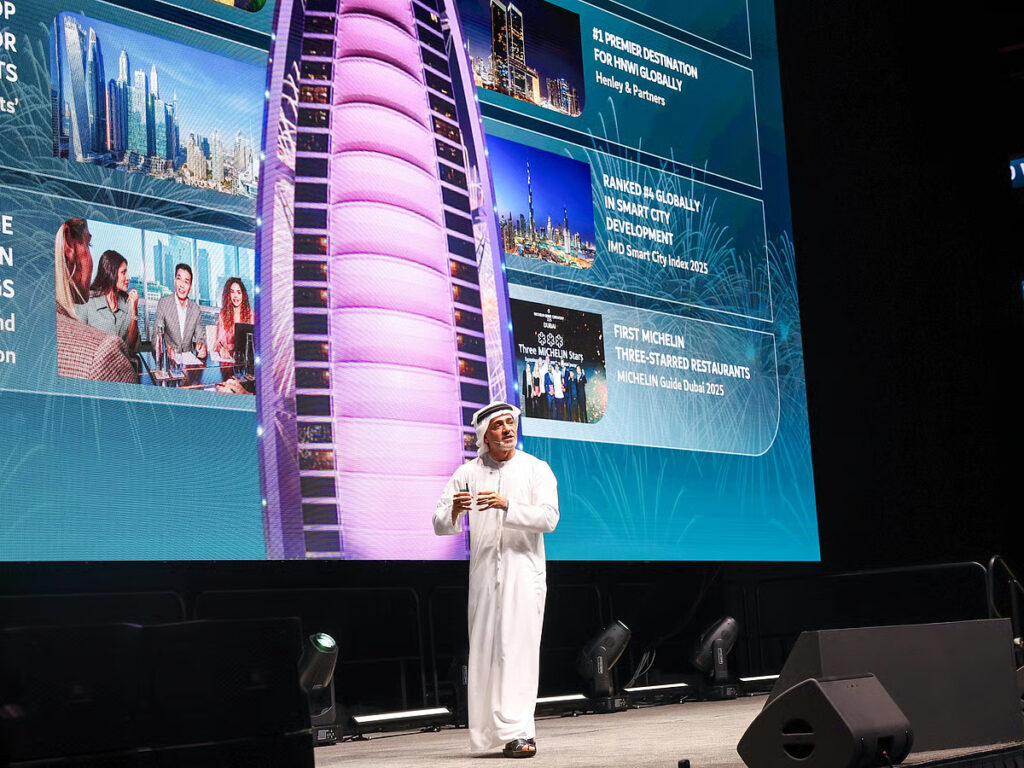
Dubai Department of Economy and Tourism highlighted initiatives such as the Beautiful Destinations Academy, which trains digital content creators in Dubai, along with collaborations involving Amazon Prime productions and international television programmes filmed in the city.
Issam Kazim said these partnerships are helping position Dubai before wider global audiences through organic content and entertainment-driven exposure.
“What’s important again is that we never stood still,” he said.
DET officials added that Dubai will continue expanding its offerings in events, gastronomy, and wellness, while also advancing initiatives such as the Dubai Fitness Challenge and major business events scheduled for later in the year.
The department also said several business events that were postponed during the crisis period are now expected to be held in the final quarter of the year. For instance, the annual Arabian Travel Market, typically scheduled for May–June, has been postponed to September this year.
Business continuity
While outlining future plans, officials from the Dubai Department of Economy and Tourism also detailed how Dubai maintained tourism and business continuity during the regional conflict period.
The government introduced economic support measures worth Dh2.5 billion aimed at key sectors including tourism, hospitality, retail, events, and small and medium-sized enterprises (SMEs).
Dubai Department of Economy and Tourism said communication was a key priority during the crisis period, including the launch of the Dubai Info Hub WhatsApp platform in partnership with Meta to provide real-time updates and counter misinformation. The platform quickly grew to more than 95,000 subscribers.
Officials also noted that inspections were carried out across Dubai to prevent unjustified price increases on goods and services during the period of uncertainty.
Issam Kazim said the city’s response strategy was shaped by lessons from past crises, including the 2008 financial downturn and the Covid-19 pandemic. “Everything that we learned during the crisis in 2008, we adapted to that,” he said. “The learnings from Covid have also been layered on top of that.”
The next growth phase
Dubai Department of Economy and Tourism data presented during a stakeholder meeting showed that tourism activity in Dubai has been recovering steadily following the ceasefire announcement.
Hotel performance during the pre-Eid period reached around 80 per cent of 2025 levels, while Eid occupancy averaged 77 per cent, with some areas peaking at up to 85 per cent.
Dubai Airports also reported strong passenger flows, noting that May 31 was expected to be the busiest travel day of the period, with nearly 194,580 passengers projected through Dubai International Airport. The busiest departure day was May 23, when more than 67,000 travellers departed via DXB.
Issam Kazim said the focus now is on sustaining momentum and preparing for future growth, describing the disruption as “situational” rather than systemic.

