

Major investments in aviation, transport, and technology reflect a clear long-term national ambition.
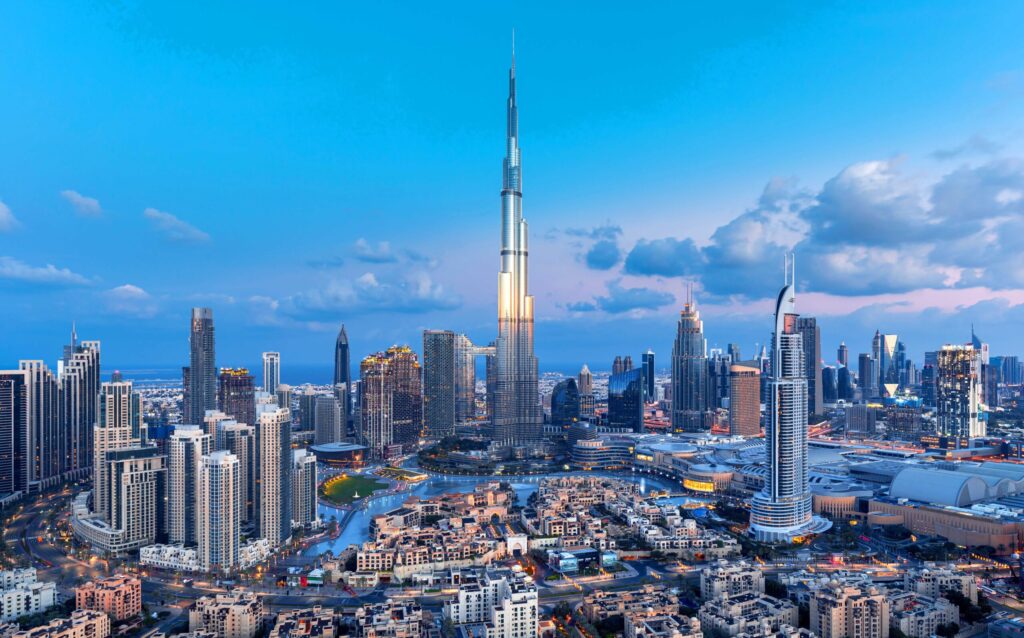
In March, President His Highness Sheikh Mohamed Bin Zayed Al Nahyan reaffirmed that the United Arab Emirates “will emerge stronger than before.” Beyond sentiment, this reflects a deeper national drive that has shaped the country’s trajectory. While many global economies respond to uncertainty with caution, the UAE has opted for acceleration—viewing challenges as catalysts for innovation and continuing to build the infrastructure of the future without pause.
Recent economic performance reflects this strategy. The UAE’s total external trade reached Dh6 trillion ($1.63 trillion) in 2025, up from Dh5.23 trillion ($1.42 trillion) in 2024, marking nearly 15% growth. In the same period, the country entered the world’s top 10 merchandise exporters for the first time, ranking ninth globally—rising from 17th place five years earlier. These figures underscore a national strategy focused on openness, infrastructure development, and consistent execution.
In Dubai, this momentum is visible through major transformative projects shaping the future. One key example is the Dh34 billion Metro Gold Line, a 42-kilometre route featuring the emirate’s first fully integrated underground network, connecting 55 major developments. Scheduled for completion on September 9, 2032—23 years after the launch of the original metro—it represents a significant investment in long-term urban connectivity and growth.
Parallel to rail development, Dubai is also expanding its cycling infrastructure to 560 kilometres as part of efforts to create a more liveable urban environment. This initiative forms a key pillar of the Dubai 2040 Urban Master Plan, which aims to transform the city into a “20-minute city” where sustainable transport improves residents’ quality of life.
In the sustainability sector, ambition has also increased significantly. The Dubai Electricity and Water Authority (DEWA) has raised its 2030 capacity target for the Mohammed bin Rashid Al Maktoum Solar Park to 8,000 megawatts. As the world’s largest single-site solar park, the project stands as a cornerstone of the UAE’s Net Zero by 2050 strategy, while reinforcing Dubai’s ability to sustain long-term economic and environmental growth.
Perhaps the most significant expression of long-term intent is the Dh128 billion expansion of Al Maktoum International Airport, designed to become the world’s largest airport with a capacity of up to 260 million passengers annually. The development represents a major investment in global connectivity, reinforcing Dubai’s role as a central hub for the movement of people and goods, while strengthening its position in international aviation through the growth of Dubai South.
This expansion is intended to enhance proximity and integration with key economic zones, including the Dubai Multi Commodities Centre (DMCC), which continues to experience strong growth, surpassing 26,000 member companies in 2025 and aiming for 50,000 in the coming years. Its ongoing development includes the next phase of Uptown Dubai, anchored by Burj 2020, alongside the expansion of digital and financial ecosystems such as the forthcoming FinX community, which targets 5,000 companies to further strengthen Dubai’s position as a global fintech hub.
Beyond its role as a supertall landmark, Burj 2020 is positioned as a response to rising demand for Grade A office space, offering between 70 and 85 floors of premium commercial real estate. The tower is planned to reach at least 600 metres, with potential to exceed 700 metres depending on final engineering feasibility assessments.
Although the project was conceived prior to the current regional conflict, the commitment to its delivery has only strengthened, reflecting the broader resilience and determination to accelerate future phases of development. Designed for the next generation of businesses operating at the intersection of commodities, finance, and technology, it aims to provide a transparent and efficient environment for global firms to scale.
As His Highness Sheikh Mohammed bin Rashid Al Maktoum, Vice-President and Prime Minister of the United Arab Emirates and Ruler of Dubai, has said, “We are a nation that does not pause in the face of challenges.” By sustaining this momentum, Dubai continues to position itself as a beacon of stability and ambition, driven by the belief that the future belongs to those who keep moving forward.

