

Tips for escaping city lights and watching the Lyrid meteor shower under clear desert skies.
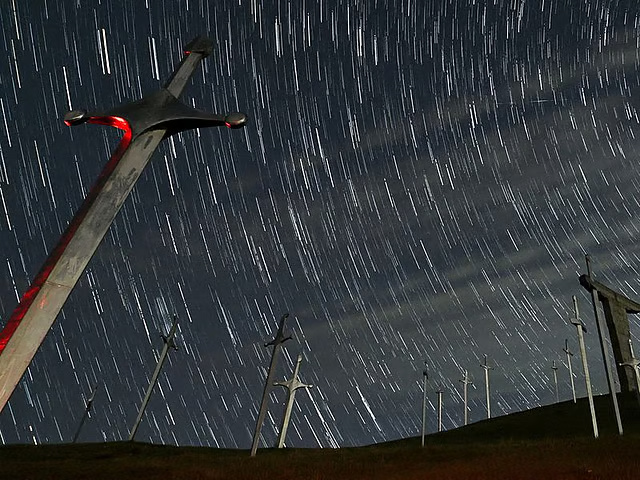
Want to catch some “shooting stars”?
You still have time until April 30, 2026, to see the Lyrid meteor shower. The springtime celestial event began around April 14 and continues to light up night skies through the end of the month.
What: Lyrid meteor shower (caused by debris left behind by Comet Thatcher)
When: Visible from April 14 to 30, 2026, according to the International Meteor Organisation (IMO)
Peak nights: From April 21–22 through the early hours of April 23, 2026
Shower details:
- Radiant: 18:04 +34°
- ZHR: 18
- Velocity: 30 miles/sec (49 km/sec, medium speed)
Parent object: C/1861 G1 (Thatcher)
Best time to view: Between 10:30pm and 5:00am for the best chances
Visibility: With minimal moon interference in 2026, viewing conditions are favourable, provided skies remain clear
Viewing tips: No telescope is needed. Find a dark spot away from city lights, lie back, and look toward the constellation Lyra.
The Lyrid meteor shower can be seen in skies above the UAE, although visibility depends heavily on weather and atmospheric conditions.
Each year in mid-April, Earth passes through the trail of dust and debris left behind by Comet C/1861 G1 (Thatcher).
Peak Lyrid showers
As these tiny particles enter Earth’s atmosphere at high speed, they burn up and create brief streaks of light — the “shooting stars” that form the Lyrid meteor shower, according to NASA.
When to catch the Lyrids
Under ideal dark-sky conditions, observers in the Northern Hemisphere may see around 15–20 meteors per hour during the peak of the Lyrid meteor shower.
At times, the number can be higher if Earth passes through a denser part of the debris stream left behind by Comet Thatcher.
Tips for stargazers
Local enthusiasts say sightings may be clearer in the early morning hours after midnight, when light pollution, haze and moonlight are usually at their lowest, although conditions can vary each year.
Choosing a location far from the city’s bright lights and haze is important. Light pollution in urban areas makes it harder to spot fainter meteors, so many observers head to quieter desert locations late at night.
Alternatively, you may catch the Lyrid meteor shower in the pre-dawn hours, when the shower’s radiant — the point in the constellation Lyra near the bright star Vega — is high in the sky.
Allowing your eyes to adjust to the darkness for around 20–30 minutes can improve your chances of spotting more meteors.

