

Spring weather remains unsettled, with chances of rain and dust storms persisting.
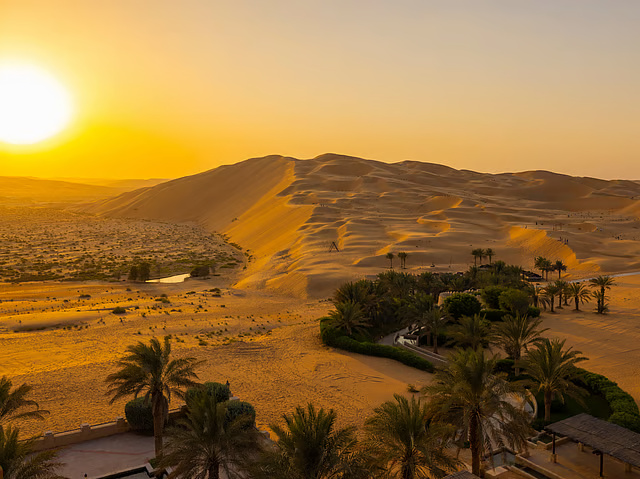
Dubai: The UAE is starting to experience the first true signs of summer, with temperatures rising above normal April levels, even as unstable spring weather continues to bring chances of rain in the coming days.
On Monday, temperatures in some parts of the country reached 40°C, a significant rise for April and several degrees higher than the usual range for this time of year. Average highs typically stay between 32°C and 34°C in coastal areas, and 34°C to 36°C inland, making this early heat surge unusual rather than expected.
However, the full intensity of summer heat has not set in yet.
The country is still in the Sarrayat season, a transitional spring period that usually lasts from mid-March to early May and is known for sudden, short-lived weather changes.
During this period, towering thunderclouds can form quickly, often leading to short but heavy rainfall, strong winds, and dust storms, especially during the afternoon or early morning hours.
Meteorologists say this combination of rising heat and unstable weather is typical for this time of year. A low-pressure system affecting central parts of the Arabian Peninsula, especially Saudi Arabia, is creating unsettled atmospheric conditions.
Although the UAE is not expected to face a direct impact, indirect effects such as cloud development and isolated rainfall remain likely over the next few days.
At the same time, recent weeks have brought unusually mild weather. In some coastal cities, temperatures remained below 30°C, while certain inland areas recorded lows falling below 15°C — and even under 10°C in places like Raknah — well below the seasonal average.
According to Ibrahim Al Jarwan, Chairman of the Board of Directors of the Emirates Astronomical Society and a member of the Arab Union for Astronomy and Space Sciences, the current weather pattern suggests the season is gradually moving out of spring.
He noted that while the period from mid-March to early May is usually linked to atmospheric instability, this year has brought a mix of cooler-than-average conditions followed by sudden temperature spikes, including the unusual early reading of 40°C.
“This is part of the transitional phase,” he explained, adding that such fluctuations are typical of the season, which can sometimes continue into early May depending on regional weather systems.
However, a more noticeable shift toward summer is expected soon.
From mid-May onward, the Indian monsoon low-pressure system — a major climatic force across the region — begins to strengthen.
Forming over northern India, Pakistan, and Iran, this system pulls in hot, humid air masses, gradually driving temperatures higher across the Gulf.
By this stage, Ibrahim Al Jarwan expects weather conditions to stabilise, marking the effective start of summer across the UAE. Temperatures are forecast to consistently rise above 40°C, with some southern and inland areas potentially nearing 50°C at peak.
For now, the country remains between seasons, where rain clouds and rising heat exist side by side, and a brief afternoon storm can still break up an otherwise sweltering day.
Summer, however, is no longer far away — it is already starting to make its presence felt.

