

A new negative list maintains restrictions in key sectors while opening select areas to foreign investment.
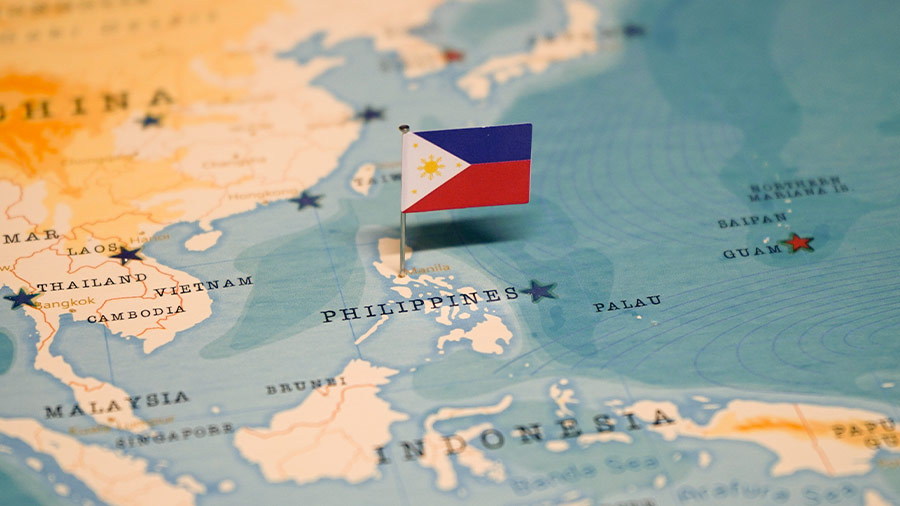
Dubai: The Philippines has updated its foreign investment framework, retaining strict ownership limits in several sectors while gradually opening others to global investors.
Philippine President Ferdinand Marcos Jr. has signed Executive Order (EO) 113, approving the 13th Regular Foreign Investment Negative List (RFINL). The measure outlines where foreign investors may participate in the economy and where they are restricted under the Foreign Investments Act of 1991.
Reform and protection
The updated RFINL reflects the government’s strategy of attracting foreign investment while protecting industries deemed vital to national interest.
Restrictions are divided into two categories. List A covers sectors where limits are mandated by the constitution or existing laws, while List B includes industries restricted for reasons such as national security, public health, and the protection of local enterprises.
Industries closed to foreign investors
Several sectors remain fully off-limits to foreign ownership, including mass media, the corporate practice of architecture, cooperatives, private security agencies, small-scale mining, utilisation of marine resources, cockpits, nuclear weapons, anti-personnel mines, firecrackers, and pyrotechnic devices.
“Only investment areas and/or activities listed in the attached 13th RFINL shall be reserved to Philippine nationals, subject to the exceptions and conditions indicated therein,” the order stated.
Partial access
Foreign participation is permitted in certain industries, but under strict limits. Ownership is capped at 25 per cent in private recruitment firms and companies involved in constructing defence-related infrastructure.
Advertising firms have been allowed up to 30 per cent foreign equity, while a broader range of sectors are subject to a 40 per cent foreign ownership ceiling.
These include retail trade enterprises with paid-up capital of less than ₱25 million, natural resource exploration, private land ownership, public utilities, trading (except retailing of rice and corn), government procurement of goods, infrastructure projects, consulting services, commercial fishing, and condominium ownership.
Openings in telecoms
Foreign investors may own up to 100 per cent of telecommunications companies, provided reciprocity conditions are met, meaning Filipino investors must also be granted similar access in the investor’s home country.
“Operation and management of telecommunications may allow up to 100 per cent foreign ownership where the foreign investor’s home country grants reciprocity to Philippine nationals, and up to 50 per cent foreign equity where such reciprocity is not present.”
Sensitive sectors remain protected
Under List B, restrictions continue for industries considered sensitive, allowing up to 40 per cent foreign equity.
These areas include the manufacture of firearms, gunpowder, dynamite, blasting supplies, explosives, telescopic sights, sniper scopes, and similar devices.
Additionally, a cap has been imposed on sectors such as dangerous drugs, sauna and steam bathhouses, massage clinics, gambling, micro and small domestic market enterprises with paid-in equity capital of less than $200,000, and firms involved in advanced technology with under $100,000 in capital.
What this means for global investors
The Philippines has signalled increased openness in sectors such as telecommunications and renewable energy. However, longstanding restrictions in areas like land ownership, public utilities, and media continue to shape the investment landscape.
International investors seeking entry into the Philippine market will need to carefully navigate these sector-specific rules, often through joint ventures or local partnerships.
EO 113, issued on April 16, will take effect 15 days after its publication in the Official Gazette or in a newspaper of general circulation.

