

A surge in U.S. crude oil and liquefied natural gas shipments to Asia has turned the Panama Canal into a critical energy transit route amid shifting global trade flows during the ongoing Middle East conflict.
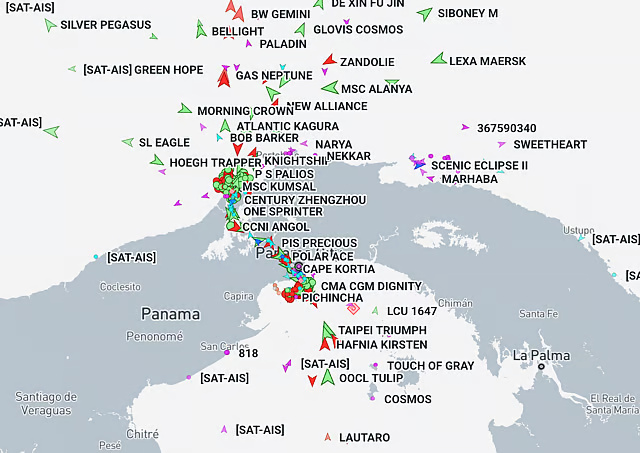
A surge of oil tankers and liquefied natural gas (LNG) carriers is crowding the Panama Canal, as shifting global energy trade routes driven by the conflict in the Middle East push the strategic waterway close to maximum capacity.
Videos circulating online this week show long queues of vessels waiting to transit the canal after loading crude oil and gas shipments from US Gulf Coast ports, highlighting a sharp rise in traffic headed for Asia.
Canal authorities said daily transits have increased to between 36 and 38 vessels, exceeding earlier projections, with energy shipments making up a significant share of the growth.
According to Reuters, demand has been especially strong from LNG and liquefied petroleum gas (LPG) carriers transporting US exports to Asian markets.
The congestion follows broader disruptions linked to heightened tensions between Iran and the United States, including a reported effective shutdown of the Strait of Hormuz — a critical global shipping route for oil and LNG.
The escalation has forced significant rerouting of energy cargoes and contributed to delays and congestion at alternative transit points such as the Panama Canal, as global shipping patterns adjust to ongoing uncertainty in key maritime corridors.
The situation has forced many energy shipments to be rerouted, increasing reliance on the Panama Canal as an alternative corridor to the Pacific.
Congestion
The current bottleneck differs from the delays experienced in 2023–2024, when drought conditions reduced water levels and constrained canal operations.
Today, improved water availability has enabled the canal to operate at full capacity, even as higher traffic volumes continue to drive congestion.
However, the bottleneck is now being driven by surging demand rather than supply constraints.
US ramps up oil and gas exports
The United States has increased its exports of oil and natural gas, with a larger share now flowing to Asia. Analysts estimate that the Panama Canal currently handles more than 95% of US liquefied petroleum gas (LPG) exports to the region.
The shift reflects wider changes in global energy flows, as buyers turn to alternative sources amid disruptions to Middle Eastern supplies linked to ongoing conflict.
Rising costs and delays
The surge in demand has pushed transit costs to record highs, with priority passage fees climbing sharply. Some LNG and LPG carriers have reportedly paid over $4 million in auction bids to secure faster transit slots.
Even with the Panama Canal operating at full capacity, unbooked vessels can face waiting times exceeding three days, while available transit slots are often reserved weeks in advance.
Shipping companies are now weighing costly trade-offs — paying premium fees for faster passage through the canal or opting for longer, riskier alternative routes such as around Cape Horn or via the Suez Canal.
FACT FILE: Panama Canal Congestion (2026)
Location: Panama Canal
Daily transits: 36–38 vessels, above the forecast of 34
Main cargo: LNG, LPG, crude oil
Key driver: Disruptions linked to the Strait of Hormuz
Waiting times: Over 3 days for unbooked vessels
Record auction fees: More than $4 million per transit slot
Primary route: U.S. Gulf Coast to Asia
Canal officials say the waterway remains a vital artery for global trade, but the current surge underscores its expanding role in energy geopolitics as supply chains adjust to conflict and shifting demand patterns.

