

Full oil and gas recovery delayed by war damage and ongoing shipping risks.
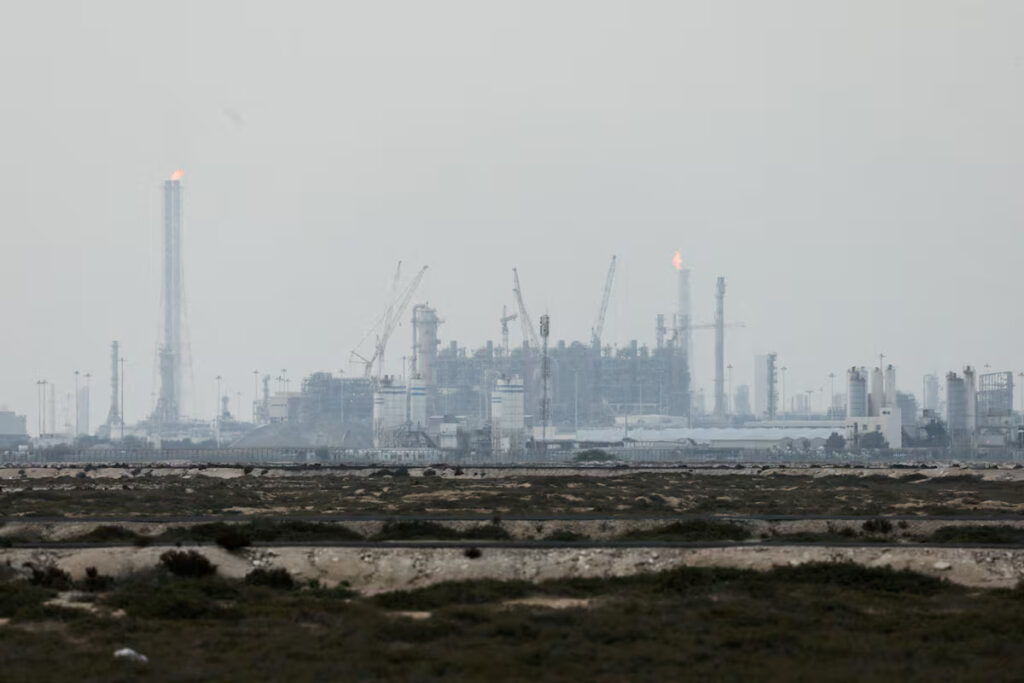
Dubai: The Middle East’s oil and gas recovery is expected to take months — and in some cases years — even as a ceasefire offers a limited pathway to resume flows.
Around 11 million barrels per day of production remains offline across the region, with recovery hinging first on the restoration of shipping through the Strait of Hormuz, according to Wood Mackenzie.
“A workable system for transit and renewed shipowner confidence is essential,” said Alan Gelder, senior vice president for refining, chemicals and oil markets at Wood Mackenzie.
Tanker movements remain uncertain despite incentives to resume transit, while ballast vessels may delay entry to avoid being stranded if conflict resumes. Onshore inventories also cannot be loaded quickly due to port constraints, Gelder said, adding that shipping bottlenecks will cap recovery for several weeks before upstream production becomes the main limiting factor.
Uneven restart
Storage capacity varies significantly across the region — from about a month in the UAE and Saudi Arabia to less than two weeks in Iraq and Kuwait. More than half of pre-war output could return before logistical constraints ease, but full recovery timelines will vary by country, according to Wood Mackenzie.
Even under stable conditions, Iraq could take six to nine months to return to previous output levels due to reservoir and operational constraints, said Fraser McKay, head of upstream analysis at Wood Mackenzie.
Ramping up production too quickly could risk long-term damage. “Operators that move to restore output too rapidly may end up causing more lasting harm,” McKay warned.
War damage deepens
The conflict has damaged more than 40 energy assets across nine countries, according to Fatih Birol, executive director of the International Energy Agency, heightening the risk of prolonged supply chain disruptions.
“You can’t just push the pause button,” said Jim Krane, a fellow at Rice University’s Baker Institute. Damage to parts of Qatar’s Ras Laffan LNG complex could take up to five years to repair, according to Saad Sherida Al-Kaabi, chief executive of QatarEnergy.
Gas recovery lags oil
Gas markets are expected to see a slower rebound:
- Fourteen LNG cargoes remain stranded in the Gulf
- Qatar’s Ras Laffan restart could stretch into late summer
- Damaged capacity may weigh on long-term output
A full restart of the facility’s 12 trains could take until the end of August, assuming operations resume soon, said Tom Marzec-Manser, head of gas and LNG analysis at Wood Mackenzie.
“Beyond LNG, domestic gas infrastructure in the UAE has been more severely impacted than oil, and recovery could require longer-term repair work,” he added.
Refinery constraints
According to analysts and industry estimates, restart timelines vary widely:
- Small oil fields: two to three weeks
- Larger fields: up to five weeks
- Refineries: 10 to 15 days, assuming no major damage
However, extended shutdowns can lead to corrosion, wax buildup and pressure imbalances, complicating the restart process, said Oklahoma-based oil industry veteran Matt Randolph.
“The priority is to keep the fields running,” said Aditya Saraswat, director of research for the Middle East and North Africa at Rystad Energy.
Near-term outlook
Even as tankers begin to return, the restart of Middle East energy flows remains constrained by a step-by-step process of restoring shipping, clearing storage, and gradually ramping up production, analysts at Wood Mackenzie say.
Key steps include:
- Securing shipping lanes
- Clearing storage bottlenecks
- Gradually restoring production
- Repairing damaged infrastructure
Each stage brings delays, resulting in a staggered recovery that may restore flows in phases while keeping full capacity still out of reach.

