

The UAE is introducing new measures—including highway expansions and public transport upgrades—aimed at making daily commutes smoother. Here’s what’s changing.
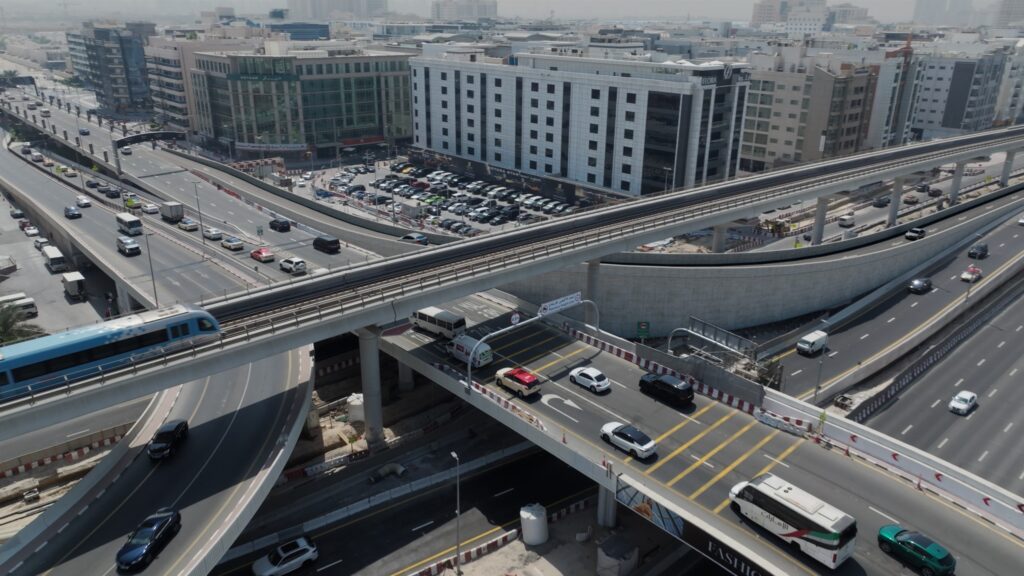
Traffic congestion, long commutes, and daily bottlenecks between emirates could soon be a thing of the past, as UAE authorities unveil a set of solutions aimed at relieving pressure on the country’s busiest roads.
At a recent meeting of the UAE Infrastructure and Housing Council, chaired by Suhail Mohamed Al Mazrouei, officials reviewed four key initiatives designed to improve traffic flow and make commuting more efficient.
The measures include strategies to curb the growth of vehicle numbers, expand highways, and develop faster, more reliable public transport connections between emirates.
“The next phase requires accelerating high-impact projects to enhance transport efficiency and support the shift to smart, sustainable mobility,” said Suhail Mohamed Al Mazrouei, Minister of Energy and Infrastructure, emphasizing that advancing public transport remains a strategic priority. “These efforts will contribute to reducing congestion and lowering emissions.”
Dubai-Sharjah-Ajman transport system
- 10 key routes linking the three emirates
- Bus Rapid Transit (BRT) with dedicated lanes
- Direct connections to metro stations and city centres
Authorities are focusing on one of the UAE’s busiest corridors, aiming to ease congestion through improved public transport. BRT systems operate on exclusive lanes, providing faster and more reliable journeys akin to metro services. Dubai has already introduced dedicated bus and taxi lanes, set to expand to 20 km this year, cutting journey times by up to 60% on some routes, according to the Roads and Transport Authority. The initiative seeks to reduce dependence on private vehicles and relieve pressure on key inter-emirate routes.
Limiting growth in vehicle numbers
A major challenge is the sharp increase in cars on UAE roads, a significant contributor to daily congestion, especially on inter-emirate routes. The council reviewed federal policy studies addressing this trend.
Vehicle growth has been substantial: in Dubai, daytime traffic reached 3.5 million vehicles, with a 10% rise in registrations between 2023 and 2024, well above the global average of 2–4%. Nationwide, registered vehicles rose to 4.56 million by mid-2025, adding nearly 390,000 cars in just one year. Officials have described this growth as “abnormal,” with Al Mazrouei noting that updated policies on vehicle ownership and registration may be needed to ease road pressure.
Fourth Federal Corridor
- New 68-km highway across multiple emirates
- 6–8 lanes in each direction
- Dh6-billion project featuring 10 intersections and 4 flyovers
Alongside policy measures, authorities are expanding road capacity through major infrastructure projects. The Fourth Federal Corridor will become the UAE’s fourth pan-emirate highway, alongside the E11, E311, and E611. It is expected to reduce congestion, provide alternative routes, and improve the movement of people and goods across the country.
Strengthening public transport links
Beyond major highways, authorities are enhancing everyday connectivity within cities. Work is ongoing to expand public transport links between densely populated residential areas and key business hubs.
The goal is to make daily commutes shorter and more predictable, enabling people to travel efficiently from home to work without heavy reliance on private cars. Globally, improving connections between residential and commercial areas through public transport is one of the most effective ways to reduce congestion and relieve pressure on road networks.

