

Robust oversight and adaptive supply chains ensure a steady flow of food across the UAE.
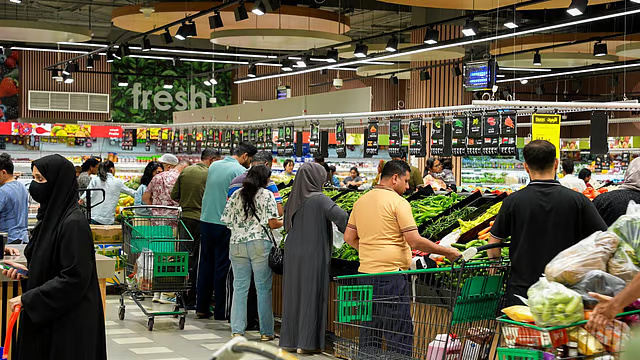
Dubai: The UAE’s food supply chain remains stable despite geopolitical pressures, with its strength rooted in a system designed to adapt—not just endure—during disruptions.
“The UAE’s food supply chain is structurally resilient, but that resilience is adaptive rather than absolute,” said Dr. Ahmed Al Hamadani, Associate Professor of Supply Chain Management at the University of Birmingham. “Its strength comes from the ability to reconfigure supply flows rather than relying on static self-sufficiency.”
This adaptive capability is reinforced by built-in structural buffers. Saif Yousif Khamis Al Naqbi, Group CEO of sahabschool.com and halarain.com, noted that the UAE’s resilience relies on “strategic reserves, diversified sourcing, and world-class logistics,” highlighting that the country maintains roughly six months of strategic stock for essential goods.
He explained that the real pressure point evolves over time: “The challenge moves from ‘Do we have food?’ to ‘How costly and efficiently can we continue replenishing it?’”
This distinction is becoming increasingly important as pressures on critical trade routes, such as the Strait of Hormuz, force supply chains to shift from efficiency-focused models to risk-managed operations.
In recent weeks, Gulf importers have rerouted cargo through Fujairah, Khor Fakkan, and Sohar, while also utilizing Red Sea gateways and land-sea corridors. These alternative routes keep goods flowing, but come with higher costs, tighter capacity, and increased coordination requirements.
The system continues to operate effectively, though at rising operational costs that may eventually be reflected in consumer prices.
Overall, the UAE’s food supply chain is not only resilient—it is becoming increasingly adaptive, coordinated, and strategically governed. This combination underpins practical food security: not by eliminating risk, but by building the capability to anticipate, absorb, and reconfigure in response to disruption, ensuring continuity even during sustained global challenges.
— Dr. Ahmed Al Hamadani, Associate Professor of Supply Chain Management and Program Director, MSc Supply Chain Management, University of Birmingham
Retailers execute the shift in real time
This adaptive model is visible across supermarket shelves in the UAE, where retailers are adjusting sourcing and logistics in real time without noticeable disruption for shoppers. The rerouting strategy leverages existing trade corridors and established supplier relationships.
“In the near term, the UAE is most likely to rely more heavily on suppliers and corridors it already knows well, rather than creating entirely new ones,” said Saif Yousif Khamis Al Naqbi, pointing to Europe, India, Brazil, the United States, and Saudi Arabia as core supply bases.
Oman’s Sohar port is emerging as a critical bypass route when pressure builds within the Gulf, while India remains central to sustaining food security flows.
“Across Carrefour’s network in the UAE, operations continue as normal, with stores open, shelves well stocked, and supply chains running as planned,” said Ahmed Galal Ismail, CEO of Majid Al Futtaim Holding, which operates Carrefour in the UAE.
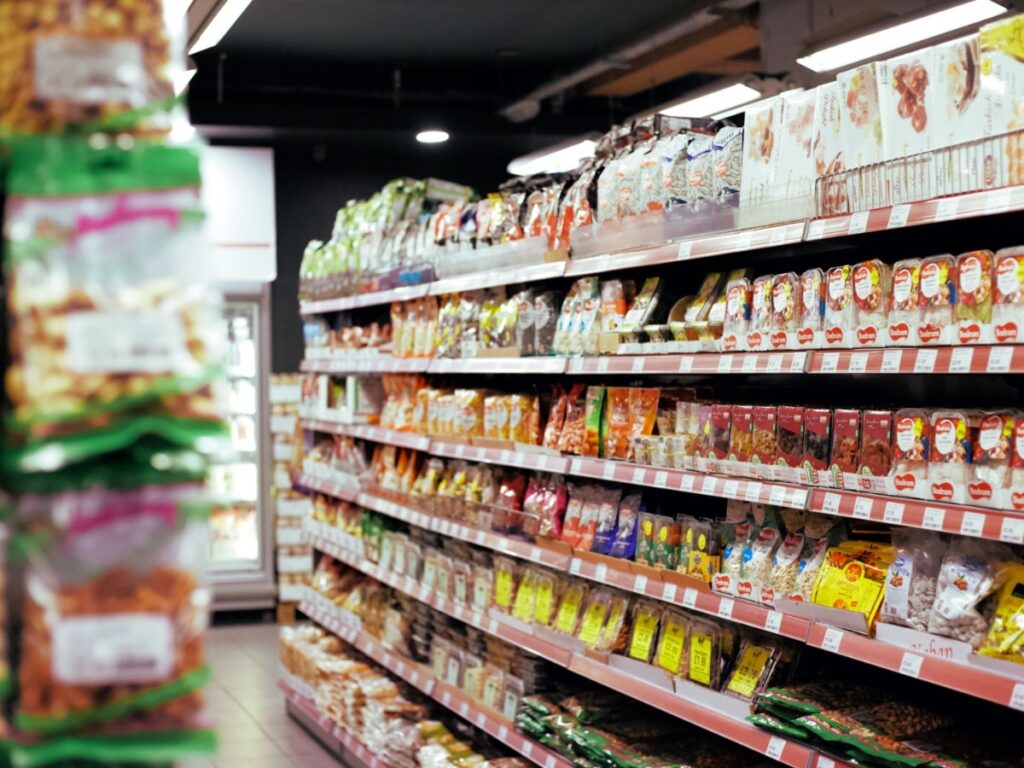
Diversified sourcing strengthens supply resilience
“From our operational perspective, we maintain strong sourcing partnerships across Europe, the UK, Australia, South Africa, India, Sri Lanka, Southeast Asia, and other key markets,” said Saifee Rupawala, CEO of Lulu Retail. “Our supply chain is inherently diversified, with roughly 40% of goods transported by sea, 20% by air, 20% by land, and 20% sourced locally. This structure enables us to quickly reroute supplies when needed.”
He added, “Our supply chain is built on diversified sourcing, strong partnerships, and continuous replenishment rather than static stockpiling. This allows us to respond swiftly by increasing replenishment cycles and adjusting sourcing as necessary.”
This capacity to rebalance supply is reinforced by years of investment in regional and local sourcing, bringing supply lines closer to the market and reducing reliance on single routes.
Lulu Retail operates on a similar model, sourcing from more than 40 countries across multiple transport modes to ensure continuity and resilience.
“Even if critical corridors like the Strait of Hormuz face prolonged pressure, we can rebalance supply through alternative shipping routes, air cargo, and regional land transport,” said Saifee Rupawala, CEO of Lulu Retail.
The company’s diversified mix of sea, air, land, and local sourcing allows rapid rerouting of shipments, with chartered cargo flights and vessels already deployed for essential and perishable items.
Infrastructure absorbs the shock
The UAE’s logistics backbone plays a key role in this resilience, enabling large volumes of goods to be redirected without affecting availability.
This capability is supported by deep infrastructure: Jebel Ali handled around 15.55 million TEU in 2025, Khalifa Port’s container capacity reached 9.6 million TEU, and Fujairah provides an additional layer of resilience with grain storage located outside the Strait of Hormuz.
Port redundancy and multi-modal flexibility
Saif Yousif Khamis Al Naqbi noted that the UAE’s logistics system provides real shock absorption through port redundancy and multi-modal flexibility, though constraints can arise during prolonged disruptions.
“Smaller alternative ports cannot match the scale and fluidity of Jebel Ali, which introduces congestion risks,” he said, emphasizing that perishables and cold-chain cargo remain the most vulnerable segments.
Over the past three weeks, Lulu Retail alone moved more than 12,000 metric tonnes of essential food into the GCC, including over 7,000 metric tonnes into the UAE, demonstrating how the system can absorb sudden shifts in supply routes.
Perishables pose the biggest challenge
Challenges remain concentrated in perishables, where shorter shelf life demands faster movement and tighter coordination. Retailers are addressing this with increased use of air freight, strengthened cold-chain systems, and more precise demand forecasting.
Dr. Ahmed Al Hamadani noted that the UAE’s food system is designed to keep goods flowing, even when efficiency must be sacrificed. “Rerouting through alternative ports preserves continuity, but comes with higher costs and longer lead times,” he said.
The National Food Security Strategy 2051 provides the overarching framework, while initiatives such as Food Tech Valley, the “Plant the Emirates” programme, new grain facilities at Khalifa Port, and advanced logistics hubs in Dubai aim to strengthen resilience across production, storage, processing, and distribution.
Saif Yousif Khamis Al Naqbi, Group CEO of sahabschool.com and halarain.com, emphasized that the long-term direction is clear: reducing dependence on a narrow set of suppliers, expanding infrastructure outside chokepoints, and increasing domestic capabilities in areas where technology can offset geographic constraints.
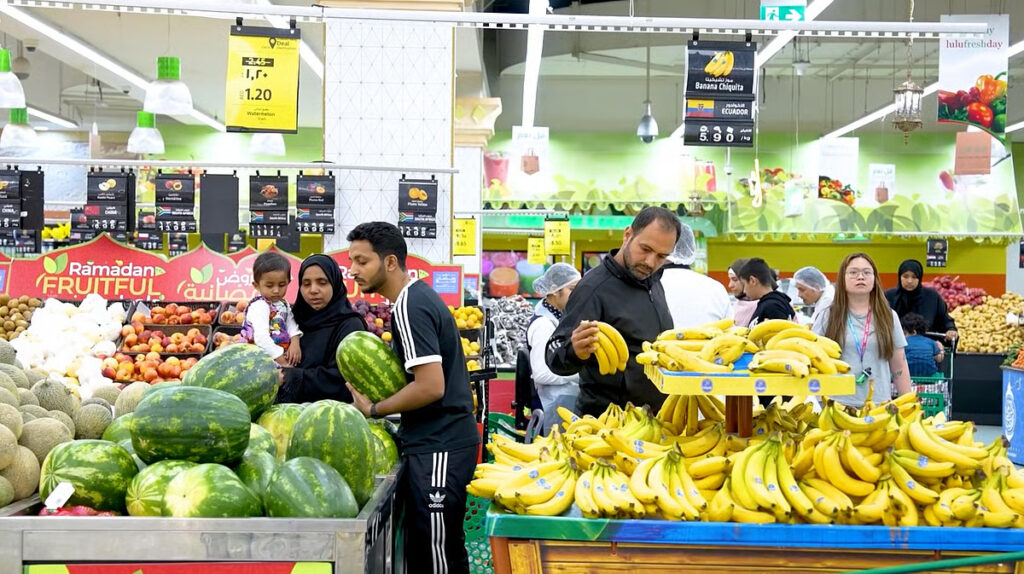
Prices are stable, but pressures are mounting
Consumers have not yet experienced significant price increases across most categories, as retailers and authorities work together to manage cost pressures.
“Our ongoing investment in local and regional supply chains, along with strong partnerships with producers and suppliers, positions us well to maintain consistent product availability while absorbing much of the cost impact for customers,” said Ahmed Galal Ismail, CEO of Majid Al Futtaim Holding.
Saifee Rupawala, CEO of Lulu Retail, added that no price increases have been necessary so far, thanks to long-term supplier agreements and efficient procurement strategies.
Nonetheless, underlying pressures are rising. Higher freight costs, longer transport routes, and global commodity trends are gradually feeding into the system, signaling potential challenges ahead.
“If disruption continues, the risk is not a shortage, but selective price inflation as the system shifts from efficiency to risk management,” said Dr. Ahmed Al Hamadani.
Global indicators are already showing rising cost pressures. The FAO Food Price Index increased in February 2026, with cereals, meat, and vegetable oils all climbing, while fertilizer costs have also risen, contributing to forward pricing risks.
Saif Yousif Khamis Al Naqbi noted that retail stability in the UAE reflects delayed transmission rather than an absence of pressure. “Retail stability in the UAE today does not mean global pressures disappear. It typically indicates that price pass-through is delayed, softened, or partially absorbed,” he explained.
He anticipates that initial price pressures will appear first in imported perishables, proteins, and edible oils, before gradually affecting other product categories.
Strong oversight keeps markets in check
Authorities have intensified monitoring to ensure stable supply and fair pricing across the market.
Oversight and adaptation keep UAE food markets stable
Between late February and mid-March, authorities carried out more than 8,000 inspection campaigns, issuing warnings and fines to prevent unjustified price increases. Officials are also monitoring daily stock levels of key food items and coordinating closely with suppliers and retailers.
Abdulla bin Touq Al Marri emphasized that protecting consumers remains a top priority, with enforcement and oversight scaled up to match the current environment.
The current situation is accelerating a broader transformation in the UAE’s approach to food security. Dr. Ahmed Al Hamadani explained that the country is moving away from a traditional import-dependent model toward a dynamic system built on diversification, local production, and coordinated governance.
“The UAE’s food supply chain is not only resilient; it is becoming increasingly adaptive, coordinated, and strategically governed,” he said.
Retailers are aligning with this shift by expanding local sourcing, strengthening regional supply chains, and investing in technology-driven logistics.
This transition is visible across policy and infrastructure: the UAE is expanding east-coast storage outside the Strait of Hormuz, reinforcing trade corridors with partners like India, and investing in food technology and controlled-environment agriculture.
“The UAE is moving away from simply importing more and hoping markets stay open,” Saif Yousif Khamis Al Naqbi said, highlighting initiatives such as Food Tech Valley and expanded grain facilities.
The result is a system that does not eliminate risk but manages it to keep goods available and markets stable. Pressure points remain—particularly around costs and operational complexity—but the core objective is clear: food continues to move, and shelves remain stocked.

