

The initiative, launched by the Community Development Authority, seeks to support families in Dubai in transitioning from temporary aid to sustainable income generation.
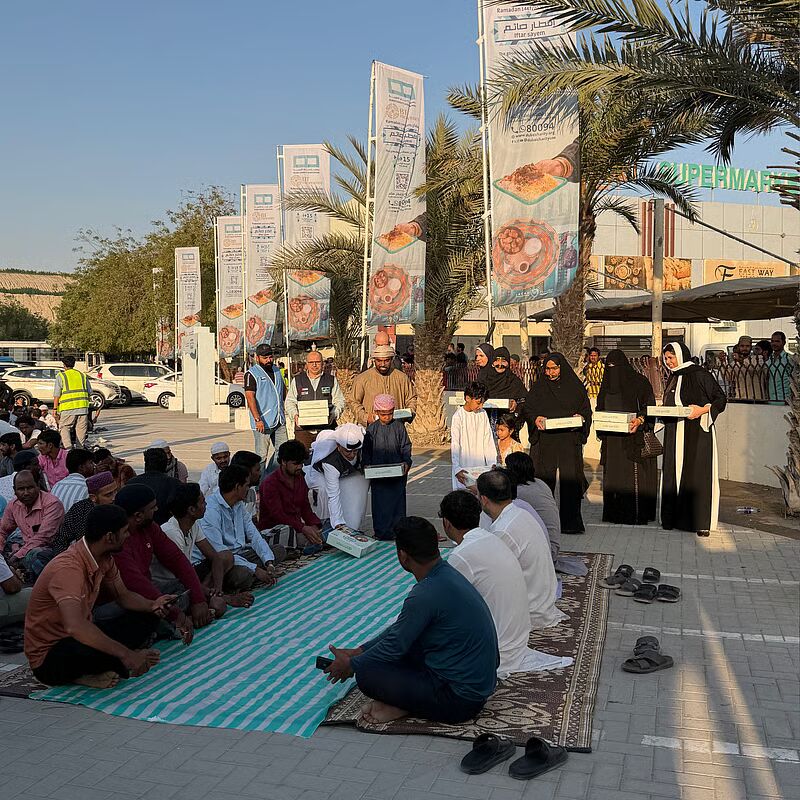
As sunset nears and kitchens fill with the rich aromas of biryani and Harees, six Emirati families are turning their homes into centers of generosity this Ramadan.
Yet, beyond the daily routine of preparing Iftar meals lies a deeper mission: to earn spiritual reward, serve the community, and embody the true spirit of compassion that defines the holy month.
Each day during Ramadan, these meals are distributed to fasting worshippers at Al Ghafar Mosque in Muhaisnah.
The initiative, launched by the Community Development Authority, forms part of Dubai’s broader empowerment strategy to help families transition from temporary assistance to sustainable income generation.
This year, six productive families are taking part, aiming to prepare and distribute nearly 13,000 Iftar meals throughout the holy month.
Obaid Al Shuweihi, Head of Financial Empowerment at the authority, emphasized that the programme is designed for long-term impact.
“We are not offering temporary aid,” he said. “We are building a sustainable economic pathway for families. Our goal is to move them from being recipients of support to active, productive contributors to society.”
He added, “Ramadan is the ideal time to reinforce this concept. Giving is multiplied during this month, and we want the impact to be multiplied as well—a reward for the fasting person and empowerment for the Emirati family.”
Al Shuweihi explained that the authority provides more than financial assistance. Families also receive guidance on food safety and quality standards, logistical and organisational support, connections to supply chains, and performance monitoring and evaluation.
“We see each family as a project with growth potential,” he said. “What begins as 70 meals a day can evolve into a recognised local brand if it is properly supported.”
He noted that the long-term vision includes project evaluation, capacity building, brand development, and improved market access beyond Ramadan.
“Our ultimate objective is for families to have a clear commercial identity and stable sales channels, enabling them to operate independently without relying on direct aid,” he added.
Hanifa Abdullah, one of the participating home chefs, prepares around 70 Iftar meals daily—totaling approximately 2,100 meals over the course of Ramadan—with the ability to increase production if needed. “My kitchen can handle more than 70 meals a day,” she said. “We are always ready to meet additional demand.”
Biryani and kabsa are among the most requested dishes. The greatest challenge, she noted, comes in the final hour before Maghrib.
“The time pressure before the call to prayer is intense,” she said. “We have to ensure fast distribution while maintaining high food quality and safety.” Beyond income, the project also eases household expenses during Ramadan, reducing financial pressure and improving stability.
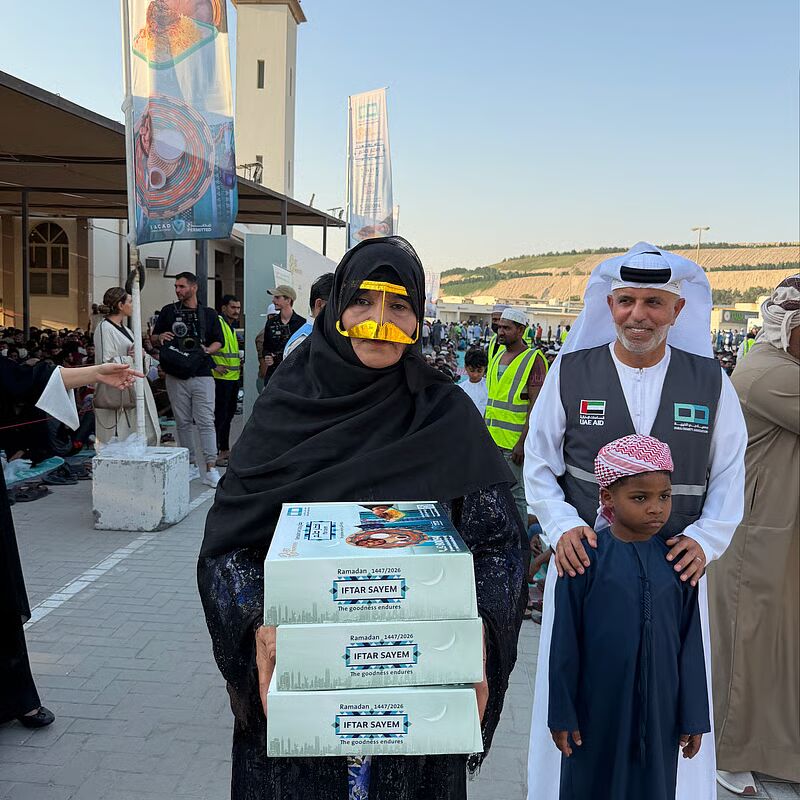
She makes it a point to prepare extra meals each day for delivery riders and petrol station workers.
“Hearing their sincere prayers at Iftar means everything to me,” she said. “It reminds me that what we are doing goes beyond business.”
Aisha Saeed Al Dhaheri is participating in the initiative for the third consecutive year, having been nominated by the Community Development Authority. She also prepares 70 meals daily, with luqaimat and harees among the most popular items.
“This is my third year in the initiative,” she said. “Each year the responsibility grows, but so does the sense of reward and fulfilment.”
Al Dhaheri prioritises completing the Iftar meals for the 70 beneficiaries before attending to her private kitchen orders. “We organise our priorities,” she explained. “We finish the ‘Iftar for the Fasting’ meals first, then I start working on my own kitchen orders.”
She added that Ramadan has become even more special at home because of the initiative. “The atmosphere is very family-oriented,” she said. “My children, my brother, and my sister all gather to help. Everyone is seeking reward, and that makes the effort lighter.”
Despite traffic congestion and high demand before Maghrib, she views it as a sign of trust. She recalled an emotional memory of an elderly neighbour who instructed her children to order daily Iftar from “Um Khaled Popular Kitchen” until she passed away.
“That moment stayed with me,” Al Dhaheri said. “Food is not just a meal; it is trust and connection.” Her kitchen operates year-round, and she hopes to open a restaurant in the future. “This initiative gives me the push I need to achieve that dream,” she added.
Beyond Ramadan
According to the Community Development Authority, the initiative generates both economic and social impact by providing direct income, developing practical management and marketing skills, boosting family confidence, and fostering a culture of work among children.
“Family stability begins with financial independence,” said Obaid Al Shuweihi. “When a family has a sustainable source of income, it builds a more secure future for the next generation.”

