

Everything You Need to Know for Safe and Smooth Driving on UAE Roads During Ramadan
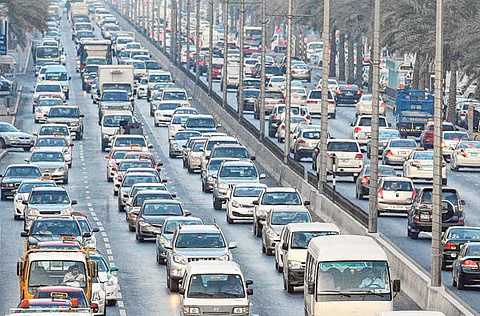
Dubai: Today marks the first day of Ramadan in the UAE, following confirmation by the official moon-sighting committee that the holy month begins on Wednesday, February 18. Ramadan brings one of the most notable shifts in daily traffic patterns of the year. Over the next 30 days, roads across Dubai, Abu Dhabi, Sharjah, and beyond will follow a new rhythm shaped by pre-dawn Suhoor meals, shortened working hours, the Iftar break, and the mass movement of residents adjusting their routines for the Holy Month.
Whether commuting on Sheikh Zayed Road or navigating the narrow streets of Deira, knowing when and where traffic peaks during Ramadan can save drivers hours on the road.
What Changes About Traffic During Ramadan?
To understand traffic patterns during Ramadan, it’s important to consider how daily routines shift. Most government and private sector working hours are reduced by about two hours, compressing the morning rush into a shorter timeframe.
Fasting residents also conserve energy during the day, postponing many trips that would normally occur in the afternoon until after Iftar. Around sunset—typically between 6:15 and 6:30 pm in late February and March—roads experience a surge in traffic as millions of residents move simultaneously, creating one of the busiest windows on UAE roads all year.
Google’s historical mobility data for the UAE during Ramadan shows a consistent yearly pattern: road usage between 5:45 pm and 7:00 pm surges to levels that match—or often exceed—the peak rush hours seen in other months. Morning traffic, while still busy, tends to be lighter than usual due to reduced working hours and the fact that many fasting residents leave for work later and drive more cautiously.
The data also highlights a secondary spike after 9:00 pm, as families travel for Taraweeh prayers, late-night meals, and visits to Ramadan Night Markets, keeping roads busier than normal well past midnight.
Morning Rush: Calmer but Still Busy
During Ramadan, the morning rush in the UAE generally occurs between 8:30 am and 10:30 am, about an hour later than the usual non-Ramadan peak of 7:30–9:00 am. This shift results from reduced working hours, with many offices and government departments starting at 9:00 am instead of 8:00 am.
“Calmer” is relative, though. Major arterial roads still face significant congestion, and the compressed timeframe means traffic that would normally spread over two hours is squeezed into one. Google Maps data historically shows Sheikh Zayed Road (E11) between Jebel Ali and Dubai World Trade Centre as the most congested stretch during Ramadan mornings, with average speeds dropping to 20–30 km/h between interchanges.
Drivers using Google Maps or Waze during this period will likely see the E11 flagged in red or dark orange, especially around the Mall of the Emirates, Safa Park, and Business Bay interchanges.
In Abu Dhabi, the Sheikh Zayed Bin Sultan Street (E10/Airport Road) and Al Khaleej Al Arabi Street (formerly Defence Road) are the main morning bottlenecks, with traffic building from Musaffah toward the city centre and from Khalifa City toward the airport interchange.
Sharjah Morning Traffic
Sharjah, which feeds a large volume of commuters into Dubai each morning, sees heavy congestion on the E311 (Emirates Road) and E11 (Al Wahda Road), consistently highlighted in red on Google Maps and Waze from around 8:00 am onwards. The Sharjah-Dubai border at Al Nahda and the Mirdif entry points remain persistent chokepoints throughout Ramadan.
The Iftar Rush: The Most Congested Window of Ramadan
The period drivers need to plan around most is the 45 minutes before Iftar, the sunset breaking of the fast. Historical data from Google and Waze shows this window consistently produces the worst congestion and highest rate of traffic incidents during the month.
In 2026, Iftar falls between approximately 6:10 pm in mid-February and 6:40 pm by mid-March, gradually shifting later each day. During the 30–45 minutes leading up to Iftar, roads across the UAE experience near-chaotic conditions: residents rush home for meals with family, restaurants fill quickly, and delivery vehicles compete for space on already crowded streets. Waze data historically records speeds on major Dubai highways dropping to near-standstill levels, with average travel times on stretches of Sheikh Zayed Road and Al Khail Road two to three times longer than usual.
Dubai’s Busiest Roads During Iftar and Alternatives
Sheikh Zayed Road (E11) becomes extremely congested in both directions between roughly 5:30 pm and 7:15 pm. Northbound traffic toward Downtown Dubai and the Marina crawls through every interchange from Jebel Ali to DIFC, while southbound drivers heading to Jebel Ali and Dubai South face similar delays.
Alternate Routes During Iftar
Waze and Google Maps consistently highlight Al Khail Road (E44) as the primary alternative to Sheikh Zayed Road (E11) during the Iftar peak. Running parallel to E11 through central Dubai, Al Khail Road provides access to Business Bay, Al Quoz, and southern suburbs with significantly less congestion, though traffic still builds closer to Iftar. For those traveling to or from Dubai Marina and JBR, the Hessa Street (D61) connector and Sheikh Mohammed Bin Zayed Road (E311) via Barsha Heights offer viable detours.
Even Al Khail Road can get congested during Iftar, particularly near the Dubai Hills Mall and Business Bay interchanges. Waze users are advised to exit earlier and use Al Asayel Street or Al Meydan Road to reach central Dubai more efficiently.
Local roads like Umm Suqeim Road (D63) and Al Wasl Road (D92), popular through Jumeirah and Umm Suqeim, also fill quickly during this time as residents head to family homes and restaurants. The internal Jumeirah road network, including Latimer Road, can become gridlocked with both residential and delivery traffic.
Meanwhile, Al Ittihad Road (E11) through Sharjah and Deira, one of the UAE’s oldest and busiest highways, is heavily impacted during Iftar. The stretch between Clock Tower Roundabout in Deira and the Sharjah border often turns deep red on Google Maps as early as 5:00 pm, more than an hour before sunset.
Alternate Routes for Sharjah-Dubai and Abu Dhabi During Iftar
For Sharjah-Dubai commuters, the E311 (Emirates Road) is the recommended diversion, linking Sharjah to Dubai via Mirdif and Dubai Silicon Oasis. Although slightly longer in distance, journey times are often faster during the Iftar peak. Waze users can also take E611 (Al Reem Highway), which bypasses much of the congestion around Deira and runs through Ras Al Khor before connecting to Al Khail Road and Downtown Dubai.
Local roads such as Salah Al Din Road and Al Maktoum Road in Deira and Bur Dubai carry heavy volumes during Iftar, as residents from older neighbourhoods rush home. Al Rebat Street and Abu Baker Al Siddique Road are suggested as alternate corridors on Waze but also experience similar traffic spikes.
In Abu Dhabi, the Sheikh Zayed Bridge and Maqta Bridge, which connect Abu Dhabi Island to the mainland, are notorious Iftar bottlenecks. Sheikh Khalifa Bin Zayed Street through the city centre also becomes heavily congested as residents head to mosques, homes, and restaurants.
Alternate routes include Mohammed Bin Zayed Road (E20) and the Musaffah Bridge corridor, providing smoother access to the island. On the island itself, Corniche Road and Hamdan Street (E10) typically experience lighter traffic than Sheikh Zayed Street during the Iftar peak, offering faster travel for locals.
The Post-Iftar Surge: 8:30 pm to Midnight
After Iftar, a second wave of traffic builds on UAE roads from around 8:30 pm onward. This period reflects the unique Ramadan rhythm: shopping malls, souks, Ramadan Night Markets, and restaurants fill up as families head out for the evening. While lighter than the pre-Iftar rush, traffic remains noticeably heavier than post-8:00 pm periods in non-Ramadan months.
Historical Google data highlights Mall of the Emirates, Dubai Mall, Ibn Battuta Mall, and City Centre Mirdif as hotspots, with substantial congestion on approach roads between 9:00 pm and 11:00 pm. Key arteries like Financial Centre Road (D71) near Dubai Mall and Al Sufouh Road (D94) near Mall of the Emirates are consistently marked as heavily congested.
Taraweeh prayers add another pulse of traffic, around 9:00 pm and again between 10:30–11:00 pm, as worshippers travel to and from mosques. Roads near major mosques—Jumeirah Mosque, Al Farooq Omar Bin Al Khattab Mosque (Al Safa), and Sheikh Zayed Grand Mosque in Abu Dhabi—experience localized but intense congestion. Waze users often report slowdowns on Al Wasl Road, Al Mina Road, and the Sheikh Rashid Road corridor during post-Taraweeh periods.
Pre-Dawn Suhoor Traffic
Although less discussed, the pre-dawn Suhoor period generates its own traffic pattern. Between 2:30 am and 4:30 am, roads near 24-hour restaurants, drive-throughs, and late-night eateries see increased activity. Areas such as Al Dhiyafah Road (Satwa), the Karama restaurant district, Al Barsha, and Jumeirah Beach Road experience elevated traffic as residents head out for late-night Suhoor meals.
Late-Night and Pre-Dawn Traffic During Ramadan
While pre-dawn Suhoor traffic is not a traditional congestion issue, roads that are usually empty around 3:00 am see noticeable activity during Ramadan. Drivers and late-night shift workers should be aware of these unusual traffic volumes when planning journeys.
Using Google Maps and Waze Effectively During Ramadan
Both Google Maps and Waze are invaluable tools for navigating UAE roads during Ramadan, especially when used proactively:
- Google Maps: Utilises historical traffic patterns. Use the ‘Leave at’ or ‘Depart at’ feature to enter your planned departure time. Google predicts journey times and often suggests leaving 20–30 minutes earlier or later to avoid peak congestion. The ‘Live traffic’ layer is particularly useful during Iftar; red and dark orange overlays highlight the worst sections.
- Waze: Relies heavily on real-time, crowd-sourced reports. UAE users actively update accidents, police checks, closures, and sudden congestion. During the Iftar rush, Waze can identify alternative routes faster than Google Maps, thanks to its community-driven alerts. The ‘Avoid highways’ setting is helpful for short trips in Dubai, favouring less congested surface roads over busy highways.
Practical Strategies to Avoid Ramadan Traffic
- Timing is key:
- For Iftar, aim to be home before 5:15 pm or delay travel until after 7:30 pm to avoid peak congestion. Roads typically clear within 45–60 minutes after Iftar.
- Morning commute: leaving before 8:00 am gets ahead of the main rush (peaking 9:00–10:30 am).
- Afternoon travel: leaving the office before 4:30 pm or after 7:30 pm avoids Iftar traffic.
- Route awareness:
- E311 (Sheikh Mohammed Bin Zayed Road) between Abu Dhabi and Dubai peaks 5:30–7:00 pm, especially near Dubai Investments Park, Dubai Silicon Oasis, and Nad Al Sheba.
- E66 (Al Ain Road) is a longer but less congested alternative for Abu Dhabi–Dubai travel.
- Alternative transport:
- Carpooling helps reduce the number of vehicles on the road.
- Public transport like the Dubai Metro (Red and Green Lines) and Abu Dhabi buses run extended hours during Ramadan, providing a congestion-proof option, particularly during the Iftar peak.
Key Times to Avoid on UAE Roads: Ramadan 2026
| Period | Location | Notes |
|---|---|---|
| Morning Rush | 8:30 am–10:30 am (Dubai, Sharjah), 9:00 am–10:30 am (Abu Dhabi) | Compressed rush due to reduced working hours |
| Pre-Iftar & Iftar | 5:00 pm–7:15 pm | Single worst congestion window; plan or avoid travel |
| Post-Taraweeh Surge | 9:00 pm–11:30 pm | Lighter than Iftar but busier than usual |
| Pre-Suhoor Run | 2:30 am–4:30 am | Localised near restaurants and food hubs |
Safety Reminder
Ramadan is a time of patience and community, which extends to the roads. Authorities, including the Dubai Roads and Transport Authority (RTA) and Abu Dhabi Police, advise drivers to:
- Allow extra travel time
- Avoid tailgating
- Exercise extra care during the Iftar window when fasting drivers may be fatigued, distracted, or rushing
Following these guidelines ensures safer journeys during the Holy Month.

