

In spite of global trade barriers and logistical disruptions, the UAE posted unprecedented trade milestones.
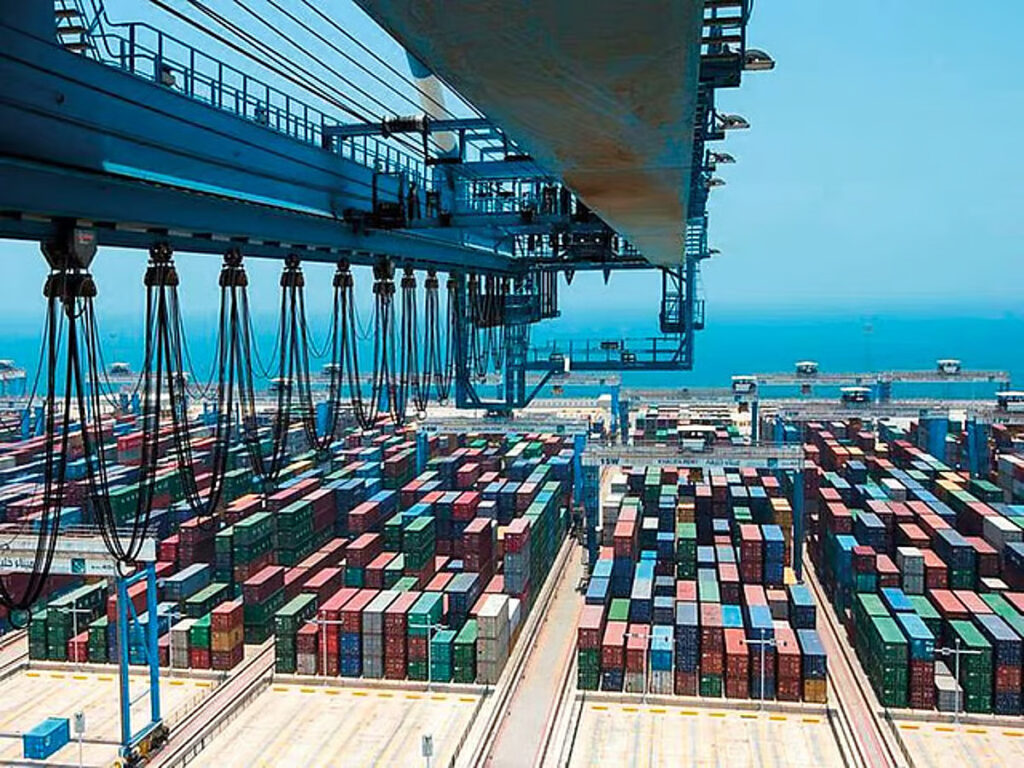
Trade does not always command headlines. The exchange of goods and services between nations is such an integral — and indispensable — part of the global economy that it tends to attract attention only when it falters, or slows to the extent that consumers, retailers, and manufacturers begin to feel the strain.
Such disruptions have occurred only a few times over the past three decades. The Asian financial crisis of the late 1990s, the global financial crisis ten years later, and the Covid-19 supply-chain breakdowns beginning in 2020 each triggered contractions in global trade of at least 10 per cent. Empty shelves and delayed orders during those periods served as stark reminders that modern life depends heavily on resources, manufactured goods, and agricultural products sourced from around the world.
While 2025 has not witnessed a breakdown on that scale, it has nonetheless been a year in which trade returned to the headlines for troubling reasons. Tariffs and trade disputes flared between major economies, placing pressure on some of the global economy’s most important drivers.
According to the World Trade Organization (WTO), the value of imports impacted by newly imposed tariffs between October 2024 and October 2025 climbed to $2.64 trillion — a fourfold increase compared with the same period a year earlier and the highest level recorded in more than 15 years of WTO monitoring.
Transit challenges
At the same time, disruptions to shipping through both the Suez Canal and the Panama Canal — albeit for different reasons — have forced ocean-going cargo vessels to take longer and more expensive routes, further straining the global trading system.
For trade-reliant nations such as the United Arab Emirates, which has built its economic strength on the seamless flow of goods through its ports, this has been far from a favourable macroeconomic backdrop.
Yet, by almost every measure, 2025 has been the most successful year on record for the United Arab Emirates’ foreign trade. Rather than merely navigating global headwinds, the country rose above them — leveraging forward-looking policy, strategic partnerships and private-sector dynamism to deliver new highs across every non-oil trade category and reaffirm its position at the centre of global commerce.
Record non-oil foreign trade
In 2025, the value of the United Arab Emirates’ non-oil foreign trade climbed to Dh3.8 trillion. That marks an increase of nearly 27 per cent compared with 2024 and places the country within striking distance of its Dh4 trillion target for 2031 — fully six years ahead of schedule.
Further highlighting this momentum, non-oil foreign trade in both the third and fourth quarters surpassed Dh1 trillion, the first and second occasions in the nation’s history that this quarterly milestone has been achieved.
Perhaps most notably, the United Arab Emirates’ non-oil exports surged to Dh814 billion in 2025 — a 45.5 per cent increase over 2024 and roughly three and a half times the level recorded in 2019.
Non-oil exports now represent 21.6 per cent of total non-oil trade, the highest share ever achieved. This milestone stands as a powerful indicator of the growing productivity, diversification and global competitiveness of the nation’s industrial sector.
Comprehensive Economic Partnership Agreements
A major catalyst behind these gains has been the Comprehensive Economic Partnership Agreement programme (CEPA) programme, which has been forging trade agreements with key economies worldwide since 2022.
In 2025, CEPAs with Australia, Malaysia, New Zealand, Jordan, Serbia, Costa Rica, Chile and Mauritius entered into force. These agreements have expanded the pool of global customers accessible to UAE exporters on preferential terms, while strengthening critical supply chains between the UAE and key markets in South America and the Asia-Pacific region.
We have also continued to broaden our CEPA network. In 2025, the United Arab Emirates deepened its engagement with Eastern Europe and Eurasia, signing agreements with Ukraine and Azerbaijan, as well as with the member states of the Eurasian Economic Union — Russia, Belarus, Kazakhstan, Kyrgyzstan and Armenia.
At the same time, the UAE strengthened its presence in resource-rich Africa, concluding CEPAs with Angola, Republic of the Congo, Central African Republic, Kenya and Nigeria. These agreements are set to unlock opportunities across critical sectors including agriculture, renewable energy, mining and logistics.
Rejuvenated trading landscape
What began as a year defined by disruption has, in part due to new trade blocs and expanding networks such as ours, ended with a reinvigorated global trading environment. Data released in December by the United Nations Conference on Trade and Development confirms that, despite geopolitical tensions and rising costs, global trade is projected to reach a record $35 trillion by year-end — driven largely by intra-regional trade in Asia and strengthening demand from Africa.
South–South trade, encompassing the Middle East, has grown by 8 per cent, underscoring the accelerating shift toward diversified and regionally integrated trade corridors.
This marks the new direction of travel for trade — and for the global economy as a whole. Guided by the vision of President His Highness Sheikh Mohamed bin Zayed Al Nahyan, the United Arab Emirates is positioned to play a central role in shaping it.
Global trade leadership
For the UAE, trade is not merely the movement of cargo. It is connectivity — the global partnerships that create opportunity for our manufacturers, service providers and investors. Trade strengthens industrial output, enhances competitiveness, drives innovation and advances economic diversification, not only at home but also for ambitious emerging economies worldwide.
Recognising trade’s catalytic power, the UAE continues to champion multilateral solutions to modern supply-chain challenges. In September, it became a founding member of the Future Investment and Trade Partnership (FIT-P), an agile coalition of nations committed to developing forward-looking trade policies, facilitating investment and generating high-quality employment. The group’s inaugural meeting in Singapore in November established an agenda focused on accelerating technological adoption and advocating for open, rules-based trade.
Ministry of Foreign Trade
Finally, 2025 marked a milestone with the announcement by His Highness Sheikh Mohammed bin Rashid Al Maktoum, Vice-President and Prime Minister of the UAE and Ruler of Dubai, of the creation of the Ministry of Foreign Trade. The ministry’s mission is to develop new trade corridors with the markets that will drive future growth, transforming today’s volatility into long-term stability and certainty.
The establishment of this ministry underscores trade’s central role in national development and its function as a diplomatic bridge to like-minded, expansion-focused nations. While trade volumes and CEPA agreements remain key performance indicators, GDP continues to serve as the ultimate measure of success.
If the past 54 years have shown us anything, it is that trade is not merely one component of economic performance — it is the engine driving it. The achievements of 2025 stand as a timely and powerful reminder of that truth.

