

Retailers say tighter supply and higher freight costs have driven prices up by around 20%.
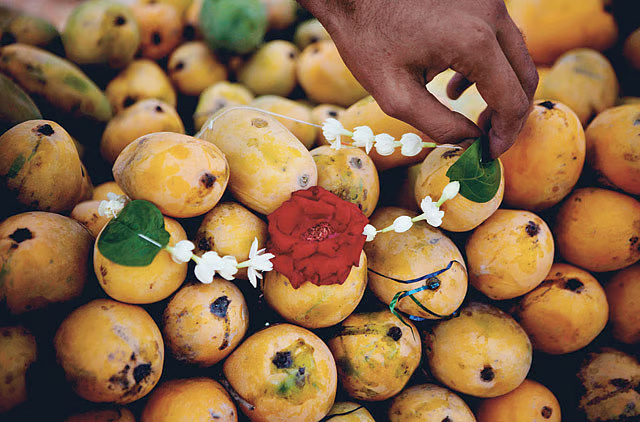
Dubai: Pakistani mangoes are more expensive for UAE shoppers this summer, but retailers say demand remains strong as residents continue to purchase one of the season’s most popular fruits despite tighter supply and rising freight costs.
Retailers say prices are roughly 20% higher this season compared with previous years, with premium varieties also becoming more expensive due to air-freight imports into the UAE.
They add that supply has been tighter following a delayed season start and lower crop yields in Pakistan, although demand from UAE consumers has continued to grow.
Gul Raiz Yaseen, Director of Pakistan Supermarket LLC, said demand for Pakistani mangoes has been rising each year, with the fruit now drawing customers from multiple nationalities.
“Every year, demand increases a lot,” he said. “Earlier, Pakistani customers used to buy them regularly, but now people from other nationalities also come to us because they want Pakistani mangoes.”
Prices move higher
At Pakistan Supermarket, a 3kg to 3.5kg box of Sindhri mangoes that previously sold for around Dh40 to Dh45 is now priced at about Dh50. Premium varieties such as Chaunsa and Anwar Ratol, which were priced at roughly Dh60 to Dh65 last year, are now closer to Dh70 per box.
The increase is largely attributed to higher air freight costs and difficulties in securing cargo space at the start of the season. Yaseen noted that freight charges have risen from around PKR350 per kg to nearly PKR500 per kg, increasing overall import costs for retailers.
He added that prices had remained relatively stable over the past two to three years, but have edged up this season due to logistics pressures. While flight availability has since normalised, freight costs remain elevated.
“That is why freight charges have increased,” he said. “At the start of the season, flights were also limited, but now the situation has gone back to normal. The freight charges, however, remain higher.”
Despite higher prices, demand has remained strong, with customers continuing to place orders for home delivery, office gifting, and family boxes.
Brian Ballinger, Head of Commercial at Choithrams, said the Pakistani mango season began later than usual this year, starting in the first week of June.
“While overall crop volumes are down by around 20–30%, mangoes are reaching the UAE through sea shipments, and premium-quality produce is being brought in by air,” he said.
Ballinger added that shoppers may notice tighter availability this summer, with prices around 20% higher than previous years due to reduced supply and a delayed harvest.
Demand, however, has remained steady. Ballinger said Pakistani mangoes are still selling well, though the delayed season start has constrained overall supply.
Why shoppers keep buying
Pakistani mangoes are typically sourced first from Sindh at the start of the season, followed by Punjab as the harvest progresses. Popular varieties include Sindhri, Chaunsa, and Anwar Ratol, each offering a distinct flavour and texture profile.
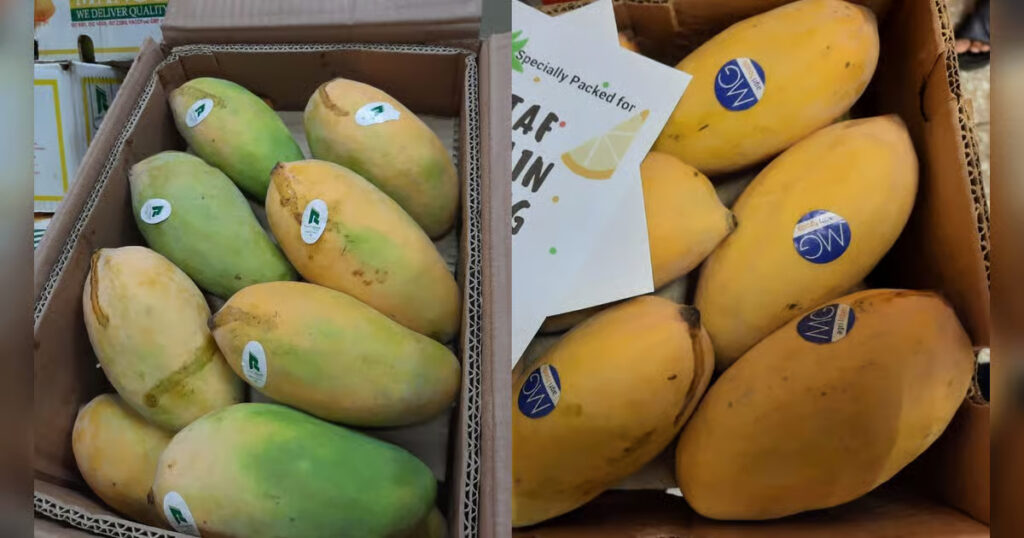
Sindhri, grown mainly in Sindh, is known for its large oval shape, sweetness, aroma, and slightly tangy taste. Chaunsa, commonly associated with Punjab, is prized for its rich sweetness, strong aroma, and soft, fibreless flesh. Anwar Ratol is smaller and yellow, known for its intense sweetness and smooth, fibre-free texture.
Ballinger added that shoppers may notice tighter availability this season, with overall supply down by around 20–30% and prices about 20% higher than previous years.
Yaseen said the variety of mangoes is one of the key reasons customers return each season.
“Each variety has its own taste, shape and quality,” he said. “Sindhri, Chaunsa and Anwar Ratol all have different flavours, and each mango is unique in its own way.”
At Choithrams, Sindhri remains the most popular Pakistani mango variety among UAE consumers, followed by Chaunsa.
Air shipments support premium demand
Retailers added that premium Pakistani mangoes are primarily imported into the UAE by air, given their limited shelf life and the need to preserve quality.
Yaseen said Pakistan Supermarket has been importing Pakistani mangoes by air for more than a decade, with shipments arriving from Karachi, Lahore, and Multan. Air cargo remains the main channel for bringing a wider range of varieties into the UAE, while sea shipments are limited to fewer types.
“The different varieties can only be shipped by air,” he said.
Pakistan Supermarket imports around 40,000kg to 45,000kg of mangoes each week across its 10 supermarkets and online platforms, according to Yaseen. He added that demand could increase to as much as 50,000kg per week if prices were more favourable for customers.
Choithrams said its established supplier network in Pakistan has helped it secure access to premium-quality mangoes despite wider industry challenges.
“Pakistani mangoes are one of the top favourites in our summer fruit category,” Ballinger said. “Their arrival later in the season makes them especially relevant, as they help sustain customer demand after the Indian Alphonso and Banganapalli seasons come to an end in mid-June.”
Retailers added that shoppers have continued buying despite higher prices, supported by the strong seasonal appeal of Pakistani mangoes and the tradition of gifting boxes to friends, family, and colleagues.
Yaseen said the season is now stabilising after a challenging start, though next year’s pricing will depend heavily on freight costs.
“I hope prices do not go much higher next year,” he said. “It will depend on freight and other costs.”
‘A gap of around 10–15 days…’
For importers, disruptions began almost as soon as the season should have started.
“There has been a gap of around 10 to 15 days, which is huge in our business,” said Ali Akram, managing partner at Nahel Vegetables & Fruits Trading LLC. “Usually, the mango season starts by the end of May. Last year, it started by the end of May, but this year the first mangoes arrived only around June 7 or 8.”
The delays have been especially evident for Chaunsa, one of Pakistan’s most prized mango varieties.
Even Sindhri, typically the first Pakistani mango to arrive each season, was also affected. Akram said that when Chaunsa shipments were due, shipping companies were not accepting cargo bookings, forcing importers to switch to air freight, which cost more than double the usual rate. As a result, customers have felt the impact, paying almost twice what they did last year.
The shipping delays also impacted fruit quality, Akram noted, as mangoes are highly sensitive to transit time. “Every fruit, especially mango, is very heat sensitive. When we used to ship from Pakistan through ocean cargo, it would usually arrive within four to five days at most, so our planning was always clear,” he said.
This year, however, vessels were rerouted before reaching Jebel Ali, making delivery timelines far less predictable.
Initially, some importers relied on air freight to maintain supply, but the costs quickly became unsustainable. “We did some air cargo shipments early in the season, but once ocean cargo started, air cargo was no longer viable for most mangoes. Air cargo has always been much more expensive compared with ocean cargo,” Akram added.
He broke it down, saying that at the start of last season, a 5kg box of Sindhri mangoes cost around Dh35 to Dh36. This year, the same box was sold for about Dh70 to Dh75—more than double the price.
Once ocean freight resumed, prices began to ease, although they remain higher than last year’s levels. “I would say around 99% of the remaining mangoes are now coming through ocean cargo,” he said.
Longer journeys affect fruit quality
The shipping disruptions have also affected fruit quality, Akram noted, as mangoes are especially sensitive to time in transit.
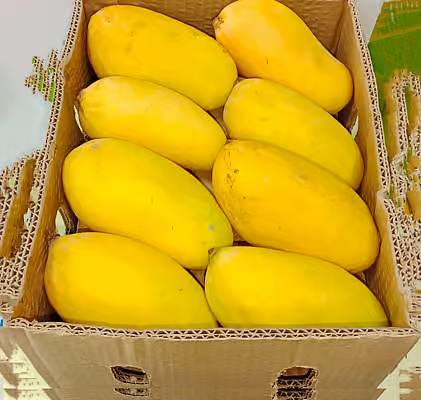
“Every fruit, especially mango, is very heat sensitive. When we used to ship from Pakistan through ocean cargo, it would usually arrive within four to five days at most, so our planning was always clear,” he said.
This year, vessels have taken longer and more unpredictable routes. With Jebel Ali Port not fully operational at times, shipments were first diverted to Fujairah or Khor Fakkan before being moved on to Jebel Ali for release.
“A journey that used to take three to five days has now become unpredictable,” he said.
Some containers are now taking 15 to 20 days to reach the market. While products like Pakistani potatoes can withstand up to 30 days in transit, mangoes are far more perishable. Once they begin to change colour, they often deteriorate from within, making timely delivery essential.
“This year, customers can see a difference in quality because we cannot predict exactly when shipments will arrive.”
Retailers adapt to keep shelves stocked
Instead of waiting for specific varieties, retailers have focused on maintaining availability. “The luxury of choosing a specific variety is not there this season,” Akram said. Rather than holding out for preferred types, suppliers are sourcing whatever meets acceptable quality standards to keep shelves stocked.
At Careem Quik, advance planning has helped reduce disruption.
“The broader industry has faced logistics and freight pressures this season, driven largely by the regional geopolitical situation; it’s a reality that has touched supply chains across fresh produce globally,” said Hanaa Mallak, General Manager of Groceries – UAE at Careem Quik.
Despite this, she said the team was well prepared through year-round supplier coordination. “We work closely with our supplier partners throughout the year, not just at the start of the season, which means supply commitments were in place early. Customers shopping with us can expect strong availability of Pakistani mangoes this summer, and the quality coming in has been excellent.”
Mallak added that the retailer relies on long-term supplier relationships rather than reacting to short-term disruptions.
“The foundation is always relationships and planning. You can’t manage a category like mangoes reactively; the groundwork has to be laid months in advance with supplier partners who share the same standards and commitment.”
“Our global sourcing model also plays a significant role. By maintaining active sourcing relationships across India, Pakistan, Thailand, Vietnam, Colombia, and Brazil simultaneously, we’re never entirely dependent on a single origin.”
“Mangoes have a very strong pull in this market because the season is very short, around two to two and a half months. There is strong demand from Pakistani and Indian customers, and also from other nationalities…”
Higher prices fail to dent demand
Despite supply challenges and higher prices, demand has remained resilient.
“I have not seen a reduction in demand,” Akram said. “Mangoes have a very strong pull in this market because the season is very short, around two to two and a half months. There is strong demand from Pakistani and Indian customers, and also from other nationalities.”
He added that customers who bought last year are still purchasing with the same consistency and order value. Akram believes buyers are willing to pay more because Pakistani mangoes are available only for a short seasonal window.
As he explained, “Mangoes are like a luxury for Pakistani and Indian communities, and for many other nationalities as well. The purchasing patterns with fruits such as apples or bananas cannot be compared, as those are available throughout the year. Customers know that if apples or bananas are expensive this month, they can wait. With mangoes, they know the season will be over in one or two months.”
Careem Quik has observed a similar trend, with customers becoming more exploratory. “What we’ve seen is customers becoming more engaged and exploratory with the mango category, which is actually a positive trend.”
“There’s been some natural flexibility in purchasing, with customers exploring different pack sizes or origins, but demand for premium Pakistani varieties like Sindhri, Chaunsa, and Anwar Ratol has remained strong.”

