

Experts outline essential safety measures for stranded motorists and fellow drivers to help prevent similar accidents.
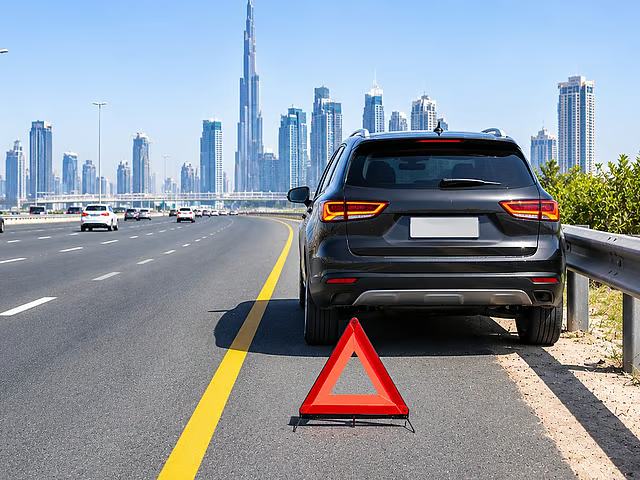
Dubai: Naifa Balkies Hameed was facing a situation that any motorist could encounter – a flat tyre. The 21-year-old final-year architecture student at Canadian University Dubai called her father, who, according to her uncle, advised her to seek roadside assistance. When he tried calling her again about five minutes later, there was no response.
She died on November 5 after being struck by a speeding vehicle on Al Khawaneej Street in the Al Rashidiya area. Her family said police informed them that she was standing behind her car when the vehicle hit her.
As her family, originally from Kerala in southern India, mourns her loss and warns against reckless driving, road safety experts say the tragedy highlights a critical lesson for every UAE motorist: drivers forced to stop on the roadside must take precautions to protect themselves, while approaching motorists must remain alert, reduce speed and maintain a safe distance.

What to do during a roadside emergency
Road safety expert Dr Mustafa Aldah, founder of Road Hero Academy, said such tragedies should serve as a wake-up call to educate motorists and prevent other families from experiencing similar losses.
If a vehicle breaks down or a motorist has to pull over because of a punctured or flat tyre, the first priority should be to move away from danger as quickly as possible, he said.
“Never stand between your vehicle and approaching traffic,” he told Gulf News. Motorists should also avoid turning their backs on oncoming traffic and move behind a safety barrier, if one is available.
“People often assume that the hard shoulder or the area beyond the road markings is safe. It is not. Drivers do not always respect those markings, and vehicles can enter these areas unexpectedly. Always keep an eye on approaching traffic and get away from the danger zone as quickly as possible,” he said.
Thomas Edelmann, founder of RoadSafetyUAE, also advised motorists to move their vehicles as far away from traffic as possible, guide passengers beyond the hard shoulder and road barriers, wear a high-visibility vest and switch on the hazard lights.
A warning triangle should be placed at least 50 metres behind the vehicle, taking extra care while doing so, he said. Motorists should then call for assistance and leave the technical work to professionals.
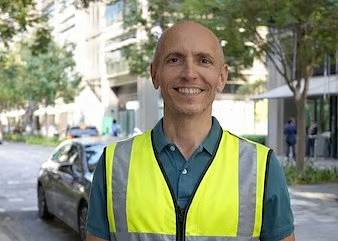
Dr Suzanne Accetta, CEO of First Driving Centre in Dubai, said drivers experiencing a tyre blowout should remain calm, avoid sudden braking or steering and gradually slow down before moving to a safe location.
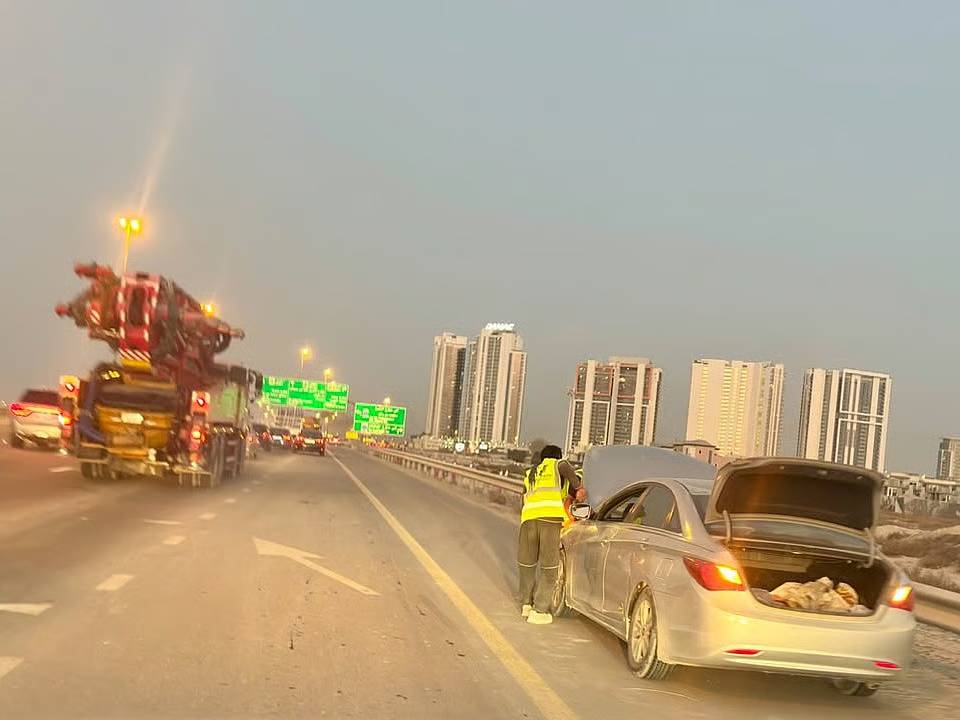
They should never attempt to change a tyre while exposed to moving traffic. If it is safe to leave the vehicle, occupants should exit through the door furthest from traffic. Otherwise, they should remain in a safe position and contact emergency services for instructions.
The experts also stressed the importance of exiting through the passenger-side door, where possible, and standing behind a safety barrier rather than remaining close to the vehicle.
What should approaching drivers do?
While stranded motorists must take precautions, approaching drivers also have a critical responsibility to prevent collisions.
Dr Accetta said motorists should remain alert, maintain a safe following distance, avoid mobile phone distractions and reduce speed when approaching a stationary or distressed vehicle. They should also avoid sudden lane changes and give roadside emergencies sufficient space.
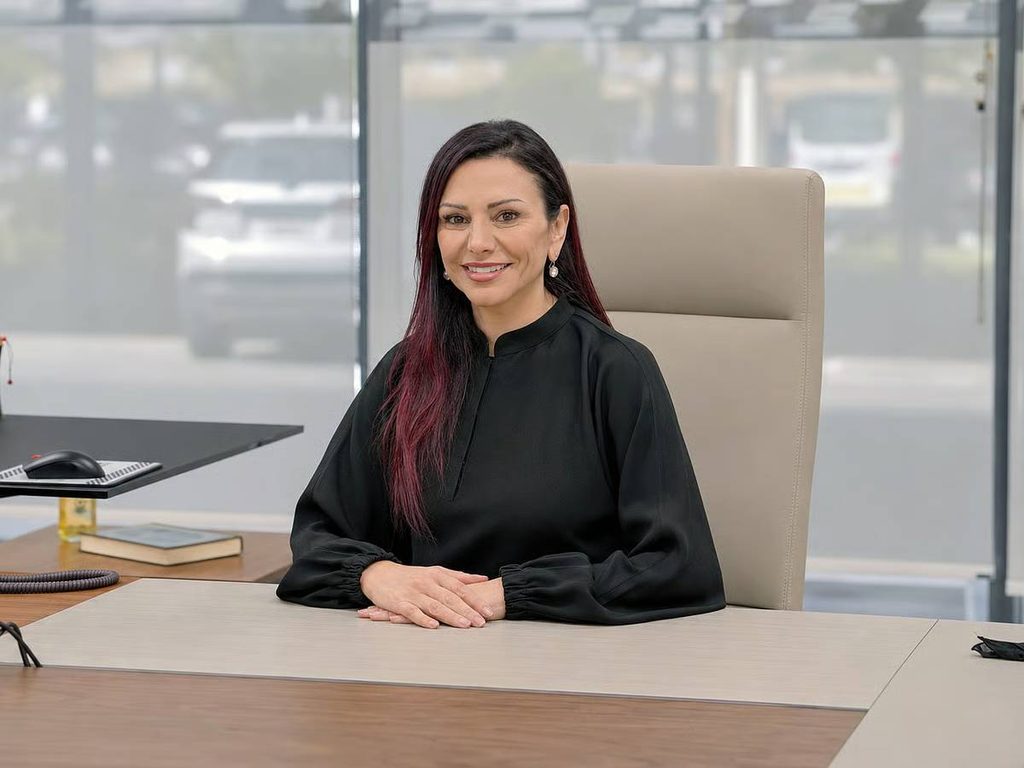
Edelmann emphasised the importance of lane discipline, advising drivers to avoid travelling too close to the hard shoulder and to exercise particular caution when passing stranded vehicles.
“It is essential to remain alert and maintain a safe distance from other vehicles, especially those that have stopped on the roadside,” he said. He also urged motorists to follow posted speed limits.
Why every driver should know where the warning triangle is
Dr Aldah recently experienced a tyre blowout himself and recalled how he had to make quick decisions while dealing with the situation.
“My eyes were constantly on the rear-view mirror as I tried to decide what to do first: get out, put on my reflective jacket, place the warning triangle or call the authorities. I immediately contacted the police, reported the incident and shared my exact location so they could send assistance and alert other motorists,” he said.
He urged motorists to familiarise themselves with their vehicle’s safety equipment before an emergency occurs.
“Every driver should familiarise themselves with their vehicle before an emergency happens. Go to your car, locate the warning triangle and learn how to set it up. We need to learn to protect ourselves against other people’s mistakes as well as our own. Also, make sure to have a reflective jacket in your car and wear it when you step out,” he said.
Dr Aldah also cautioned against using fire extinguishers as substitutes for warning triangles.
“I regularly see broken-down vehicles with fire extinguishers placed behind them instead of warning triangles. This is not an effective substitute because a fire extinguisher is not designed to provide the same visibility as a warning triangle,” he said.
Prevention starts before a journey
Edelmann said the UAE Ministry of Interior recorded 25 major accidents caused by burst tyres in 2025.
He urged motorists to inspect their tyres regularly for signs of wear, cracks and expiry dates, and check tyre pressure approximately every two weeks.
Regular maintenance and timely tyre replacement, he stressed, can help reduce the risk of sudden breakdowns and dangerous roadside emergencies.

A major tyre manufacturer also advised motorists to walk around their vehicles before setting off to check for visibly underinflated tyres, cuts or bulges. Tyre pressures should be checked regularly when the tyres are cold.
If the dashboard displays a low-pressure warning, drivers should pull over at a safe location and inspect their tyres as soon as possible.
A tyre that is flat, visibly damaged or continues to lose pressure after being topped up requires motorists to stop in a safe place and call for roadside assistance. Driving on a flat tyre can damage its internal structure and make the vehicle more difficult to control. Punctures should only be repaired by a qualified tyre technician.
Road safety is a shared responsibility
Dr Accetta said road safety education should extend well beyond obtaining a driving licence.
“Emergency preparedness, defensive driving and awareness of roadside hazards should be essential aspects of every motorist’s driving knowledge,” she said.
“A few seconds of caution can prevent a lifetime of regret. Road safety is a shared responsibility, and every life matters.”
For Naifa’s family, that message carries a deeply personal meaning.
“If her story can make even one person think twice before driving recklessly, I hope it can prevent another family from going through the pain we are experiencing today,” her sister-in-law, Maryam, had earlier told.
A wider pattern of crashes involving stationary vehicles
Several serious crashes this year have involved vehicles stopped on the road.
In June, one of Dubai’s deadliest road accidents this year claimed the lives of seven workers – six Indians and one Sri Lankan – and left nine others injured. The incident occurred on Emirates Road when a minibus crashed into a truck that had stopped in the middle of the road following an earlier accident.
The crash raised questions about the circumstances that left the truck stationary in the middle of the road and why the approaching minibus was unable to avoid it.
Brigadier Juma Salem bin Suwaidan, Director of the General Department of Traffic at Dubai Police, had urged motorists to remain vigilant and attentive, maintain safe distances between vehicles and follow the correct safety procedures in the event of an accident or vehicle breakdown.
Commenting on the Emirates Road accident, Dr Aldah said: “Even if the first truck had broken down or been involved in an accident, that does not mean another driver should crash into it.”
Drivers often fail to notice stationary vehicles and warning lights, he said, adding that he had even witnessed cars colliding with police vehicles despite their blue warning lights being switched on.
Latest incident
In the latest incident, two people – a 28-year-old Emirati man and a 16-year-old Arab boy – were killed and two others injured when their car crashed into a parked truck on the Fujairah-Khor Fakkan Road around midnight on Monday, November 9. Police are investigating the cause of the accident.
Brigadier Saleh Mohammed Abdullah Al Dhahani, Director of the Traffic and Patrols Department at Fujairah Police and Head of the Traffic and Licensing Services Centre, urged motorists to slow down when approaching parked trucks and other stationary vehicles, maintain a safe distance and avoid sudden lane changes.

