

The one mindset hurdle stopping Dubai learners from clearing the RTA test, says expert.
Dubai: For many learning to drive in Dubai, failing the road test on the first attempt is a common experience. In fact, countless learners admit to failing **once—or even multiple times—**before finally obtaining their licence.
While the Roads and Transport Authority (RTA) has not published recent official pass-rate figures, the experiences of learners across the emirate suggest that passing the final road test can be more challenging than anticipated.
But why do so many people struggle—and is it really just about driving skills?
Common reasons for failing the road test
Several technical mistakes can result in an automatic fail during Dubai’s RTA road test, including:
- Entering a no-entry zone
- Stopping inside a yellow box junction
- Failing to give way at a roundabout
- Poor lane discipline
- Not checking mirrors or blind spots before changing lanes
- Lack of proper vehicle control
These errors are treated seriously because they have a direct impact on road safety.
However, according to Suzanne Accetta, CEO of First Driving Centre in Dubai and a senior transport and mobility executive with over 25 years of international experience, the challenge often goes beyond technical driving mistakes. She previously served as Driver Training and Qualification Manager at Dubai Taxi Corporation.
“It’s more of a mental block,” she explained. “It isn’t just about forgetting to indicate or misjudging a gap. It’s about whether a learner has truly internalised what safe, responsible driving means—not merely as a set of rules to memorise, but as a mindset to carry into every journey.”
Two types of learners in Dubai
Most driving learners in Dubai generally fall into two main categories:
1. Experienced drivers who cannot exchange their licence
Dubai’s roads attract drivers from around the world, many of whom bring decades of experience. However, expats holding licences from countries that are not eligible for direct exchange must complete the full Dubai learner process, regardless of their prior driving experience.
According to Suzanne Accetta, this group often struggles with unlearning old habits. “Experienced drivers carry habits from their previous experience, and it can be difficult to change them,” she explained.
“For instance, not indicating, ignoring traffic signs or pedestrian signals, or driving with one hand on the steering wheel. During the learning process, you have to gradually retrain yourself to break these old habits.”
2. First-time drivers: When nerves take over
For learners sitting behind the wheel for the very first time, the challenge is often mental rather than technical. Here, the main obstacle isn’t bad habits—it’s nervousness and lack of confidence.
“It’s lack of confidence and nervousness that can take over and make you forget what you’ve learned,” said Suzanne Accetta. “Confidence and control are key while driving. If a person is not confident or is nervous, they cannot concentrate properly, which often leads to a loss of control.”
Even learners who have practised extensively can make uncharacteristic mistakes during the test due to anxiety.
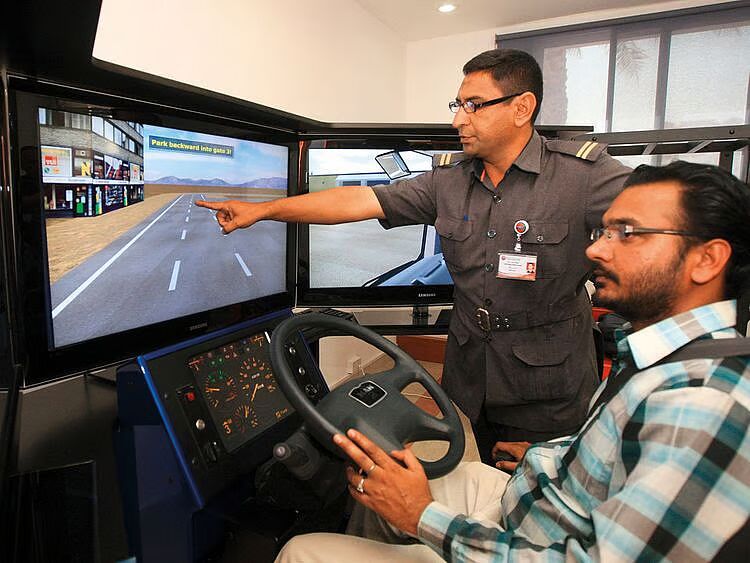
One solution Accetta advocates is the use of driving simulators, a tool increasingly adopted by Dubai driving schools. The concept is simple: expose learners to realistic driving scenarios in a safe, controlled environment before they face them on the road or in a test, helping to build confidence and reduce mental blocks.
“Using a simulator can help learners overcome their fear and experience likely driving scenarios in a controlled environment, allowing them to build confidence before facing the road or test,” she explained.
Is it really about skill—or mindset?
According to Suzanne Accetta, driving is not just about operating a vehicle; it also involves:
- Constant awareness of surroundings
- Anticipating other drivers’ actions
- Understanding road signs and markings
- Taking responsibility for other road users
“It’s about helping learners realise that driving isn’t just getting behind the wheel and pressing the accelerator or brake. There’s much more to it—it comes with real responsibility. They need to apply everything they’ve learned, bring it all together, and that’s what ultimately makes a well-rounded driver,” Accetta explained.

