

Rising Saudi-Houthi Tensions, Tanker Attack and Strait of Hormuz Uncertainty Heighten Regional Concerns.
Dubai: Tensions in the ongoing US-Iran conflict intensified on Thursday as hostilities extended across the Gulf and Arabian Peninsula.
Saudi Arabia launched strikes against Houthi positions in Yemen, while the Iran-backed group claimed responsibility for a missile attack targeting Riyadh airport. Meanwhile, a tanker operating off the coast of Qatar reported being struck by multiple projectiles, raising further concerns about maritime security in the region.
Amid these developments, Iran and Oman reached an agreement to establish designated safe passage routes through the Strait of Hormuz.
Although the arrangement could help facilitate maritime transportation, it does not necessarily mean that the strategically important shipping corridor has fully reopened or that all security risks have been eliminated.
US Central Command, meanwhile, disputed Iran’s assertion that the Strait of Hormuz had been closed, maintaining that commercial vessels and energy shipments were continuing to move through the waterway.
For UAE residents, the most immediate concerns involve potential disruptions to air travel, fluctuations in fuel prices, shipping operations and broader regional security, rather than direct changes to everyday activities within the country.
Saudi-Led Coalition Reports Strikes on 82 Houthi Military Targets
The Saudi-led coalition announced that it had destroyed 82 Houthi military targets across four provinces in Yemen, following attacks on airports in Riyadh and Abha.
According to the coalition, the military operation targeted several strategic facilities, including missile storage locations, command-and-control centres, communication installations, weapons warehouses and other military infrastructure.
The strikes were carried out in Saada, Hodeidah, Al-Jawf and Marib, areas where Houthi military positions were reportedly located.
Saudi authorities stated that the earlier airport attacks had resulted in three fatalities and 36 injuries, adding to concerns over the escalating conflict and its impact on civilian safety.
The latest developments represent a significant expansion of the regional conflict, with Saudi Arabia’s civilian aviation infrastructure now facing direct attacks, raising concerns about security across the Arabian Peninsula.
Houthis Claim Another Ballistic Missile Strike on Riyadh Airport
The Houthi group announced on Thursday that it had launched a ballistic missile towards King Khalid International Airport in Riyadh, claiming the projectile successfully hit its intended target and disrupted airport operations.
However, the group’s claims could not immediately be independently confirmed.
The reported strike follows previous attacks targeting airports in Riyadh and Abha, intensifying concerns about aviation safety in Saudi Arabia and neighbouring Gulf countries.
For travellers in the UAE, these developments do not necessarily indicate that local airports will suspend operations.
However, airlines could introduce flight diversions, schedule changes or temporary suspensions of certain regional routes if security conditions worsen.
Passengers planning to travel within the region are advised to monitor updates from their airlines and relevant aviation authorities.
Commercial Tanker Reports Multiple Projectile Strikes Near Qatar
A commercial tanker travelling approximately 51 nautical miles (94 kilometres) north of Qatar’s coastline reported being hit by several projectiles, according to the UK Maritime Trade Operations (UKMTO) agency.
Casualties were reported following the incident, although further information about the number of people affected and the extent of the damage remained unavailable.
The attack adds to mounting concerns about the safety of commercial vessels operating in waters surrounding the Strait of Hormuz, where several shipping-related security incidents have been reported.
The situation is particularly relevant to the UAE because its major ports, oil and gas exports, international trade operations and import supply chains depend heavily on maritime transportation through the Gulf.
Any prolonged disruption to shipping activity could affect transportation costs, delivery schedules and regional trade flows.
Iran and Oman Reach Agreement on Safe Shipping Routes Through Hormuz
Iran and Oman have agreed on designated maritime routes intended to improve the safety of vessels travelling through the strategically important Strait of Hormuz.
Iranian Foreign Ministry spokesperson Esmaeil Baghaei confirmed that both countries had reached an understanding on the geographical coordinates of specific routes for ships entering and exiting the waterway.
The two nations also agreed on procedures for sharing these coordinates with the appropriate international maritime authority.
The arrangement represents an effort to support safer navigation through one of the world’s most important energy transportation corridors amid continuing regional tensions.
However, the establishment of designated routes does not automatically guarantee unrestricted passage or eliminate the security threats facing commercial shipping in the area.
The agreement carries particular importance because Oman shares control of the Strait of Hormuz’s coastal waters and has played a major diplomatic role throughout the conflict.
However, the announcement should not be interpreted as confirmation that the vital shipping corridor has fully reopened.
Iran continues to maintain restrictions and conditions on maritime navigation, while ongoing military activity and security threats pose significant risks to vessels passing through the region.
US Central Command Disputes Claims of Hormuz Closure
US Central Command (CENTCOM) has rejected Tehran’s assertion that the Strait of Hormuz is closed, stating that commercial shipping and energy transportation continue through the strategic waterway.
According to the US military, maritime activity is continuing, including the movement of an estimated 20 million barrels of crude oil.
The conflicting statements from Washington and Tehran underline the uncertainty facing international energy markets.
Although oil shipments are continuing, transporting crude through the region has become considerably more expensive and dangerous compared with conditions before the conflict.
Higher war-risk insurance premiums, increased freight charges and the need for longer alternative shipping routes are contributing to elevated oil prices.
These additional costs reflect the continuing geopolitical uncertainty surrounding one of the world’s most important maritime trade routes.
Oil Prices: Brent Crude Remains Above $100 Per Barrel
Global oil prices remained elevated on Thursday, October 8, as concerns about shipping security and regional supply disruptions continued to influence energy markets.
According to OilPrice.com, at approximately 10:03am Gulf time, major crude oil benchmarks recorded the following prices:
- Brent crude: $102.84 per barrel, an increase of 2.63%, or $2.38.
- West Texas Intermediate (WTI): $90.38 per barrel, rising 2.38%, or $2.10.
- Murban crude: $106.69 per barrel, gaining 0.47%, or $0.50.
Oil markets are currently responding to two opposing developments.
On one hand, Gulf oil-producing countries have successfully restored a substantial portion of their petroleum exports, helping maintain global supply.
On the other, attacks on tankers, rising maritime insurance expenses and shipping restrictions around the Strait of Hormuz continue to place upward pressure on crude prices.
According to data from energy analytics firm Kpler, Gulf crude oil and condensate exports, excluding Iran, reached approximately 16.5 million barrels per day in September, approaching levels recorded before the conflict.
Despite this recovery in export volumes, persistent security concerns are preventing a corresponding decline in international oil prices.
UAE Fuel Prices: Motorists Face Higher Petrol and Diesel Costs
Motorists across the UAE are already experiencing the financial impact of rising global energy prices.
Petrol and diesel prices increased in October 2026 for the third consecutive month, reflecting continued volatility in international oil markets.
Compared with September, fuel prices rose by approximately 11.6% to 16.6%, adding to transportation expenses for residents and businesses.
However, changes in international crude oil prices do not immediately result in adjustments at UAE petrol stations.
The country follows a monthly fuel-pricing mechanism, under which domestic petrol and diesel rates are determined using international oil and refined petroleum product market trends.
This means that any further increase or decrease in global oil prices during October would generally influence subsequent monthly fuel-price announcements rather than cause an immediate change at the pump.
UAE Aviation: Airports Remain Open, but Travellers Should Monitor Flight Updates
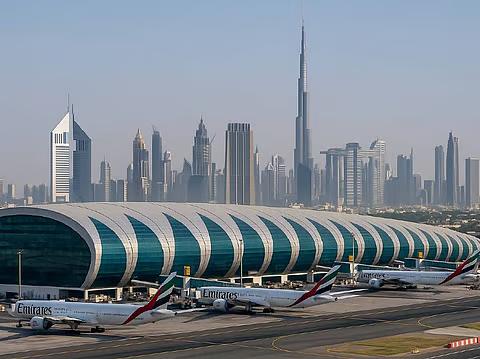
Major airports across the UAE, including Dubai International Airport (DXB) and Zayed International Airport (AUH) in Abu Dhabi, continue to operate despite escalating tensions in the region.
However, the ongoing conflict has created uncertainty for regional aviation, with airlines facing the possibility of unexpected flight delays, cancellations and route adjustments.
Leading UAE carriers, including Emirates, Etihad Airways, flydubai and Air Arabia, are maintaining operations across much of their international networks, although certain services have experienced disruptions.
Recent flight cancellations and delays have affected routes involving Saudi Arabia, Lebanon, Iraq, Bahrain and Kuwait, while connections to some conflict-affected destinations remain temporarily suspended.
Meanwhile, Philippine Airlines has resumed its Dubai-Manila services, with reservations available from October 5.
Several international airlines have also extended restrictions on flights serving the UAE and other Middle Eastern destinations.
- Air France: Flights to Dubai and Riyadh remain suspended until October 24.
- Cathay Pacific: Passenger services to Dubai and Riyadh have been cancelled through January 31, 2027.
- Singapore Airlines: Operations involving Dubai continue to face disruptions.
Travellers are strongly encouraged to verify their flight status through their airline’s official website or mobile application immediately before travelling to the airport, even if their tickets have already been confirmed.
With regional airspace conditions subject to rapid changes, passengers should remain alert to airline notifications and potential schedule revisions.
Trump Warns Iran of Tougher US Action as Conflict Continues
US President Donald Trump has suggested that the ongoing conflict with Iran could reach a swift conclusion, while warning Tehran that Washington may pursue more severe measures if tensions persist.
Trump indicated that the United States could bring the war to an end relatively quickly but cautioned that the outcome might be less favourable for Iran if Washington adopts a tougher approach.
The US president also claimed that American military operations had significantly weakened Iran’s defence capabilities.
He further reiterated his assertion that the United States was exercising control over maritime movements through the Strait of Hormuz, a strategically important shipping corridor for global energy supplies.
His remarks come amid continuing disagreements between Washington and Tehran over military developments, shipping access and the security situation in the Gulf.
US President Donald Trump has reiterated that Iran will not be permitted to acquire nuclear weapons, emphasising Washington’s position on Tehran’s nuclear ambitions.
The central disagreements between the two countries continue to involve Iran’s nuclear programme, uranium enrichment activities and the future of navigation through the Strait of Hormuz.
The United States is seeking legally binding assurances that Iran will neither develop nuclear weapons nor maintain the ability to produce them rapidly.
Iran, however, has continued to oppose demands to abandon its uranium enrichment programme, leaving a major obstacle to any potential diplomatic agreement.
Mecca Defence Alliance Moves Towards Stronger Regional Security Cooperation
President Trump has also expressed support for efforts by Saudi Arabia, Turkey and Pakistan to activate collective-defence provisions under the Mecca Defence Alliance.
The initiative follows recent Houthi attacks on Saudi territory, which have heightened concerns about regional security and the protection of civilian infrastructure.
Activating the alliance’s collective-defence arrangements could represent a significant development in regional security cooperation, potentially strengthening coordination among participating countries in response to external threats.
What the US-Iran Conflict Means for UAE Residents Today
Despite rising tensions across the Middle East, daily life in the UAE continues largely as normal, with no reports of a nationwide closure of airports, schools, businesses or essential public services.
However, the UAE’s position as a major international hub for aviation, energy exports, maritime trade and logistics means residents may continue to experience the indirect consequences of the conflict.
While the country is not facing a general domestic shutdown, developments elsewhere in the Gulf could influence transportation costs, international travel and the prices of imported goods.
Key Areas UAE Residents Should Monitor
Travel: Passengers may experience flight delays, cancellations, diversions or longer journey times as airlines respond to changing regional airspace conditions.
Fuel prices: Motorists are already paying considerably more for petrol in October, with Special 95 priced at Dh4.28 per litre and Super 98 at Dh4.40 per litre.
Retail and imported goods: Increasing fuel expenses, shipping charges and insurance premiums could gradually raise the cost of imported products. However, this does not necessarily mean supermarket prices will increase immediately across all categories.
Maritime shipping: The Strait of Hormuz remains a major source of uncertainty. Even when vessels can navigate the waterway, additional security requirements and higher insurance costs can make transporting goods significantly more expensive.
Oil markets: With Brent crude trading around $100 per barrel, elevated energy prices continue to create pressure on transportation, logistics and other fuel-dependent industries.
Aviation operations: UAE airports remain operational, but regional airspace restrictions and security developments could result in sudden changes to airline schedules.
What UAE Residents Should Do Amid Regional Tensions
Residents and travellers can take several practical precautions to minimise potential disruptions:
- Verify flight details: Check your airline’s official website or mobile application before departing for the airport.
- Plan additional travel time: Allow extra time for airport procedures and possible schedule adjustments.
- Prepare for route changes: Be aware that airlines may introduce longer flight paths, unexpected diversions or last-minute cancellations.
- Avoid misinformation: Do not rely on unverified social media reports concerning airport closures, missile strikes or other security incidents.
- Follow official announcements: Monitor updates from UAE government authorities, airports and airlines for reliable information.
- Review transportation expenses: Account for higher petrol prices and possible increases in travel and delivery-related costs.
Key Developments to Watch in the Coming Hours
Several developments could influence how the regional situation unfolds on Thursday, October 8.
Among the most important are whether Houthi attacks against Saudi Arabia continue, whether commercial shipping movements through the Strait of Hormuz increase or decrease, and whether additional tankers or maritime facilities become targets.
Another major factor will be the direction of diplomatic engagement between Washington and Tehran, particularly whether discussions move towards a potential settlement or tensions intensify further.
For UAE residents, the immediate situation remains manageable, although uncertainty persists across the wider region.
The key takeaway is that UAE airports remain open, petrol prices have increased, Brent crude continues to trade above $100 per barrel, and regional security conditions remain subject to rapid change.
Residents are encouraged to stay informed through official channels while continuing their normal activities and making necessary adjustments to travel and transportation plans.

