

UAE travellers urged to check flight updates and rely on verified news amid US-Iran tensions.
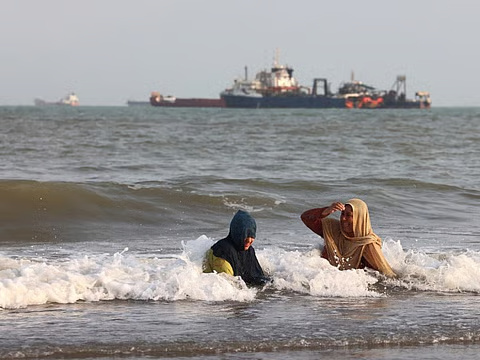
The UAE remains open to business and air travel, but the steep drop in shipping activity through the Strait of Hormuz and recent attacks involving three UAE-linked vessels highlight the continued fragility of the region’s security situation.
With the deadline for a temporary agreement expiring today, Monday, August 17, 2026, the US-Iran standoff is entering another critical phase.
For UAE residents, the impact is being felt most directly through maritime security concerns, flight disruptions and uncertainty in fuel markets.
Shipping through Hormuz plunges
The Strait of Hormuz remains the most immediate concern for the UAE and global energy markets.
Ship traffic through the strait has fallen sharply. Ship-tracking data showed just five vessels crossed on Saturday and none on Sunday, compared with 31 vessels over the previous weekend and around 130 vessels a day before the disruption.
The decline follows attacks on vessels operated by or affiliated with Abu Dhabi National Oil Co. (ADNOC), which the UAE Foreign Ministry has condemned.
The UAE has accused Iran of attacking three vessels linked to ADNOC, while Tehran has disputed or rejected the allegations. The incidents have heightened concerns over the security of the Strait of Hormuz, one of the world’s most important energy routes.
Latest developments
- Trump’s 60-day deadline has expired: A temporary US-Iran arrangement aimed at preventing a return to full-scale conflict reached its deadline on Monday, August 17, without a clear breakthrough between Washington and Tehran.
- US and Iran remain divided: Key disputes continue over sanctions, Iran’s nuclear programme, the reopening of the Strait of Hormuz and the US naval blockade.
- Ceasefire extension remains uncertain: Reports suggested Washington and Tehran had reached an understanding in principle to extend the arrangement, but the duration and terms of any extension remained unresolved.
- Diplomatic efforts under pressure: The expiry of the deadline does not automatically signal the start of another major US-Iran military offensive. However, it has placed further strain on diplomatic efforts and increased uncertainty over what comes next.
- New regional defence alliance: Regional security dynamics have also shifted following the signing of the Mecca Joint Defence Agreement by Saudi Arabia, Türkiye and Pakistan on August 7. The pact has been described as a significant new security arrangement, with US President Donald Trump calling it a “big, bold” development.
- Saudi Arabia issues alert in Jazan: Saudi Arabia’s Civil Defence warned residents in Jazan after the National Early Warning Platform detected a potential threat. Residents were advised to move to safe locations and follow official instructions.
- Kushner holds talks with Hamas leaders: US envoy Jared Kushner met Hamas leaders in Egypt on Sunday as part of efforts to advance President Trump’s Gaza peace plan, ahead of a planned meeting with Israeli Prime Minister Benjamin Netanyahu.
Beware of viral claims
The latest developments also highlight the need for UAE residents to be cautious about unverified Iran-related claims circulating online.
A widely shared statement concerning Iran’s nuclear programme was traced from India to Israel and then the US, despite being based on a fabricated quote.
Residents should be especially wary of social media posts claiming missile strikes, nuclear attacks, airport closures or new government directives unless the information has been confirmed by official authorities or reputable news organisations.
- Oil prices remain in focus: Brent crude was trading at around $88.41 a barrel early Monday at 10:30am Tokyo time, while US West Texas Intermediate stood at about $82.12 and Murban Crude at $89.42.
- UAE air travel remains operational — but check before heading to the airport: UAE airports continue to operate, although flight schedules and routes may change as airlines monitor developments and regional airspace.
- Airlines are advising passengers to check for updates: Emirates has a dedicated travel-updates page and urges passengers to verify their flight status before travelling. Etihad also provides a flight tracker and latest travel information, while Air Arabia offers an online flight-status service.
- Reports on Sunday indicated that Emirates and flydubai had resumed some flights over Iranian airspace after previously diverting around the region, highlighting how quickly airline routes can change, according to AirLive.
What travellers should do
- Check your flight status immediately before leaving for the airport.
- Allow extra time for potential security checks or operational changes.
- Do not rely solely on an earlier itinerary or booking confirmation.
- Consider alternative travel plans if your journey involves routes near affected airspace.
- Follow instructions issued by airports and airlines rather than relying on social media reports.
What UAE residents should watch today
The key developments to monitor over the next 24 hours include:
- Whether Washington and Tehran extend or abandon the temporary framework.
- Whether shipping traffic through the Strait of Hormuz recovers or declines further.
- Any additional attacks on commercial vessels.
- New military action involving Iran, the US or Israel.
- Changes to UAE airline routes and flight schedules.
- Movements in oil prices and their potential impact on regional economies.
- Any new security alerts or official warnings in Saudi Arabia, Bahrain, Kuwait, Qatar or the UAE.
Residents should rely on official UAE announcements, airline notifications and verified news organisations for updates, while avoiding the spread of unconfirmed claims as the US-Iran standoff enters another uncertain phase.

