

Emirates, Etihad, flydubai, and Air Arabia have been gradually reinstating their route networks following the conflict.
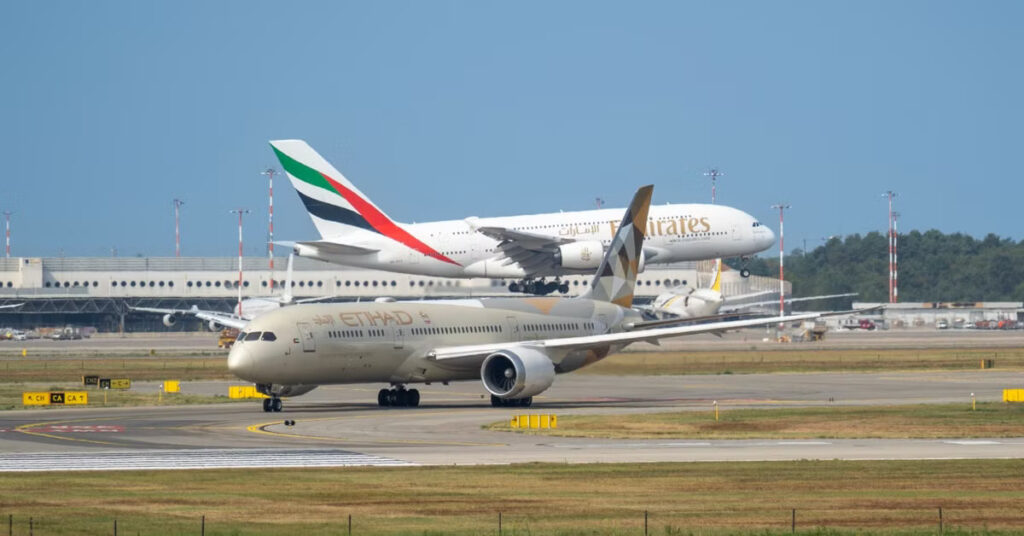
A potential US–Iran ceasefire could mark a turning point for UAE airlines, with carriers likely to speed up the restoration of previously disrupted networks, rebuild passenger confidence, and benefit from a rebound in travel demand, aviation analysts said.
The agreement, if signed as planned, could bring relief to Emirates, Etihad Airways, flydubai, and Air Arabia, which have faced weeks of operational disruption due to regional tensions, airspace restrictions, and weaker demand.
According to AFP, a US–Iran deal aimed at ending the four-month conflict is expected to be signed on Friday at Switzerland’s mountain resort of Bürgenstock.
“In short, if the deal is signed this Friday as planned, airlines such as Emirates and flydubai, along with Air Arabia and Etihad Airways, are likely to see a strong and significant rebound in travel demand,” said Saj Ahmad, Chief Analyst at London-based StrategicAero Research.
He added that the UAE’s role as a global aviation hub means passenger confidence could recover quickly once regional stability improves.
“Before the conflict, the UAE’s position as the world’s leading travel hub meant that passenger confidence is expected to support the rapid resumption of network restoration, along with a potential decline in air fares as oil prices ease and confidence in the ceasefire and continued talks strengthens,” Ahmad said.
UAE aviation resilience
Travel and aviation consultant Anita Mendiratta said the crisis has highlighted the Gulf’s crucial role in global connectivity, while also demonstrating how much more resilient the aviation sector has become.
“What this latest crisis has exposed is the importance of the Gulf region to global air travel and trade,” she said.
“Sitting at the heart of global aviation and connecting Europe, Asia, Africa, and Australasia through some of the world’s largest and most advanced aviation hubs, any escalation naturally raises concerns around airspace access, fuel markets, insurance costs, and traveller confidence,” she said.
However, she noted that airlines are now better equipped to handle disruption.
“The aviation and tourism sectors no longer respond to crises with panic; they respond with planning,” Mendiratta said, adding that reliability has become key to rebuilding demand.
“One of the most important lessons learned during the recovery phase was that reliability builds trust, and trust drives demand,” she said.
Airspace reopening could accelerate recovery
For airlines, one of the key benefits of a ceasefire would be more predictable operations and the possible reopening of more efficient flight routes.
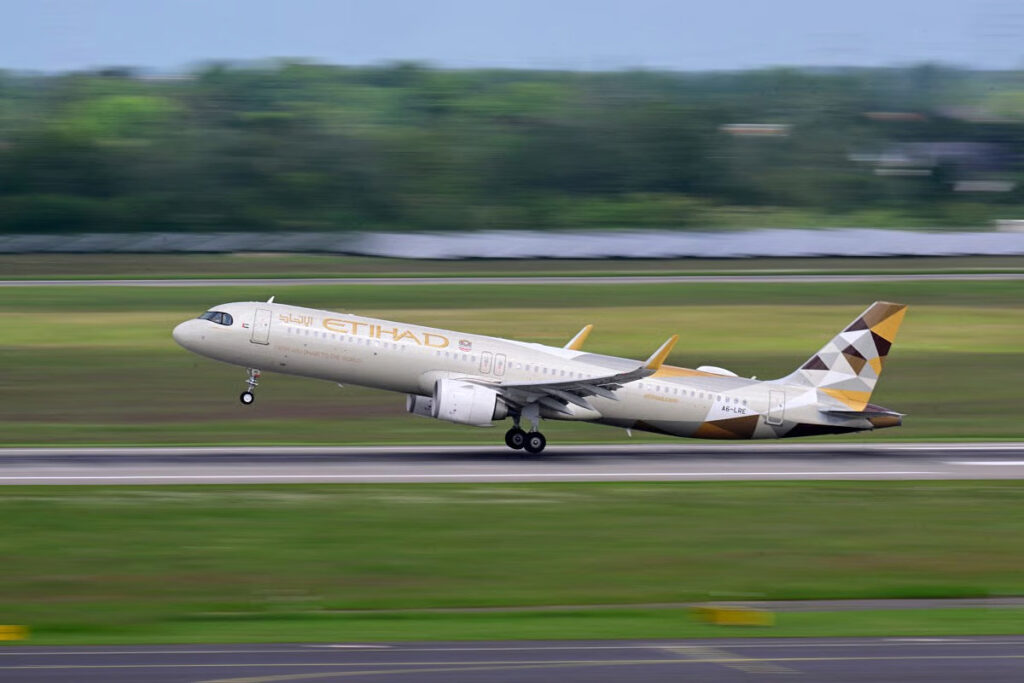
During the conflict, carriers experienced cancellations, longer routings, and higher operating costs due to airspace restrictions. Ahmad said UAE airlines could quickly move to restore connectivity through Iranian airspace if conditions permit.
“Iranian airspace is key for shorter flight times and distances to Europe and the Americas — and Iran benefits from navigation fees, so it’s a win-win for both sides,” he said.
Dubai aviation growth remains intact
While recent disruptions have impacted Dubai International Airport’s growth trajectory, analysts say its long-term fundamentals remain unchanged.
“It’s too early to say whether Dubai International will surpass 2025 passenger figures,” Ahmad said. “But even if it doesn’t, the turbulence in 2026 is something no one could have foreseen. The fundamentals driving the airport’s growth remain intact — the timeline has simply shifted slightly as flights, networks, and airspace gradually reopen.”
The recovery outlook also aligns with Emirates’ preparations to receive its first Boeing 777X aircraft next year.
“Critically for Emirates, it is also focused on the arrival of its first Boeing 777X aircraft next year, making it essential to rebuild network capacity and launch new routes now to support the integration of its future fleet workhorse,” Ahmad said.
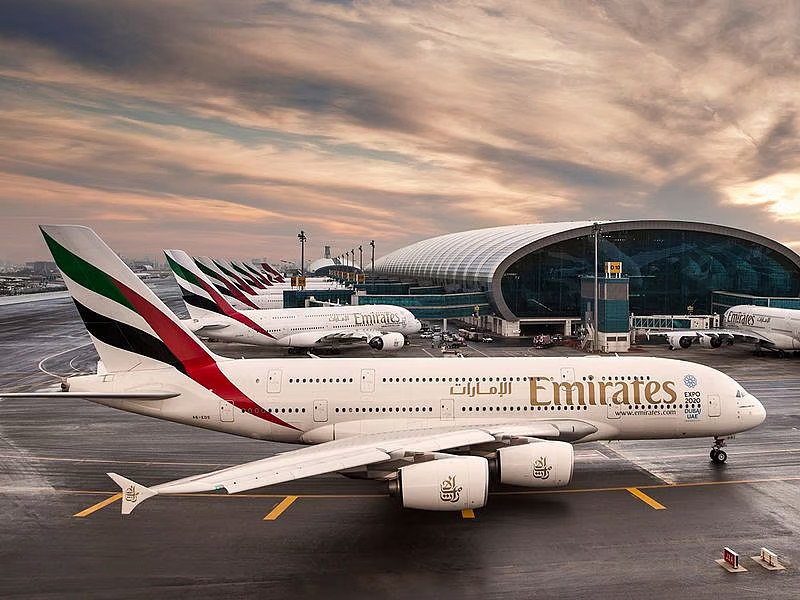
Dubai’s flagship carrier, Emirates — which was among the first airlines to resume flights days after the conflict began — is currently operating to 138 destinations across 73 countries spanning the Americas, Europe, Africa, West Asia, the Middle East/GCC, the Far East, and Australasia.
Summer travel season will test airlines
The ceasefire comes as airlines enter one of the busiest travel periods of the year, making the recovery in traveller confidence especially important.
“In just five months, Emirates’ first-half financial results are due, and there is no doubt the conflict will have affected demand and revenue,” Ahmad said.
“However, this loss can now be recovered following the agreement between Iran and the USA.”
He cautioned that the recovery depends on the deal holding and diplomatic negotiations continuing.
“Provided the agreement holds and diplomatic talks continue to make progress, even if modest, the UAE can once again view its aviation hub as a key growth driver and strengthen its gateway position,” he said.
Airlines focus on rebuilding trust
Emirates President Tim Clark told Reuters that the airline would prioritise rebuilding traveller confidence rather than lowering fares.
Clark said Emirates would focus on offering “all sorts of incentives other than price” to encourage passengers to return.
“That could include new measures to ensure the safety of operations, for instance,” he said.
He added that the airline is working with governments and regulators to ease restrictions affecting Middle East airspace.
“We rely on governments to be a little less restrictive in the warnings they issue about travelling across the Middle East,” Clark said.
Etihad sees recovery underway
Meanwhile, Etihad Airways CEO Antonoaldo Neves said the airline has moved from managing disruption to restoring operations.
The airline initially focused on passenger support, accommodation, and repatriation flights before working with regulators to restore connectivity.
“We find a way to create airways that were really safe,” Neves said.
Etihad’s load factors recovered from about 55% in April to 65–70% in May, rising to around 84% more recently.
Neves added that the airline is currently operating at around 85% of available seat kilometres and expects capacity to reach 110% of last year’s levels by June 15.
“The trajectory is positive,” he told Gulf News. “We may have some ups and downs, but the overall direction remains positive.” He added that flown revenue is expected to return to previous levels by August.
Middle East airlines on recovery path
IATA Director General Willie Walsh said Middle Eastern airlines have been affected by both network disruption and higher oil prices, though recovery is already underway.
“The Middle East airlines have been doubly hit because they’re faced with disruption to their network and the high oil price,” Walsh told Gulf News at the airline lobby group’s annual general meeting in Rio de Janeiro.
“But the good news is that, wherever I look, things are gradually improving,” he added.
He noted that the sharpest impact came at the start of the crisis, when Middle East airlines’ capacity fell by around 60% in March.
“We’re forecasting them to be down 11% for the year, which suggests a progressive increase and recovery in capacity,” Walsh said.
“I spoke to Antonoaldo Neves, and he’s expecting capacity this year to be higher than the same period last year. That’s lower than initially planned, but still above last year’s levels.”
Walsh added that the disruption does not represent a long-term crisis for the aviation industry.
“I don’t think this is a crisis for the industry. Individual airlines may be facing challenges, but at an industry level, we still expect airlines to remain profitable, albeit at lower levels than initially forecast,” he said.
Fuel remains a challenge
While demand is expected to recover, fuel costs continue to pose a major challenge for airlines. Neves said Etihad benefits from a strong hedging position, though he cautioned that fuel prices may take time to stabilise.
“We have a very good hedging position. It’s not perfect, but it’s good,” he said. Fuel accounts for around 30% of Etihad’s cost base, but the airline is absorbing higher costs rather than fully passing them on to passengers.
“As of now, we have not passed on the increases. We are back to the same average fare levels we had before the conflict,” Neves said.
Industry leaders said the ceasefire would not immediately erase the impact of the conflict, but it could mark the beginning of a gradual recovery, restoring confidence in the UAE’s role as one of the world’s key aviation hubs ahead of the summer travel season.

