

Residents say safeguarding Arabic is vital to preserving national identity, as English increasingly serves as the default language in schools, workplaces, and daily interactions across the UAE.
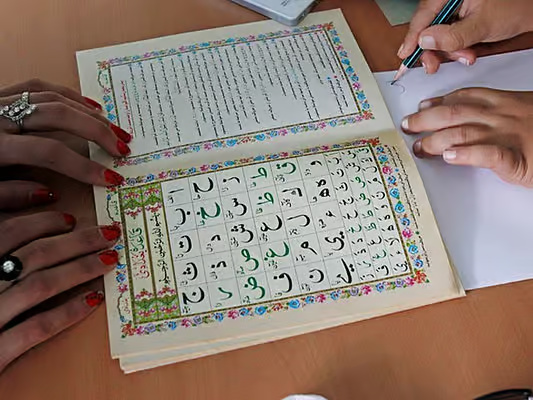
The Federal National Council has recommended setting up a National Council for National Identity and the Arabic Language, as well as introducing a dedicated law to safeguard Arabic, amid concerns over its declining use among younger generations.
FNC Speaker Saqr Ghobash said the main concern is the possibility of raising generations who have only a superficial command of Arabic and a weaker connection to their cultural identity and sense of national belonging.
The proposed law would extend across key sectors, including education, media, government services, business, family life, and technology. It would also mandate the use of Arabic in advertisements, public awareness campaigns, and official events.
Yousra Al Sharfi from Abu Dhabi said the issue has moved beyond education and now reflects a deeper challenge tied to national identity and cultural belonging.
“Arabic is not just a language for communication. It carries religion, history, values, and the memory of society,” she said.
She noted that English is increasingly associated with success and modern life, while Arabic is often limited to classrooms and formal settings.
“The problem is not learning English, but allowing Arabic to lose its natural place in daily life,” she said.
She added that protecting Arabic must go beyond legislation and include stronger measures across schools, media, technology, and family life.
“Parents also play a major role. Many speak English with their children at home, thinking it gives them better opportunities, but this weakens their connection to their mother tongue,” she said.
English dominates daily life
Um Muadad from Dubai said English now dominates hospitals, hotels, restaurants, airports, and even official communications from some institutions.
“Sometimes you feel lost in your own country. Arabic becomes the second option, while English comes first,” she said.
She added that even some young Emiratis wearing traditional attire prefer speaking English in public, which she views as concerning.
“There is no real identity left if everything becomes English. Arabic should be the main language everywhere, not only when we need translation,” she said.
Schools and social media add pressure
Um Maitha from Dubai also noted that many young people now prefer English or mix both languages in everyday conversations at school and home.
She pointed to several contributing factors, including heavy reliance on English in education and technology, limited daily use of Arabic, and social media dominated by foreign-language content.
“Some school methods also make Arabic feel difficult instead of helping students enjoy it,” she said.
She supported the idea of a national council, saying it would give the issue stronger official attention.
“But real success depends on practical action. We need better curricula, stronger Arabic digital content, and teachers who help students love the language, not fear it,” she said.
Residents broadly agreed that protecting Arabic is not about rejecting English, but about restoring balance and ensuring future generations remain connected to their language, culture, and national identity.

