

Many residents expect the agreement to boost business activity, improve travel conditions, and enhance the overall sense of security across the region.
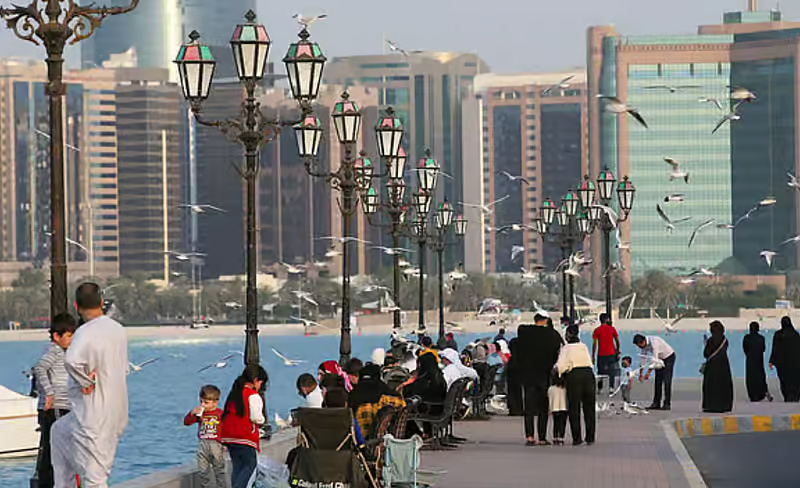
From lower airfares and fuel prices to smoother travel and improved economic stability, Emiratis and expatriates say they hope the agreement will help ease some of the pressures that have affected daily life in recent months.
Residents across the UAE have welcomed the peace agreement with optimism, expressing hope that it will bring greater stability, reduced living costs, and renewed economic confidence after months of regional uncertainty.
In the early hours of Monday, Pakistan Prime Minister Shehbaz Sharif announced that the US and Iran had reached a peace deal, a major development coming more than 100 days after the conflict began on February 28. US President Donald Trump later confirmed the agreement, stating that the deal with Iran was finalised and announcing the lifting of the US naval blockade. He also said he had “authorised” the reopening of the Strait of Hormuz at no cost.
Many residents said they expect the agreement to support business growth, improve travel conditions, and strengthen regional security.
Dubai resident Maryam said her initial reaction to the news was one of pride and hope. “I felt proud and hopeful. I was proud of my country and the efforts of our leadership, especially Sheikh Mohamed bin Zayed Al Nahyan, in supporting peace and stability,” she said.
Maryam hopes the agreement will lead to greater stability, more opportunities, and an improved quality of life for residents. She also believes stronger regional cooperation could deliver tangible economic benefits. “Stronger cooperation and trade can help reduce costs and improve economic growth, which may positively impact the cost of living,” she said.
Like many residents, she hopes the deal will eventually bring lower prices for essentials such as food, fuel, and household goods, while also making travel easier and more affordable through improved regional connectivity.
Relief and optimism
For Abu Dhabi resident Khattab Ahmed, the announcement brought immediate relief. “Even though life has been stable, thanks to God, there was always a feeling of uncertainty in the background,” he said.
Ahmed hopes the agreement will reassure people not only in the UAE but across the wider region. One of his immediate expectations is a reduction in fuel prices. “Fuel prices are one of the biggest ways I feel the impact of what’s happening in the region,” he said. “If prices come down, even a little, it would be a sign that things are moving in the right direction.”
Abu Dhabi resident Moneim Mohamed described the deal as a welcome development after months of uncertainty. “I see this as a new beginning for the second half of 2026,” he said, adding that recent tensions highlighted the importance of stability in everyday life.
“It made me realise how valuable normal life is—no worrying about alerts, sudden price increases, or travel disruptions,” he said.
Economic benefits
Emirati resident Hind Almazrouei said that while the tensions did not directly affect her family financially, they created anxiety about broader regional implications. “There was no direct financial impact on my family, but the regional tensions caused concern and psychological stress,” she said.
She believes the agreement could boost economic stability and investor confidence, potentially creating jobs and supporting business growth. “Peace enhances stability and reduces fears associated with tensions and conflicts, helping people feel more secure, confident, and optimistic,” she said.
If she could choose one outcome, she would prioritise long-term regional stability. “Greater stability and security in the region positively affects people’s lives, future opportunities, and prospects for growth and prosperity,” she said.
For her, a return to normal means living, working, and travelling without concern while pursuing personal and professional goals with confidence and peace of mind.
Aviation sector outlook
The aviation industry is also expected to benefit from a more stable regional environment. A UAE-based pilot said travel demand had been affected as passengers postponed trips due to uncertainty.
“Many people were hesitant to travel, so I think after the peace agreement, demand will increase and return to normal,” he said.
He added that airlines faced operational challenges due to airspace restrictions and longer routes, which increased fuel consumption and costs. “After the agreement, I believe everything will get back to normal, and the aviation industry will grow stronger,” he said.

