

The UAE model demonstrates that development thrives on strategy, identity, and foresight.
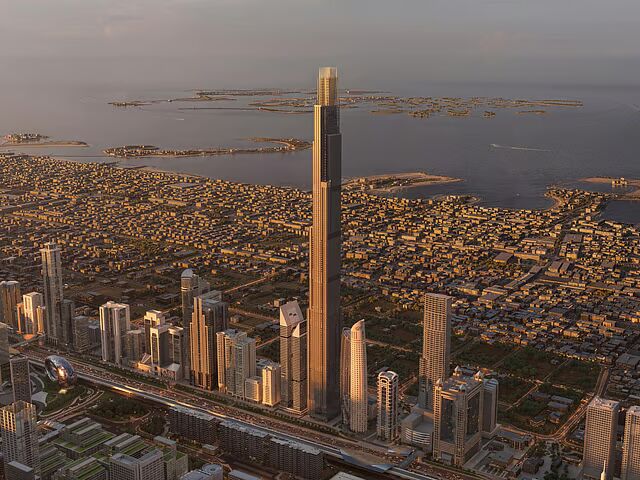
Many nations have embarked on the complex journey of building a state and society, yet only a few have successfully navigated a clear path forward, articulating the strategic vision required to realize sustained development and growth. It is therefore unsurprising that scholarly discussions on state-building are among the most extensive and nuanced within strategic studies. This attention stems not only from the subject’s critical importance, but also from the fact that nation-building demands years of effort and substantial human and material resources, making trial-and-error approaches extremely costly. The risks of failure—or even missteps caused by missing key pillars of successful state construction—are significant.
During one of my visits abroad, I was asked: “How did the UAE manage to create a successful model in a region often weighed down by crises?” I pointed to the nation’s foundational principles and its deliberate integration of nation-building with human development. From the very beginning, the UAE emphasized value-driven and humanitarian principles, giving the country a strong sense of identity that would endure amid change. It was as though the nation anticipated the powerful currents of globalization, which could erode any roots not firmly established or nurtured within a societal framework capable of shielding them from the extremes of both excessive Westernization and rigid traditionalism—both of which inevitably accompany openness to knowledge and engagement with the wider world.
Strong Foundation
Nation-building demands a solid foundation—not only for developmental and structural institutions but also for the people, national identity, and the regulatory frameworks that govern the state—commonly referred to as the “social contract.” At its core, it requires a philosophical vision capable of addressing the challenges of the present and future while drawing lessons from the past. Successful state-building is anchored in a unifying idea or vision, from which strategies and implementation plans are derived.
The late Sheikh Zayed bin Sultan Al Nahyan, the UAE’s Founding Father, exemplified this calibre of nation builder, establishing the foundations of a distinctive leadership approach. Building on these foundations, His Highness Sheikh Mohamed bin Zayed Al Nahyan, President of the UAE, has advanced a governance model that continues the nation’s ascent—from its beginnings in the heart of the desert to achievements on Mars. The UAE’s political, diplomatic, economic, developmental, investment, scientific, and knowledge accomplishments now resonate globally, reflecting a vision that has guided the country’s remarkable journey.
Random ideas, poorly conceived plans, or notions disconnected from reality—rooted in illusion or wishful thinking—cannot contribute meaningfully to nation-building. True national progress is built on solid foundations: accurate data, a coherent system of identity, and an integrated cultural, economic, and social framework. These elements create an enabling environment for success, allowing a country to achieve distinction and excel among the community of nations.
Dilemma of ‘Experimentation’
The challenge of “experimentation” in state-building and development lies in its potentially severe, long-lasting consequences. Unlike controlled laboratory experiments, where material losses and human costs might be accepted in pursuit of knowledge, nation-building affects the present and future of entire societies. The stakes include not only economic costs but also complex political, social, and cultural implications, making trial-and-error approaches exceptionally risky.
In recent decades, the concept of a strong state has evolved beyond military power and arsenals, important as they remain. Global health and economic crises have highlighted the importance of resilient development, national cohesion, societal resilience, and strength across multiple domains. As influence has shifted from battlefields to the arenas of economics, science, and other pillars of soft power, the definition of national strength has expanded well beyond military capability alone.
Successful Economic Transformation
History and contemporary experience show that many states have faltered despite possessing significant structural resources, simply because they lacked the vision and foresight required for effective development. In an era of unprecedented global development, there are notable examples of successful economic transformation. China provides a striking case: it has transitioned from being the “world’s factory,” dependent on a vast traditional industrial base, to a global scientific and technological powerhouse with a knowledge-based economy.
China’s research and development spending surpassed $500 billion in 2024, an annual increase of 8.3 percent, and rose to approximately $550 billion in 2025, representing around 2.68 percent of GDP. It now ranks second globally in total R&D expenditure, after the United States, investing 3.5 times more than Japan, which ranks third, and 3.7 times more than Germany, which ranks fourth—surpassing even advanced economies like India, Singapore, and South Korea. These figures underscore China’s commitment to sustaining progress, competitiveness, and its ambitions as a leading global scientific power.
Scientific Research
There are also remarkable international examples in scientific research and development, one of the most competitive arenas in the race toward the future. India stands out, particularly in mathematics and physics research, which has played a key role in the growth of its IT sector. In 2023, India’s IT revenues increased by 8.4 percent, reaching $245 billion, including $194 billion from exports, with industry projections targeting $500 billion by 2030.
In summary, nation-building and the creation of a successful national model—whether in the economy, politics, technology, education, or scientific research—are neither ceremonial displays nor media spectacles. They result from careful strategic planning, the study of inspiring success stories, and a commitment to a coherent vision rather than scattered ideas that fail to form a complete framework. Success requires patient, prudent action within transparent institutional and legislative structures. Political will and media attention alone cannot replace these essential foundations. In the UAE, the pillars underpinning sustained success include integrated commitments to environmental sustainability, a systematic transition to a knowledge-based economy, scientific research, artificial intelligence, and renewable energy. These pillars demonstrate that the UAE’s achievements did not occur by chance—they are the outcome of visionary leadership capable of anticipating the future, wisely managing national resources, and building robust institutions that have accumulated expertise and mobilized capabilities since the country’s early years.
Strategic Effectiveness
Evidence of this strategic effectiveness is abundant. One clear indicator is the reduction of the oil sector’s contribution to GDP to under 20 percent, signaling the UAE’s successful economic diversification. The country is no longer primarily defined as an oil state, as has long been the case for many Gulf nations. Instead, it has emerged as an exceptional development model and a competitive hub in artificial intelligence, renewable energy, information technology, and other non-oil sectors. Reinforcing this progress is a visionary leadership that enjoys the trust and support of its people, with deeply rooted qualities that enable sustained nation-building, continued achievements, and guidance of the UAE’s accelerating development trajectory.

