

Meteorologists say El Niño does not necessarily lead to extreme rainfall or flooding, as the UAE’s weather is largely influenced by local pressure systems and atmospheric conditions.
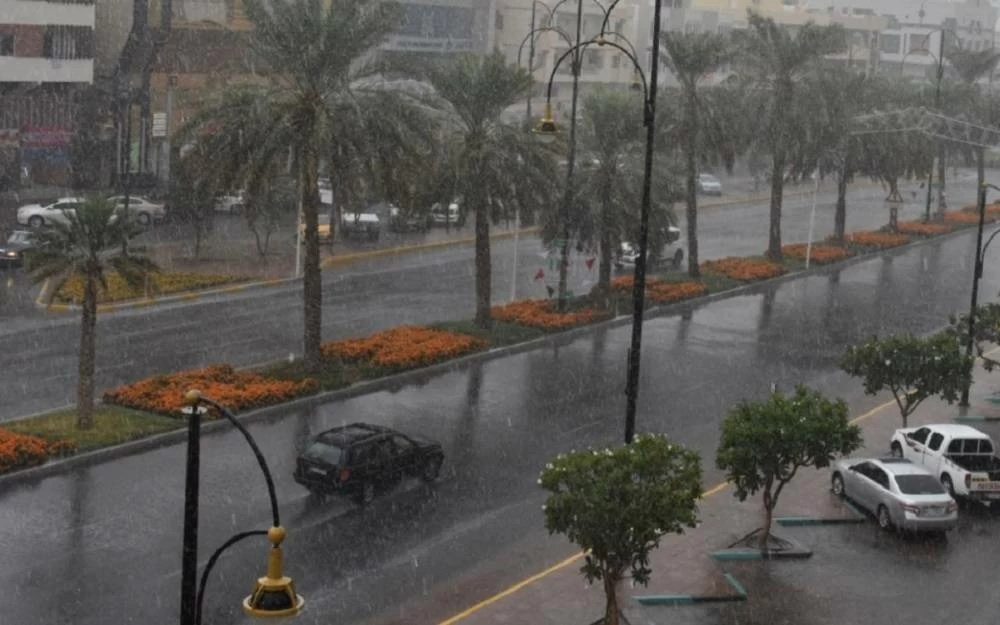
Long-range weather models suggest the UAE could receive above-average rainfall between October and January as the country enters its cooler and typically wetter season, according to an expert from the National Center of Meteorology (NCM).
However, meteorologist Ahmed Habib cautioned residents against viewing the forecast as an indication of extreme storms or flooding caused directly by El Niño. Although some weather models point to wetter-than-normal conditions, the exact amount and intensity of rainfall remain uncertain.
Habib said some weather models suggest the UAE could experience above-average rainfall from October and November through January. However, he stressed that it is not possible to predict the exact amount of rainfall with certainty.
The explanation comes amid increasing attention on this year’s El Niño, a climate phenomenon marked by unusually warm surface waters in the eastern tropical Pacific Ocean. While El Niño can affect weather conditions across different parts of the world, its occurrence does not necessarily mean that a specific country will experience severe or extreme weather.
In a clarification issued on September 11, the NCM described this year’s El Niño as “very strong,” noting that the phenomenon can be associated with favourable rainfall. However, the authority added that heavier rain may occur when suitable atmospheric conditions develop over the UAE.
El Niño does not automatically mean flooding in the UAE
For UAE residents, it is important to distinguish between El Niño’s global influence and local weather conditions. While El Niño can affect climate patterns worldwide, the weather experienced in the UAE ultimately depends on atmospheric systems developing over the region.
Habib explained that El Niño does not have a direct, isolated impact on the UAE. Instead, it can influence broader atmospheric circulation patterns, with the effects differing considerably across regions such as Asia, Europe and the Americas.
He also pointed out that historical weather records include periods when El Niño was present as well as periods when it was absent, highlighting that the phenomenon alone cannot determine the UAE’s rainfall or weather conditions.
The NCM has also addressed misleading social media posts suggesting that El Niño will directly cause severe flooding or exceptionally heavy rainfall across the UAE.
Residents have been advised to follow official NCM forecasts and weather alerts instead of relying on unverified information circulating on social media when evaluating the possibility of rain or severe weather.
Local conditions will determine rainfall levels
Although global climate patterns such as El Niño can influence atmospheric circulation, local weather systems play the key role in determining whether rain-producing conditions form over the UAE.
Significant rainfall requires several atmospheric factors to align, including sufficient moisture and water vapour, favourable surface and upper-air temperatures, and appropriate pressure systems.
Habib also noted that large-scale atmospheric patterns, including Rossby waves, can affect the movement and development of weather systems, influencing where heavier rainfall may eventually occur.
Habib said it is still too early to determine exactly where extreme weather could develop, as this will largely depend on evolving pressure systems. While conditions could potentially affect parts of the Middle East, it is not yet possible to identify a particular country or area, such as the northern Gulf.
Therefore, the presence of a strong El Niño alone cannot be used to predict a specific extreme weather event in the UAE.
Habib added that although El Niño is currently active over the ocean, existing pressure patterns around the UAE are not creating conditions associated with extreme weather.
However, atmospheric conditions may evolve as the season progresses. For this reason, longer-term projections suggesting above-average rainfall should not be confused with short-term weather forecasts, which provide a more precise picture of upcoming conditions.
In the meantime, the UAE is expected to experience its typical gradual shift towards autumn. Temperatures are likely to remain high initially before becoming milder later in the season. According to Habib, daytime temperatures may continue to reach around 44°C to 46°C, while rising nighttime humidity could increase the chances of fog and mist, especially in coastal areas.

