

Rising crude oil prices put central bank policies and household budgets around the world to the test.
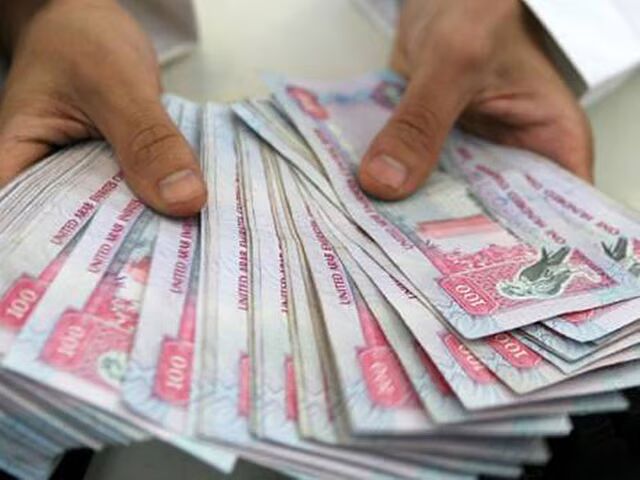
Dubai: A sharp surge in crude oil prices triggered by escalating hostilities involving Iran is complicating the outlook for interest rates, raising fresh questions for households and investors from the United Arab Emirates to the United States. Brent crude jumped sharply in recent sessions after US and Israeli strikes on Iran and Tehran’s retaliatory actions, with markets reacting to supply‑risk concerns tied to the Strait of Hormuz, a key energy transit route.
The spike in oil has rattled global markets and reignited debate over whether central banks can proceed with anticipated interest rate cuts this year. Higher energy prices can fuel inflationary pressures, narrowing policymakers’ room to ease monetary policy and potentially keeping borrowing costs elevated for longer — a development that would affect mortgage borrowers and households globally.
Brent crude surged over 9% in a single session, driven by US and Israeli strikes on Iran and Tehran’s retaliatory actions, along with reported threats to shipping through the Strait of Hormuz, which handles roughly 20% of the world’s crude supply.
The spike has unsettled global stock markets and reignited debate over whether central banks can move ahead with expected rate cuts this year — a development closely monitored by UAE homeowners and businesses grappling with elevated borrowing costs.
Nigel Green, CEO of the Dubai-based deVere Group, warned that the magnitude and rapid pace of the oil price surge could shift inflation expectations and postpone plans for monetary easing.
“When oil spikes with this magnitude and speed, inflation accelerates quickly,” Green said, warning that a sustained rise toward $90 per barrel of Brent crude would “fundamentally reshape the inflation outlook and force a repricing of interest rate expectations.”
“Markets had been anticipating lower borrowing costs, but that outlook is now under pressure,” he added, noting that investors should prepare for rates to “remain elevated well into 2026, and potentially rise further if inflation proves persistent.”
Wait-and-See at the Fed
Economists in the US say the Federal Reserve is unlikely to respond immediately. The Federal Open Market Committee meets on March 17–18, with forecasters expecting the benchmark interest rate to stay within the 3.5%–3.75% range.
Tom Porcelli, chief economist at Wells Fargo, characterized the current oil spike as a supply-driven shock — the type policymakers often “look through” when setting rates.
“Unless there is a prolonged war or major long-term disruptions to key shipping routes in the Strait of Hormuz, the impact on U.S. growth, inflation, and monetary policy should remain modest,” Porcelli said in a March 2 commentary, noting that the situation remains fluid.
He cautioned that persistently higher energy costs could unanchor inflation expectations, reducing the Federal Reserve’s flexibility to ease policy.
For residents of the United Arab Emirates, the Fed’s stance has direct implications: the dirham is pegged to the U.S. dollar, and the UAE Central Bank typically aligns its rate decisions with the Federal Reserve to maintain currency stability.
If U.S. Rates Remain Higher for Longer:
- Variable-rate mortgages in the United Arab Emirates would continue to be costly.
- Personal loan and credit card interest rates would stay elevated.
- Financing conditions for businesses would remain tight.
For many households, the prospect of lower monthly repayments would be delayed even further.
Duration Is Key
Wayne Winegarden, senior fellow in economics at the US-based Pacific Research Institute, noted that the length of the conflict would largely determine its economic impact.
“If the war is short, consumers may experience higher gas prices for a few weeks,” Winegarden said. “If it drags on or escalates, energy costs could surge, increasing the risk of stagflation.”
In the United States, higher gasoline prices could ripple through food, transport, and airline costs. In the United Arab Emirates, where fuel prices are adjusted monthly based on global benchmarks, residents could also see quicker changes at the pump.
Beyond fuel, elevated oil prices drive up shipping and logistics costs. Air cargo networks have already faced constraints, with FedEx suspending flights to and from several Middle Eastern destinations over safety concerns. This affects imported food and consumer goods in the UAE, much of which relies on international supply.
Global Policy Crossroads
Europe and parts of Asia, heavily dependent on imported energy, may experience renewed inflationary pressures if oil prices remain high. Diverging policy responses across regions could further contribute to currency volatility.
Green noted that bond markets are already adjusting to reduced confidence in near-term rate cuts and cautioned that duration risk in fixed-income portfolios is rising.
“This is not a typical volatility episode driven by sentiment alone,” he said. “It is a supply-side shock with real macroeconomic consequences. As inflationary pressures build, monetary policy flexibility will narrow.”
For now, most economists expect central banks to keep rates steady while evaluating incoming data.
However, if oil prices remain elevated for months rather than weeks, expectations for rate cuts could be delayed further — leaving borrowers in the United Arab Emirates and worldwide facing the reality of higher-for-longer interest rates just as energy costs climb.

