

New rules also outline categories of workplace violations.
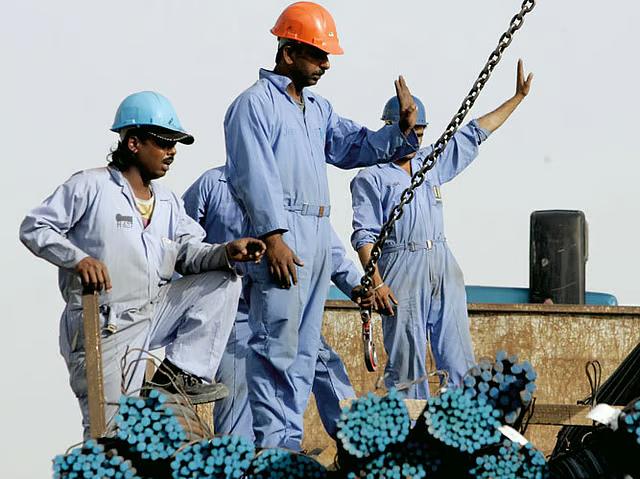
The Ministry of Human Resources and Emiratisation (MoHRE) has introduced new rules, controls and standards aimed at promoting fairness in the labour market when disciplinary measures and penalties are imposed on workers. The framework seeks to protect the rights and interests of employees, employers and business owners.
In a statement on its official website, the ministry said a stable working environment does not depend on the absence of accountability or the imposition of excessive penalties. Instead, it is built on workers and employers understanding their respective rights and responsibilities, and having confidence that decisions affecting their employment are based on clear rules and applied fairly.
The ministry stressed that the strength of a disciplinary decision lies not in the severity of the punishment, but in the validity of the grounds supporting it. While workplace discipline requires the exercise of authority, its long-term effectiveness depends on how fairly that authority is used.
Ensuring fair disciplinary action and establishing misconduct
The ministry explained that deciding whether to penalise a worker may appear straightforward, but ensuring fairness requires more than simply establishing that a violation has taken place. Employers must consider the circumstances of the incident, its impact on operations and whether the proposed penalty is justified.
MoHRE said: “A worker may be late for work for the first time, while another may repeatedly arrive late despite having been warned. Similarly, one worker may commit an error with limited consequences, while another, through negligence, may put the safety of colleagues or the interests of the establishment at risk. Although the violations may be established in both cases, the differing circumstances and consequences mean that treating them equally in terms of penalties would be closer to overlooking justice than achieving it.”
The ministry added: “This highlights the importance of distinguishing between establishing that a violation has occurred and determining whether the penalty is lawful and justified. The former concerns the incident itself and the evidence supporting it, while the latter relates to the soundness of the procedures followed and whether the penalty is proportionate to the seriousness of the misconduct.”
Disciplinary penalties under the UAE Labour Relations Law
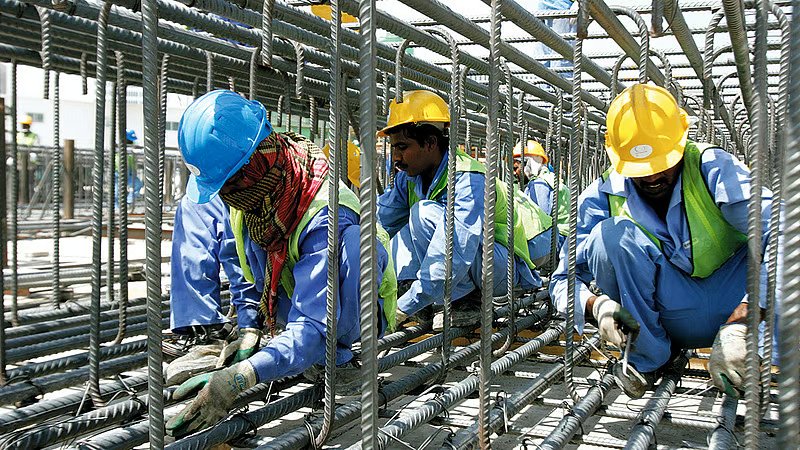
The ministry said UAE legislation recognises the need to strike a balance between protecting workers’ rights and giving employers the authority to maintain discipline in the workplace. As a result, employers’ powers to impose penalties are neither unrestricted nor stripped of the tools needed to uphold workplace standards.
Article 39 of Federal Decree-Law No. 33 of 2021 on the Regulation of Labour Relations, as amended, sets out the disciplinary penalties that employers may impose on workers. These range from written notices and warnings to dismissal, while preserving employees’ entitlement to end-of-service benefits in accordance with the conditions set out in the law.
The ministry noted that the legal framework does more than define the types of penalties employers can impose. It also regulates the procedures that must be followed when making disciplinary decisions.
Article 24 of the Executive Regulations, issued under Cabinet Resolution No. 1 of 2022, requires employers to consider the seriousness of a violation and its consequences before imposing a disciplinary penalty.
The provision also requires employers to notify workers in writing of the allegations against them and give them an opportunity to present their statements and have their defence considered. The proceedings must be documented in an official record before any penalty is imposed. Workers must also be informed of the reasons for the disciplinary action taken against them.
A legal framework
The ministry stressed that these safeguards are more than formal procedures to be completed before a disciplinary decision is issued. They reflect a fundamental legal principle: an employer’s authority to take disciplinary action is legitimate only when exercised within the limits set by law, not simply because the employer has the right to organise and manage the workplace.
It explained that giving workers an opportunity to be heard does not mean overlooking misconduct, just as examining the circumstances of a violation does not weaken an employer’s authority. An investigation may reveal facts that were not initially apparent or establish that the misconduct was more serious than first thought. In either case, a decision based on a proper investigation is more likely to achieve its intended purpose.
The ministry also emphasised that workplace discipline does not begin when a violation occurs. It starts much earlier, with clear workplace instructions, ensuring employees understand their responsibilities and establishing transparent standards for professional conduct.
The clearer and better understood these rules are, the less likely violations are to occur. They also make the accountability process fairer and more objective when breaches do happen.
Fairness does not mean leniency
MoHRE explained that fairness in imposing disciplinary penalties involves more than considering the worker responsible for a violation. It also means protecting other employees and safeguarding the interests of the establishment.
Overlooking serious violations may compromise workplace safety and weaken discipline. On the other hand, imposing excessively harsh penalties for minor mistakes can undermine workers’ confidence in the fairness of disciplinary decisions.
The ministry said: “Proportionality does not mean reducing penalties in all circumstances. Rather, it means selecting the penalty justified by the facts of each case. Article 41 of the same Federal Decree-Law reinforces this approach by prohibiting the imposition of more than one disciplinary penalty for a single violation, reflecting the importance of establishing clear limits on disciplinary action.”
The ministry concluded: “In practical terms, an establishment’s efficiency is not measured by the number of penalties it imposes on its employees, but by its ability to maintain discipline and reduce the recurrence of violations. A reasoned warning may be sufficient to correct behaviour, while other violations may require firmer action to protect the interests of the establishment and its employees.”

