

Although passengers can carry multiple phones, lawyers clarify that personal devices are not automatically exempt from seizure under applicable laws.
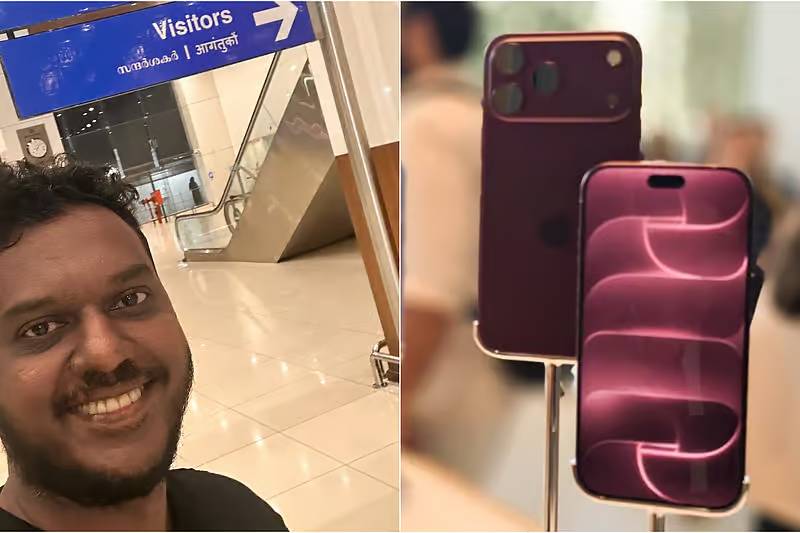
A UAE resident who staged a sit-in protest at Kerala’s Nedumbassery airport in Kochi after customs officials seized his new iPhone 18 Pro is planning to approach the Kerala High Court.
Ajas Mohammed said he returned to the airport on Monday to retrieve the phone, which was seized on Friday, October 23, but was unsuccessful. He claimed that customs officials offered him a settlement involving a reduced duty payment, which he declined. He is now exploring legal options and plans to seek clarity on what he describes as ambiguities in India’s customs regulations.
Mohammed, an entrepreneur and founder of the education app Eduport, said he may also file a Public Interest Litigation (PIL) seeking clearer guidelines on the import of personal electronic devices.
The incident has sparked debate over how Indian customs rules apply to personal electronics brought into the country by returning residents and travellers.
What do the rules say?
Dubai-based lawyer Shabeel Ummer explained that electronic devices may qualify as personal effects, but they are not automatically exempt from customs duty simply because passengers intend to use them personally.
Sharjah-based lawyer Hakkim Ottapalam added that customs officers can examine goods, assess their value and determine applicable duties under the Customs Act, 1962, and relevant rules. Both lawyers noted that the distinction between new and used personal effects is not necessarily the sole factor in determining their customs treatment.
Mohammed’s protest video went viral on social media, reportedly attracting more than 4.7 million views. He said several non-resident Indians had expressed support, with some offering financial and legal assistance, although he declined monetary contributions.
What happened at Kochi airport?
Mohammed arrived at Nedumbassery airport around 9pm on October 23, carrying a burgundy iPhone 18 Pro purchased in Dubai the previous day for Dh5,950. He said the phone had been removed from its box and was intended for personal use. He was also carrying an older iPhone 14.
According to Mohammed, customs officials told him that duty would be payable because the new phone’s value exceeded Rs75,000, approximately Dh2,890. He refused to pay and remained at the airport as a form of protest.
He said he was allowed to sit at the airport for several hours before Central Industrial Security Force (CISF) personnel intervened at around 2am and removed him from the premises. Customs officials subsequently filed a case against him, alleging interference with their duties.
Why is he considering legal action?
Mohammed argues that customs rules lack clarity regarding the number of electronic devices passengers may bring into India for personal use. He believes clearer guidelines would help travellers understand their obligations and avoid disputes at airports.
He has called for more specific rules on personal electronic devices, similar to the limits that apply to certain categories of gold and jewellery.
The case has renewed discussion about the treatment of personal electronics under Indian customs law, including the circumstances in which a newly purchased device may attract duty. The applicable requirements depend on the relevant baggage rules, exemptions and circumstances of import.
What goods can travellers carry duty-free under Indian customs law?
According to Shabeel, head of Legal and HR at V Group International, ordinary belongings reasonably required for personal use and daily life while travelling are generally permitted duty-free.
Can newly purchased items qualify as personal effects?
Hakkim, an advocate at Farouq Abdalla Lawyer and Legal Consultants, said the rules do not necessarily require an item to be old or previously used to qualify as a personal effect. This means a newly purchased device may also be considered a personal effect, depending on the circumstances.
However, Shabeel clarified that an electronic device is not automatically exempt from customs duty simply because a passenger describes it as personal property. Customs authorities may consider factors such as the item’s value, condition, quantity, intended purpose and the circumstances of its purchase.
Hakkim added that passengers should be prepared to explain the purpose of their purchase and provide reasonable supporting evidence when necessary. Relevant records, such as call history, messages, account information and other documents, may help establish the circumstances. Customs officers may consider these details when assessing the goods under the applicable law.
Both lawyers agreed that there is no blanket limit on the number of mobile phones a passenger may carry. However, the number of devices alone does not determine whether they qualify for duty-free treatment.
Shabeel outlined how different situations may be assessed under the applicable rules:
- Two previously owned and regularly used phones: The circumstances may support treating both as personal effects, although the applicable rules and individual facts remain relevant.
- One existing phone and one newly purchased iPhone: The new device may receive a different assessment. Its intended personal use does not automatically guarantee duty-free entry.
- Multiple new or boxed phones: These may prompt questions about the purpose of importation and whether the devices qualify for passenger baggage concessions.
Can passengers appeal customs decisions?
Hakkim said Section 128 of the Customs Act, 1962, provides a mechanism to appeal certain customs decisions before the Commissioner (Appeals). Passengers should verify the applicable limitation period and procedural requirements for the specific order before filing an appeal.
Despite the attention surrounding the incident, both lawyers cautioned against reaching conclusions without reviewing the full facts and relevant documents.
“Without examining the complete facts, the relevant documents and the applicable legal provisions, it would not be appropriate to conclude that either party acted unlawfully,” Hakkim said.
Shabeel added that reported accounts of an incident should be distinguished from a judicial determination of whether the actions taken were lawful.

