

The plans propose a 68km federal highway featuring 10 major interchanges.
Dubai: The UAE Infrastructure and Housing Council held its first 2026 meeting, chaired by Suhail bin Mohammed Al Mazrouei, Minister of Energy and Infrastructure, to review major transport and infrastructure projects aimed at enhancing inter-emirate connectivity and supporting future urban growth.
The session, attended by Mattar Al Tayer, Director General and Chairman of Dubai’s RTA, alongside council members and senior ministry officials, focused on monitoring the progress of strategic initiatives to strengthen the UAE’s infrastructure readiness and global competitiveness.
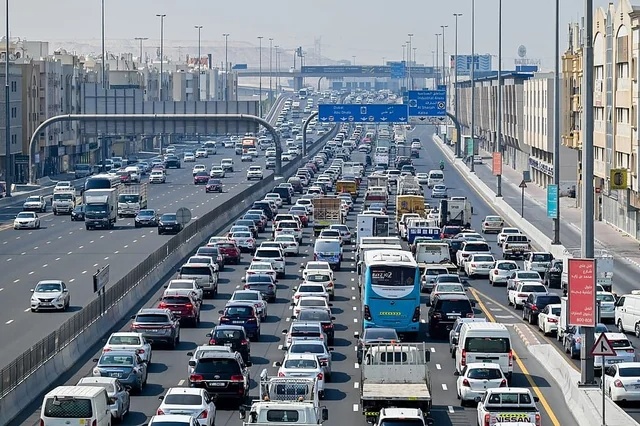
Held virtually, the meeting covered several key agenda items, including the results of federal policy studies to curb vehicle growth, proposals to expand mass transit connections between Dubai, Sharjah, and Ajman, and updates on the Fourth Federal Highway project, one of the UAE’s flagship road development initiatives.
The council examined technical progress on the highway, which is designed to enhance inter-emirate connectivity, increase road capacity, ease congestion, and improve traffic flow.
The plans include a 68km federal highway with 10 major interchanges, six to eight lanes in each direction, and four flyovers, at an estimated cost of around Dh6 billion.
The council also discussed a comprehensive study for an integrated mass transit network connecting Dubai, Sharjah, and Ajman to address growing daily commuting demand. The proposed system would feature 10 main routes with bus rapid transit (BRT) lanes and links to key transport hubs, including metro stations and city centres.
Additionally, officials reviewed the impact of recent adverse weather, assessing measures taken to ensure traffic continuity and road safety during heavy rain, underscoring the importance of applying these lessons to enhance preparedness and response capabilities.
Officials highlighted the need to accelerate strategic transport projects and expand sustainable mobility solutions, improving connectivity between densely populated areas and business districts, reducing reliance on private vehicles, alleviating congestion, and offering flexible transport alternatives.
Al Mazrouei emphasised that infrastructure development remains a core pillar of the UAE’s comprehensive development strategy and a key driver of national competitiveness, supporting a vision that prioritises quality of life and sustainable resource management.
He added that the next phase will accelerate high-impact projects aimed at improving transport efficiency and enabling a transition to smart, sustainable mobility systems capable of accommodating population growth and urban expansion while reducing congestion and emissions.
The council also reviewed plans to enhance Ajman’s connectivity with the third and fourth federal road corridors, as part of broader efforts to strengthen inter-emirate mobility and facilitate the movement of people and goods, supporting overall economic activity.

