

While some parents took to social media to call the results “unjustifiably strict,” many educators welcomed the outcomes and praised their students’ efforts.
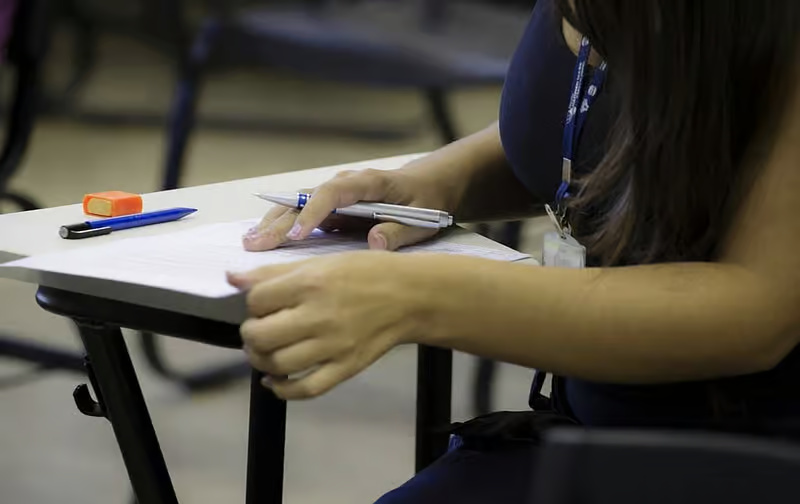
As thousands of students across the UAE received their A-level results last week through a Portfolio of Evidence (PoE) system, educators praised the process as robust and fair, while reassuring parents that it represented the best possible method of assessment under the circumstances.
In April this year, Cambridge, Pearson Edexcel and OxfordAQA cancelled all IGCSE and A-level examinations in the UAE for the May/June 2026 series amid safety concerns arising from the ongoing US-Israel-Iran conflict.
Instead of sitting formal examinations, thousands of students were assessed through a Portfolio of Evidence (PoE), comprising coursework, internal assessments and academic work completed throughout the year.
Parents, students react
While many educators praised the PoE process, some parents took to social media to describe the results as “shocking” and “unjustifiably strict.”
One parent said her daughter received a disappointing grade in a subject where she had consistently achieved top marks throughout the year. “We will be sending the paper for re-evaluation to the Cambridge board,” she said.
Some students also questioned whether the PoE system gave them a fair opportunity to demonstrate their abilities. One Cambridge student, who received A*, A and B against predicted grades of A*, A*, A*, said the process required them to complete “twice the amount of effort in half the time”.
The student also said there was little clarity about how the evidence was assessed. “I truly believe scores would have been better if we actually sat the papers,” they said.
Another Dubai student criticised what he viewed as Cambridge’s strict approach, contrasting it with Pearson Edexcel’s use of enhanced grading based on previously completed examinations.
Schools remain positive
Despite concerns from some students and parents, school leaders across the UAE expressed confidence in the results.
Andy Kai Fong, Secondary Principal at GEMS Wellington Academy Silicon Oasis, said the portfolios had accurately reflected students’ performance and that the school was “delighted with the outcomes”.
He also acknowledged the considerable emotional strain experienced by students and families, particularly after the disruption caused by the Covid-19 pandemic and the latest exam cancellations.
Sheridan Teasel, Head of Secondary at Dubai British School Emirates Hills, said the evidence had been completed under formal examination conditions and designed to replicate real A-level papers. However, he acknowledged the “incredible amount of work” unexpectedly transferred to teachers, which would normally have been handled by examination boards.
Rebecca Coulter of Dubai British School, Jumeirah Park, said students faced a condensed and more intensive assessment schedule alongside their coursework and other evidence.
At Safa Community School, Vice Principal Mike Davies said more than 7,000 pieces of evidence were collated, quality-assured and submitted electronically to examination and awarding bodies. Staff and students worked both in school and remotely, while the school even operated a 24-hour evidence drop-off facility to ensure logistical challenges did not disadvantage students.
Emotional toll
Despite reassurances from school leaders, the experience took an emotional toll on many students.
One student said she was relieved the process was over but frustrated that she had not been able to sit traditional A-level examinations. She was particularly concerned about friends who had received lower grades than they believed they deserved.
While many students met their university conditions, others were left negotiating with universities after falling short of their required grades, with some turning to backup institutions.
The uncertainty also highlighted a broader concern among students and families: whether universities would view PoE grades with the same confidence as grades earned through traditional A-level examinations.
For those who navigated the unprecedented assessment process, however, the results represent not only academic achievement but also considerable resilience from students, teachers and school leaders.

