

When Child Car Seats Are Mandatory, Where to Install Them and What Exceptions Apply.
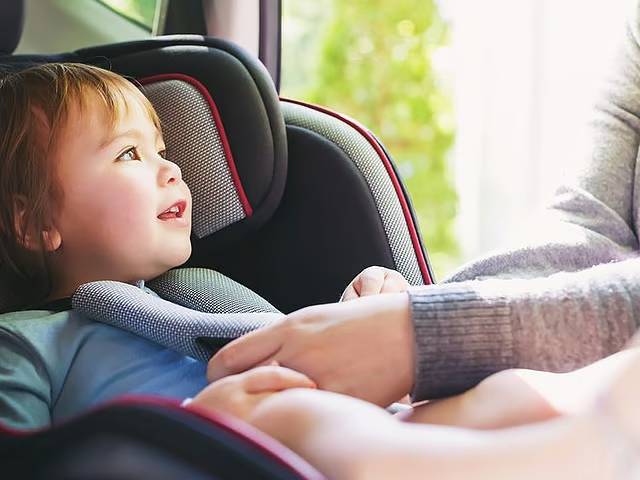
Dubai: How can you tell if your child is travelling in the right car seat? And when is it safe to move from a rear-facing seat to a booster?
With new federal traffic regulations coming into effect on January 1, 2027, parents in the UAE should familiarise themselves with child car seat requirements, including age and height limits, where seats must be installed and the circumstances in which exceptions are permitted.
A January 2026 survey commissioned by RoadSafetyUAE and Al Wathba Insurance, involving 1,010 UAE residents, found that 72 per cent of parents with children aged four and under owned an appropriate child restraint system, while 28 per cent did not. Research also indicates that child restraints can reduce the risk of death in a road accident by up to 71 per cent and the risk of injury by up to 82 per cent.
Here is a breakdown of the regulations and safety recommendations parents should know.
Child car seats mandatory for children aged four and under
Under Article 11 of Cabinet Decision No. 174 of 2026, drivers must provide appropriate child safety seats for children aged four and under.
The seats must:
- Be installed in the rear of the vehicle.
- Be appropriate for the child’s weight and height.
- Meet the safety standards applicable in the UAE.
When can a child car seat be installed in the front?
The regulations provide two exceptions to the requirement that children travel in the rear seat.
1. Medical conditions
Children with medical conditions that prevent them from using a child safety seat may qualify for an exemption, provided the condition is supported by a medical certificate approved by the relevant UAE medical authority.
The child must also be accompanied by another person in the rear seat.
2. Vehicles without rear seats
If a vehicle does not have rear seats, a child safety seat may be installed in the front, provided that:
- The seat is rear-facing.
- The front passenger airbag is deactivated.
When can children sit in the front passenger seat?
Under the federal regulations taking effect on January 1, 2027, children may sit in the front passenger seat if they meet either of the following conditions:
- They are older than 10 years.
- They are at least 145cm tall.
Children do not need to meet both criteria. For example, a nine-year-old who is at least 145cm tall may be allowed to sit in the front passenger seat.
Which child car seat should parents use?
The appropriate child restraint depends on the child’s age, weight and height. The following are general road safety recommendations to help parents choose the right seat.
- Rear-facing child seats: Children under four should travel in rear-facing child safety seats, subject to the height and weight limits specified by the manufacturer.
- Forward-facing child seats: Children can move to a suitable forward-facing seat once they meet the manufacturer’s age, weight and height requirements. Some models are designed for children weighing between 9kg and 18kg.
- Booster seats: Children aged five to 10 may need booster seats to ensure the vehicle’s seat belt fits properly, with the shoulder belt resting across the chest rather than the neck.
- Anchor points: Child seats must be securely fitted using the vehicle’s designated anchor points or an approved seat belt installation method.
Child restraint systems can reduce the risk of death in a road accident by up to 71 per cent and the risk of injury by up to 82 per cent. Proper use of seat belts and child restraints is therefore a crucial measure in preventing serious injuries and fatalities on roads in the UAE and worldwide.
Other safety precautions parents should follow
In addition to complying with child restraint requirements, parents should take the following precautions:
- Activate child safety locks: Prevent children from accidentally opening doors or windows while the vehicle is moving.
- Secure loose objects: Remove or properly secure bulky items that could become dangerous projectiles during sudden braking or a collision.
- Never leave children unattended: Vehicle interiors can reach dangerously high temperatures within minutes, even when windows are slightly open. Children left inside parked vehicles face a serious risk of heatstroke.

