

UAE banking sector reports resilient profits and lending despite ongoing tensions.
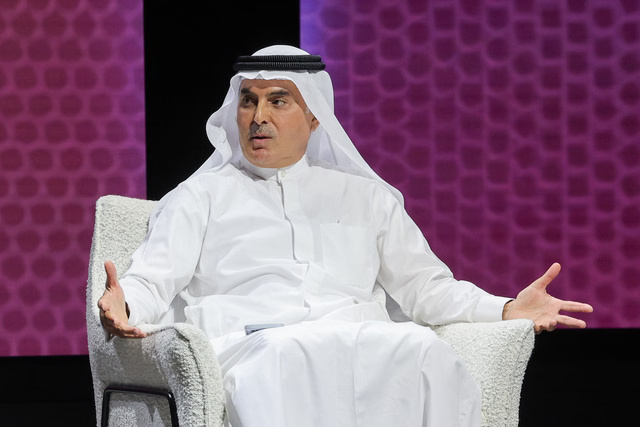
Dubai: Senior banking officials said the UAE banking sector has not sought any Covid-style rescue package during the current regional crisis, even as lenders brace for potential disruptions to trade, tourism, and regional shipping routes.
Speaking at a media briefing, senior officials from the United Banks Federation (UBF)—a professional body representing banks and financial institutions in the UAE—said the sector remained profitable and well-capitalized despite ongoing tensions. They added that the Central Bank of the UAE had only eased certain technical banking ratios, rather than introducing broad-based financial support measures.
AbdulAziz Abdulla Al Ghurair, Chairman of the UBF and Mashreq Group, said there had been minimal capital outflows from the UAE in the weeks following the outbreak of the US-Israel-Iran war on February 28.
“The question was whether there was significant capital outflow. Hardly any money moved out; in fact, funds are still flowing in,” Al Ghurair said.
He added, “Even with the Central Bank’s support package, no funding was provided compared to the Covid period. During Covid, support was far more extensive. This time, after discussions, the view was that the banking sector is in strong shape and at its best condition, so a support package was not necessary.”
No support needed
During the pandemic, the UAE introduced a Dh200 billion support package for banks and businesses. This time, relief measures were largely limited to temporary repayment flexibility for affected companies and individuals.
Al Ghurair said he supported the government’s position. “They were right. We did not need support, and we are still growing at a good rate… The banking sector has performed well and should continue to do well,” he said.
He added, “The Central Bank has also provided some flexibility on repayments for businesses impacted by the crisis. We have until the end of June to assess these cases and give businesses some breathing room.”
For example, if a restaurant relies heavily on tourism and tourist traffic slows down, banks must remain flexible and fair. If a business has been successfully operating for 15 years but suddenly faces financial difficulties, support can be provided without harming its risk rating, reputation, or overall standing.
Inflation and food security pressures
However, some sectors have started to experience pressure, with hospitality businesses reliant on tourism, as well as restaurants and firms connected to shipping and logistics, identified as particularly vulnerable.
Al Ghurair and Jamal Saleh, Director General of the UBF, estimated that inflation could climb to around 3% by the end of the year, driven by higher fuel prices, freight charges, and import costs.
Products transported by air have become especially costly, they noted, with rising food import prices cited as a key example.
At the same time, the crisis has revived discussions around food security and boosting local production.
Officials said policymakers are increasingly open to revisiting regulations to strengthen domestic agriculture and manufacturing.
“Everything that was considered taboo in the past, as long as it supports local production and self-sufficiency, we will break those rules,” Al Ghurair said.
Property market slowdown discussed
Executives also addressed concerns about Dubai’s property market following years of strong growth. While they noted that mortgage defaults remain below 1%, they acknowledged that buyers have become more cautious, with many delaying purchases amid expectations of a potential price correction.
“People have slowed down their property purchases,” said Al Ghurair.
“They’ve slowed down because they think, ‘maybe I can wait—prices might come down,’” he added.
Strait of Hormuz remains a concern
Bankers said the potential disruption of the Strait of Hormuz has become a more significant planning consideration for both businesses and regulators.
They added that the UAE is increasingly exploring alternatives via Fujairah and the Arabian Sea, along with future rail and logistics connections.
“We will find a solution,” said Al Ghurair.
Despite concerns over regional instability, Al Ghurair said he remains optimistic about the UAE’s long-term outlook, noting that the country has consistently emerged stronger from past crises. “They all bounce back better,” he said, adding that challenging periods often prompt governments and businesses to rethink regulations, logistics, and infrastructure in ways that ultimately enhance competitiveness and attract greater investment.
He also said many residents in the UAE “take it for granted” how safe and stable everyday life is in the country. “We want to make the UAE a home for everybody, for talented people to live and work in harmony,” he said, while urging residents and businesses not to leave during uncertain times.
“Don’t pack up and go, please. You’ll regret it if you pack up and go,” he added.

