

RBL Bank comes under Dubai bank’s control following a $2.75 billion capital injection in historic deal.
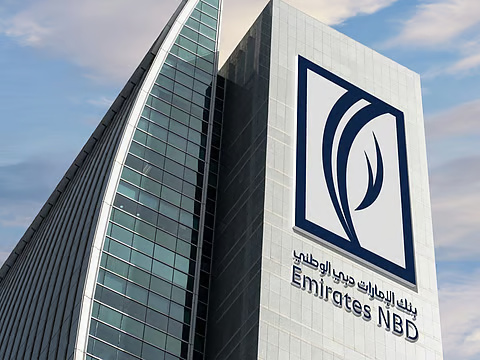
Dubai: On June 18, 2026, at a ceremony in Mumbai attended by Maharashtra Chief Minister Devendra Fadnavis, Emirates NBD completed its acquisition of a 60% controlling stake in RBL Bank. The $2.75 billion capital infusion marks what is widely seen as one of the most significant cross-border banking deals in the region in decades.
The scale of this deal is unprecedented. To begin with the numbers, they are truly striking. A capital infusion of approximately INR 260 billion, executed through a fresh preferential share issue, makes this the largest foreign direct investment ever in the Indian banking sector. It is also the largest equity fundraising in the history of Indian banking.
In addition, it marks the first time a foreign banking institution has acquired a majority stake in a profitable, listed private sector bank in India. Each of these milestones would be notable on its own—but together, they signal a defining shift and open a new chapter in Indian banking history.
The regulatory journey to complete the transaction was historic in its own right. Approvals were obtained from the Competition Commission of India (CCI) in January 2026, followed by the Reserve Bank of India (RBI) in April, the Securities and Exchange Board of India (SEBI) and the Ministry of Finance in May, as well as the Central Bank of the United Arab Emirates. The multi-jurisdictional clearance process reflected the scale and sensitivity of the deal, underscoring the seriousness with which both governments approached it, and making India’s sovereign endorsement unmistakably clear.
Why India, and why now
Emirates NBD’s entry into India was not opportunistic. Its international strategy is structured around five core markets: the UAE, Saudi Arabia, Egypt, Turkey and India—each selected for distinct structural advantages such as demographic scale, economic momentum and strategic connectivity.
India, now the world’s fifth-largest economy, is expanding at a pace that outstrips many comparable markets. Its growing middle class is set to reshape global consumption patterns, while its financial system—though already well developed—remains underpenetrated in key segments. These gaps present opportunities for well-capitalised, technology-driven banks to make a significant impact.
Emirates NBD’s existing India branches in Mumbai, Chennai and Gurugram are expected to be integrated into RBL Bank over time, combining decades of relationship banking with a domestic network of 564 branches serving around 15 million customers.
This goes beyond a conventional market entry. It represents a deeper structural integration into India’s banking landscape.
The architecture of the deal matters
A key detail stands out: the entire $2.75 billion flows directly into RBL Bank’s balance sheet through a fresh share issuance, rather than being paid out to an existing shareholder. This represents long-term, constructive capital aimed at strengthening the bank’s foundation—supporting investment in technology, talent and scalability to compete with India’s largest private sector lenders. It is the type of strategic foreign investment Indian regulators have long encouraged but rarely seen at this magnitude.
Following the transaction, RBL Bank has been reclassified under the Reserve Bank of India (RBI) framework for a “foreign bank in subsidiary mode.” This designation marks an important shift in India’s approach to international banking capital, moving beyond limited branch-based participation toward a model where a foreign parent takes a significant, committed stake and operates through a fully embedded domestic institution.
The corridor that makes this logical
The UAE–India economic relationship stands as one of the most significant bilateral partnerships globally. With the Comprehensive Economic Partnership Agreement (CEPA) in effect, cumulative UAE foreign direct investment into India approaching $25 billion, and an estimated 3.5 million Indians residing in the UAE, financial flows between the two countries are both deep and continuous. Bilateral trade has already exceeded $100 billion, while the UAE ranks as the second-largest source of remittances to India—reflecting a substantial, day-to-day circulation of capital through multiple channels.
A historical footnote adds deeper context: the National Bank of Dubai, predecessor to Emirates NBD, was established in 1963 with assistance from the State Bank of India. In the early decades of the Gulf’s development, much of the region’s trade was denominated in Indian rupees, and Indian merchants and capital played a foundational role in building its financial infrastructure. Against that backdrop, today’s transaction is seen as a symbolic full-circle moment: an institution historically supported by Indian financial architecture now becoming one of the largest foreign investors in an Indian bank.
A signal the world will read
Regulatory approval allowing a foreign institution to hold up to 74% in a profitable, listed Indian private bank represents a notable policy milestone. It signals growing confidence in India’s financial system and a broader recognition that long-term foreign capital can serve as a stabilising and developmental force.
Global banks and investors in financial hubs such as London, Singapore and Tokyo are expected to take note, as the Emirates NBD–RBL structure may serve as a reference point for future cross-border banking partnerships in India.
What distinguishes this transaction is its stated long-term horizon. Emirates NBD has framed the investment not as a short-cycle financial play, but as an institutional commitment measured in decades. Viewed in that context, the arc—from early Indian involvement in the Gulf’s financial system in 1963 to today’s multi-billion-dollar investment into a Mumbai-based bank—underscores why this deal is being positioned as structurally significant rather than merely large in scale.

