

From declining reading levels to regression in maths, experts are urging parents to rethink the summer break as a balance of rest, curiosity and everyday learning, rather than relying on worksheets.
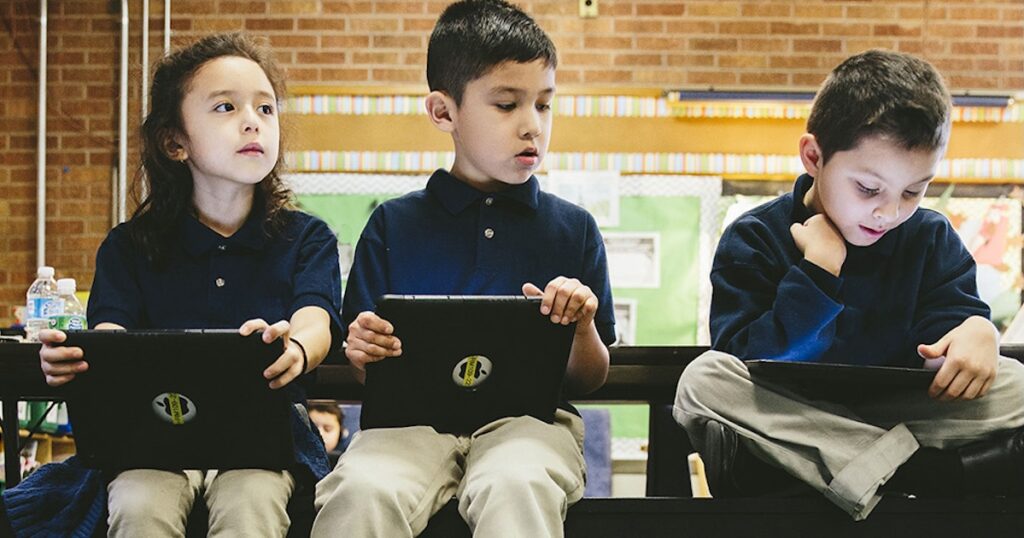
With summer vacations set to begin in two weeks, educators across the UAE are warning about the so-called “summer slide” — a well-documented phenomenon in which students lose part of their academic progress during long breaks.
Several studies suggest that children can lose 20–30% of their learning over the summer, with mathematics skills particularly affected, showing an average decline equivalent to up to 2.6 months of learning loss over just six weeks.
While summer gives children a valuable opportunity to unwind, research suggests it can also reverse months of academic progress. Studies indicate that test scores often stagnate or decline during the holiday period, with mathematics typically experiencing a greater drop than reading.
The latest findings are drawn from NWEA’s 2024–2025 MAP Growth data and evaluations of summer learning programmes.
Educators say this learning loss is often not immediately visible, but can accumulate over time. In response, school leaders in the UAE are urging families to rethink how learning is approached during the break — not as formal study, but as part of everyday life.
Dr Funke Baffour-Awuah, Vice President of Culture of Excellence, said the way parents frame summer learning is crucial. “The moment we talk about ‘retaining academic skills,’ we immediately place the burden on children — and often in the wrong way. Summer should not be a diluted version of school. It should be a time of intentional, joyful learning,” she said.
“My advice to parents is this: embed learning into life, not worksheets. Read together — not just assigned texts, but books children genuinely want to read. Visit a museum and ask questions to spark curiosity. Cook a meal and explore measurements, chemistry and culture all at once,” she added.
She noted that everyday experiences often matter more than structured tasks. “The research is clear: children who engage in regular, low-pressure reading over the summer return to school measurably stronger. But the quality of reading matters as much as the quantity.”
However, educators also caution against turning summer into an extension of the classroom. Dr Baffour-Awuah stressed the importance of balancing learning with rest when asked how families can strike the right approach.
“This is the question we need to ask more boldly, because in our anxiety about learning loss we risk something equally serious — rest loss,” she said. “Summer is not just a holiday from school; it is, for many children, a vital period to reset, regulate and recover.”
She suggested a gentle structure rather than rigid scheduling. “Balance, for me, looks like mornings with purpose and afternoons with freedom. We want to avoid extremes: total disengagement on one end, and overly packed schedules of tutoring and programmes on the other, which leave children exhausted by September.”
Dr John Robert Brown, Director of Education at Woodlem Education, also emphasised experiential learning. “Parents may consider summer holidays as opportunities for experiential learning for their children,” he said.
“Many holiday experiences can be linked to academics. There are unlimited opportunities in the real world to apply geometry, statistics and even algebra,” he added.
Building life skills beyond textbooks
Experts agree that summer is also a key period for developing confidence, creativity and resilience.
Dr Brown said physical activity and real-world exposure are essential. “Children learn important lessons about collaboration, competition, fairness, perseverance and health on playgrounds and playing fields.”
He cautioned against overprotection. “Too many children today are shielded from real-world risks and live in virtual, risk-free environments. Parents should limit online time and encourage outdoor activity.”
Pretty Khosla, Principal at The Apple International Community School, said families should focus on consistency rather than intensity.
“Research consistently highlights the risk of summer learning loss, particularly in reading, writing and mathematics. However, this can be mitigated through simple, consistent learning opportunities embedded in everyday family life,” she said.
“Even 15–20 minutes of purposeful learning daily can help students retain essential skills. The goal is not to increase academic pressure, but to maintain engagement, curiosity and a love for learning,” she added.
On life skills, she noted: “Summer is a valuable opportunity to develop personal qualities, competencies and character attributes essential for future success.”
From cooking and budgeting to volunteering and internships, she said such experiences help students build “confidence, communication skills, teamwork, adaptability, empathy and social responsibility.”

