

Among GCC countries, the UAE recorded the lowest proportion of logged days involving tobacco use (58.6%), while showing the most significant observed physiological differences in the region.
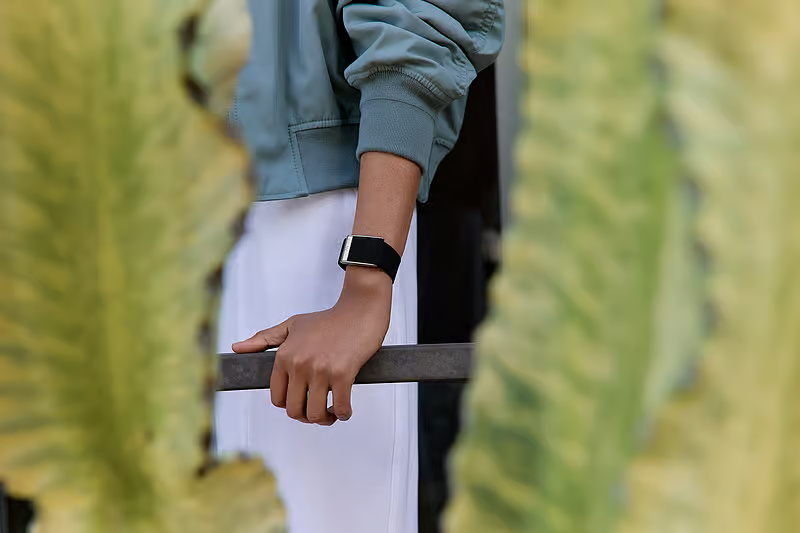
Despite widespread awareness of the harmful effects of smoking, many smokers continue to struggle with quitting. New research suggests that personal wearable devices, which provide real-time insights into how smoking affects the body, could play a key role in supporting smoking cessation.
A landmark study by wearable technology company Whoop, published in JMIR mHealth and uHealth, analysed data from more than 12,000 new members over a 72-week period. The study found that continuous health monitoring was associated with significant and sustained reductions in tobacco use, with these changes corresponding to measurable improvements in cardiovascular health and sleep quality.
The study found that daily tobacco use among members who reported smoking declined significantly, falling from 55.1% at enrolment to 27.2% after 72 weeks. By the end of the study period, more than one in four participants (28.2%) who initially used tobacco had stopped completely.
“The size of the shift surprised us,” said Dr Greg Grosicki, Staff Research Scientist at Whoop. “We did not expect that scale. I won’t claim Whoop caused it, but it is difficult to ignore that seeing your own physiology day after day may encourage people to make different choices.”
The impact on the body
The study also measured the physiological differences between tobacco-use days and tobacco-free days. It found that days involving tobacco use were associated with:
- A 1.71 beats-per-minute increase in resting heart rate
- A 3.54 millisecond decrease in heart rate variability (HRV)
- A higher respiratory rate
- Nearly 10 fewer minutes of sleep
The research also included a regional analysis of Whoop members across the Gulf Cooperation Council (GCC), which showed similar overall patterns while highlighting notable differences between countries.

The UAE recorded the lowest proportion of logged tobacco-use days among GCC countries (58.6%), yet showed the largest observed physiological differences across the region. On tobacco-use days, UAE members experienced a significant decline in heart rate variability (HRV), along with increases in resting heart rate and respiratory rate, and lost nearly three minutes of sleep.
Dr Grosicki explained that these findings reflect the contrast between tobacco-use and tobacco-free days rather than indicating greater harm among UAE members. “Larger physiological differences are expected when members use tobacco less frequently because there are more non-use days to compare against,” he said. “The results reflect the day-to-day contrast, not greater harm in the UAE.”
Making the hidden cost visible
Although the health risks of smoking are widely known, many people continue to smoke. Dr Grosicki suggested that awareness alone may not always be enough because understanding that something is harmful in theory is different from experiencing its effects personally.
“Health warnings tell you there is a problem, then leave you to work out what it means for you and what to do,” he said. “Whoop closes that gap by showing how tobacco affects your body over time.”
Dr Ihsan Almarzooqi, co-founder and Managing Director of Metabolic (formerly GluCare.Health), said wearable technology can help reveal the often unseen effects of habits. “Wearables make the invisible cost of a habit visible,” he said. “Most people have no idea this is happening in real time because they have never seen the data. Once they do, quitting stops being a moral argument and becomes a physiological one.”

Nalla Karunanithy, CEO of Digital Health and Omnichannel at Aster DM Healthcare, said wearables help transform an abstract health risk into a personal experience. “Seeing data such as ‘your HRV dropped 22% last night’ can influence people in a way that generic health warnings often cannot,” he said.
Using data to support smoking cessation
For smokers looking to quit, experts recommend taking a data-driven approach. Dr Almarzooqi advised users to begin monitoring their health metrics before their quit date whenever possible.
“If you can, start tracking a few days before your quit date,” he said. “You don’t need a perfect baseline — just enough to understand your typical resting heart rate, HRV and sleep patterns, so you have something to compare against after you stop.”
Karunanithy cautioned that quitting should not depend on willpower alone. “Build structure rather than relying only on resolve,” he said. “Successful quitters reduce exposure to triggers, replace old habits with new behaviours, and use social support. Keep strategies ready for cravings — ride the wave, delay the urge, or take a short walk.”

The company recently launched Thrive by myAster, a comprehensive health assessment programme that evaluates more than 100 biomarkers through a test conducted every six months, providing users with a broader picture of their overall health.
Dr Grosicki offered a practical approach for people who notice lower recovery scores on tobacco-use days. “Don’t read too much into a single day,” he said. “But if your recovery is consistently lower on the days you use tobacco, that is your body telling you something. Try reducing your use, observe the changes over a few weeks, and use that information to guide your decisions. It is harder to dismiss your own data than a general health warning.”

