

Fintech rolls out dirham accounts through Ruya Bank, with CEO positioning Dubai as a key base rather than a satellite office.
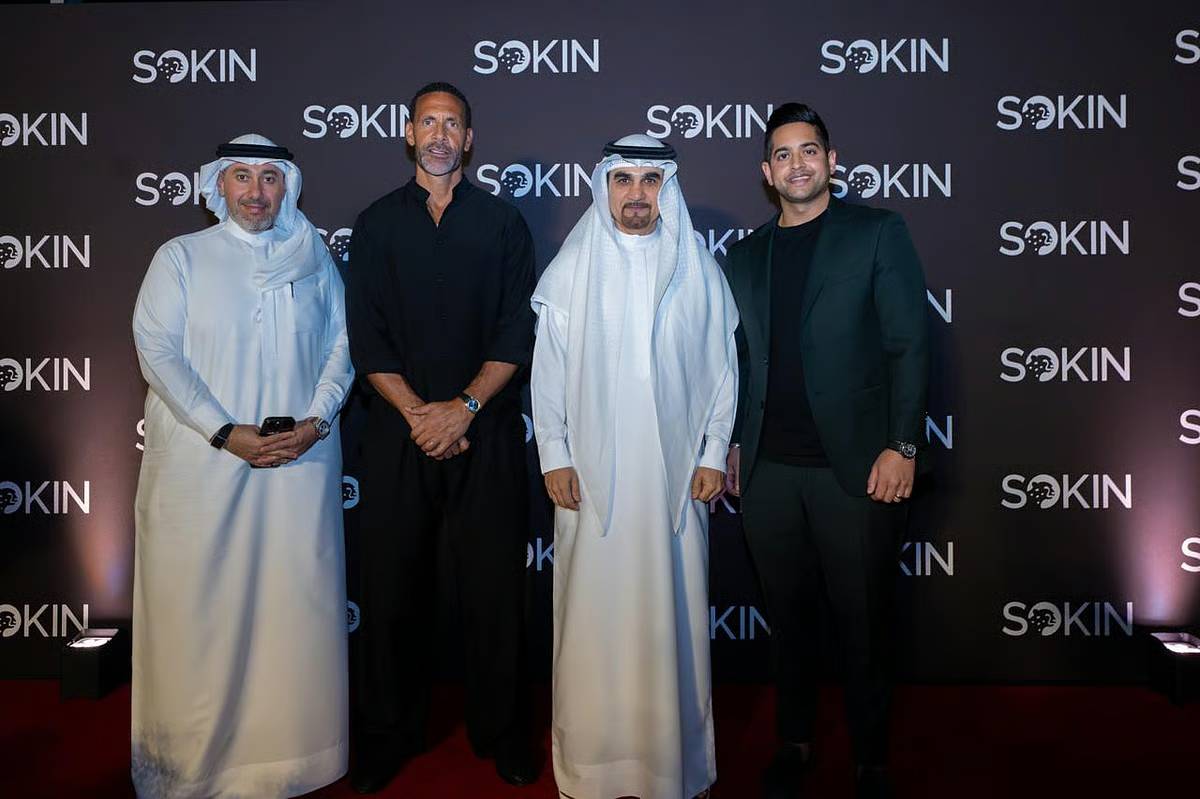
Dubai: Global fintech firm Sokin has secured a licence from the Dubai Financial Services Authority (DFSA) and opened a new UAE office at One Za’abeel. The company plans to expand its local workforce to 100 employees and has entered into a strategic partnership with Seed Group.
The move enables business clients to send and receive dirhams through a Sokin AED account. Platform partners can also access embedded local payment rails, allowing them to move money into and out of the UAE, as well as across more than 70 other currencies on behalf of their clients.
The scale of the business is significant. Companies move more than $11 billion annually through Sokin’s licences and infrastructure, covering 70 currencies across 170 countries. The fintech holds licences in 36 countries and operates eight offices. Founded in 2019, it has raised more than $100 million from investors, including Morgan Stanley Expansion Capital and Prysm Capital.
Building a base in Dubai
Vroon Modgill, Sokin’s founder and CEO, insists the UAE is no side project.
“This is not a satellite office for us,” he tells Gulf News in an exclusive interview. “We have a proven business model and we’re doing 100 per cent year-on-year growth.”
He says Sokin aims to double its transaction volumes next year.
The company currently employs around 65 people in the UAE, Modgill reveals. Further recruitment will include roles in the partnerships team, which works with fintech firms and software platforms seeking to embed Sokin’s multi-currency accounts into their services.
Sokin’s expansion has been years in the making. The company entered the UAE nearly three years ago as a strategic partner of Seed Group, a company of The Private Office of Sheikh Saeed bin Ahmed Al Maktoum.
Modgill dismisses the suggestion that the latest expansion represents a sudden bet on the market.
“We want to be everywhere, not somewhere,” he says. “We’ve been building the foundations. Now it’s time to accelerate.”
The regulatory approvals and licence have given the company the confidence to scale up its Dubai operations. Sokin secured its licence through its Dubai International Financial Centre (DIFC) office, where it is regulated as a Money Service Provider under a Category 3D licence.
The licence covers the issuance of payment instruments and the execution of payment transactions, as well as account information and payment initiation services. It also permits the company to advise on and arrange money services.
Onshore AED services are delivered through a partnership with Ruya Community Islamic Bank LLC. Licensed by the Central Bank of the UAE, Ruya holds the dirham deposits. UAE businesses can maintain an AED account alongside accounts in 28 other currencies.
How Sokin aims to simplify payments
The UAE payments market is crowded, with banks and money transfer companies having operated in the country for decades. But Modgill argues that competing on price alone is not the right strategy.
Corporates operating across 10 countries often have to manage 10 banking partners, 10 accounting platforms and 10 different payment acceptance methods, he says. That can mean dealing with around 30 separate platforms.
“What we decided as a team very quickly is what if we just condense that into one?” he says. “We’re probably the only ones in the market that has that full stack.”
Trying to undercut competitors on price could prove counterproductive, he warns. In a pricing war, he says, “I might win one transaction, that’s about it.”
Customer retention is more important, he adds, pointing to existing clients who are conducting more business through Sokin each month.
Stablecoins and artificial intelligence are also central to the company’s proposition. This year, Sokin launched stablecoin accounts and settlement services. It also introduced an MCP connector that allows finance teams to initiate payments through the AI tools they already use.
Modgill says the company acquired a firm in March that provides settlement infrastructure.
He is cautious about competitors moving too quickly into the stablecoin space. “We spent 18 months looking at stablecoins and seeing how it would fit into our infrastructure,” he says.
Stablecoins, he explains, operate alongside traditional payment networks such as Swift. Customers are generally less concerned about which payment rail is used than whether the transaction is settled instantly.
AI, however, has its limits in financial services. Regulatory licensing still requires human involvement, Modgill says. He recalls a regulator outside the UAE asking his team to remove AI note-taking tools from an initial meeting.
Instead, Sokin uses AI primarily to improve operational efficiency.
Seed Group is selective about the companies it partners with. Hisham Al Gurg, CEO of Seed Group and The Private Office of Sheikh Saeed bin Ahmed Al Maktoum, says the group evaluates far more businesses than it ultimately supports.
“Every year, we probably look at more than 2,000 companies,” he says. “How do we pick fewer than 20?” The group’s role, he explains, is straightforward: “to help them succeed.”
Al Gurg sees fintech as a natural fit for Dubai, given the sector’s ability to adapt quickly to local markets.
“It’s very agile,” he says. “With software and with technology, you can customise, you can localise very quickly.”

