

This Ramadan, enjoy your Iftar under the skies of Saturn, Jupiter, and more
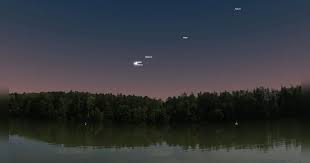
Dubai: This Ramadan, the night sky is putting on a spectacular show. On Saturday, 21 February 2026, Al Thuraya Astronomy Center invites stargazers to witness a rare planetary parade from the tranquil Al Qudra Desert.
What is a planetary parade and why is it rare?
A planetary parade occurs when multiple planets in our Solar System appear to align in a single sweeping arc across the sky, as seen from Earth. This alignment happens because all planets orbit the Sun roughly along the same flat plane, called the ecliptic. Occasionally, several planets reach compatible points in their orbits at the same time, creating the visual effect of a celestial queue stretching across the horizon.
While two or three planets lining up is fairly common, seeing six planets parade together is exceptionally rare. Each planet moves at its own pace — for instance, Mercury completes its orbit in 88 days, whereas Saturn takes nearly 29 years. The precise cosmic choreography required for a multi-planet alignment like this doesn’t happen often, making it a truly spectacular event that demands attention.
Which planets will be visible on 21 February 2026?
On the night of the event, skywatchers will be able to see Venus, Mars, Jupiter, Saturn, Uranus, and Neptune forming a spectacular planetary parade.
- Venus: The brightest object in the evening sky, easily visible with the naked eye.
- Jupiter: Shines brilliantly and reveals its iconic cloud bands through a telescope.
- Mars: Glows with its familiar reddish hue.
- Saturn: Visible early in the evening; viewers should observe soon after Iftar to catch its famous rings before it sets.
- Uranus and Neptune: The outer ice giants are normally invisible to the naked eye but become stunning targets through high-powered telescopes.
This rare alignment promises one of the most talked-about astronomical displays of the decade.
A Ramadan experience like no other
The evening kicks off at 6:00 pm with an event introduction, followed by Iftar and prayer at 6:20 pm, offering a meaningful moment for the community to gather under the stars during the holy month.
Saturn observation begins at 6:45 pm, so early arrival is essential to catch its iconic rings before the planet sets. As night falls, experts will discuss the relationship between Ramadan, Moon sighting, and the Islamic lunar calendar, a tradition guiding Muslim communities for over 1,400 years.
By 7:45 pm, a dedicated session will explain the planetary parade — how and why planets align and what makes this particular event so extraordinary. Following a Q&A, telescopes will shift to the Moon, Uranus, and Jupiter, before opening for free exploration of deep-sky objects such as nebulae and star clusters from 9:30 pm onwards. Visitors can also try phone photography through the telescopes to capture these cosmic moments.
Book your spot before it’s gone
With limited spaces, this event is expected to fill quickly. Whether you’re an astronomy enthusiast, a curious family, or simply seeking a meaningful Ramadan night out, this is a once-in-a-season experience that connects the heavens above with the spirit of the holy month below.
📅 Date & Time: Saturday, 21 February 2026, 6:00–10:00 pm
📍 Location: Al Qudra Desert, Dubai
🔗 Book now: althurayaastronomycenter.ae

