

Strong winter bookings and returning airlines support DXB’s recovery despite Gulf tensions.
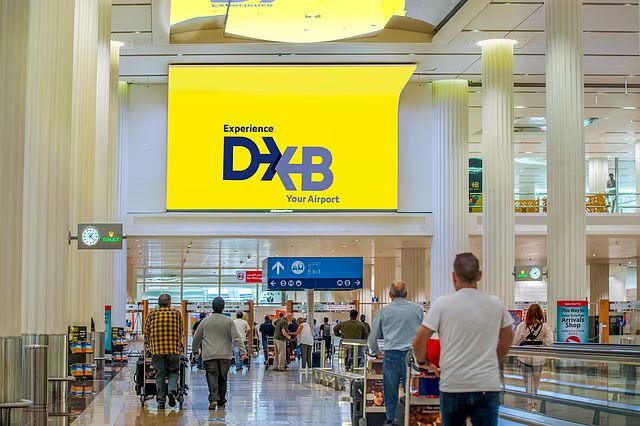
Dubai: Continued attacks on Saudi Arabia and the resulting disruption to regional aviation are unlikely to derail Dubai International Airport’s (DXB) recovery, Dubai Airports CEO Paul Griffiths has said.
He expects strong winter travel demand and the return of airline capacity to drive passenger growth through the end of 2026.
Speaking at a media roundtable on Tuesday, Griffiths said the recent escalation in Saudi Arabia had not prompted any changes to Dubai Airports’ passenger forecasts, despite the Kingdom being one of DXB’s largest markets.
“ I don’t think so. The conflict is sufficiently remote for us to confidently maintain our forecast for a recovery in passenger numbers,” he said when asked whether the continuing attacks could affect Dubai’s year-end targets.
“Looking ahead, bookings for the next few weeks are very strong.”
His remarks come as airlines continue to revise flight schedules to Saudi Arabia following October’s attacks on airports in the Kingdom, adding further uncertainty to an aviation sector already grappling with months of disruption linked to the US-Iran conflict.
Saudi flight disruption
Saudi Arabia’s aviation sector has faced renewed security concerns since October, when attacks targeted airport infrastructure and aircraft.
On October 8, King Khalid International Airport in Riyadh was hit in two separate attacks, targeting airport facilities and a Saudia aircraft. The Saudi General Authority of Civil Aviation (GACA) confirmed that the incidents resulted in deaths and injuries.
The attacks damaged a Saudia aircraft and disrupted operations at the capital’s main international airport. Earlier strikes had also affected airports in Riyadh and Abha.
Several international airlines subsequently suspended or scaled back services to Saudi Arabia, with some flight disruptions continuing into November.
Some carriers have since started restoring services. Qatar Airways resumed daily flights to Riyadh on November 13, followed by Dammam services on November 14, although other routes remain suspended.
Despite the developments, Griffiths cautioned against treating the wider Middle East as a single conflict-affected destination.
“You can’t say that the whole of the Middle Eastern area is one homogenous area because it isn’t,” he said.
He stressed that the challenges facing Saudi Arabia were separate from the broader regional conflict, adding that disruption in one market should not automatically be seen as a sign of wider regional instability.
Winter demand
Griffiths said bookings for Dubai’s winter travel season were particularly strong, supported by the emirate’s established appeal among visitors seeking warmer weather.
Asked about inbound travel demand, he responded: “Very, very strong. Very strong indeed.”
He said Dubai remained well positioned to attract visitors from key international tourism markets, particularly Europe, during the cooler months. However, Saudi Arabia continues to play a significant role in DXB’s aviation network.
The airport handled 1.4 million passengers travelling to and from Saudi Arabia in the third quarter of 2026, making it DXB’s second-largest country market after India, which recorded 2.6 million passengers.
The UK ranked third with 1.3 million passengers, while Pakistan and the United States also featured among the airport’s five largest markets.
Griffiths said the proportion of passengers connecting through Dubai and those beginning or ending their journeys in the emirate had remained broadly consistent with pre-conflict levels.
The two categories continue to account for roughly half of DXB’s passenger traffic each, although their respective shares vary slightly from month to month.
This stability is significant for Dubai’s aviation recovery, indicating that both international transit traffic and visitors travelling directly to the emirate continue to underpin demand.
Airlines return
Dubai Airports is also banking on the restoration of international airline services to accelerate its recovery in the final quarter of the year.
Griffiths said airline capacity had returned to approximately 83 per cent of previous levels, while Emirates was already operating at around 90 per cent of its earlier capacity.
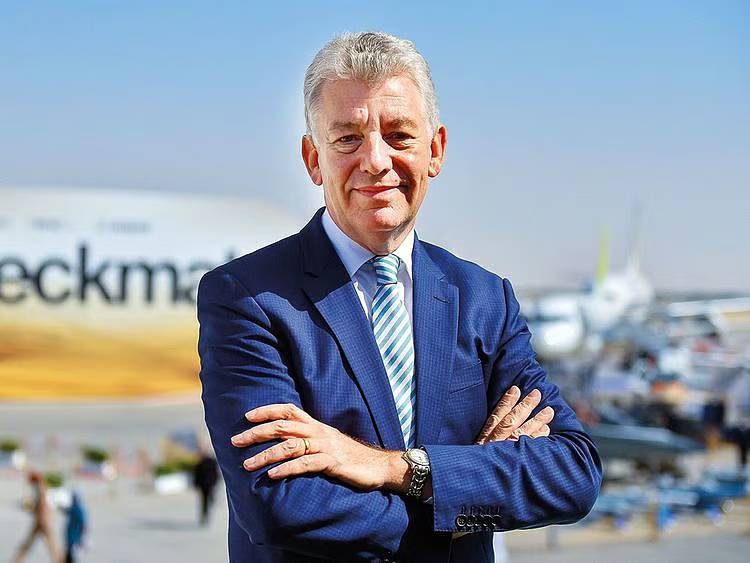
“There’s absolutely no barriers for us to get back to 100 per cent capacity,” he said.
He compared the current recovery with the strong rebound in air travel following the Covid-19 pandemic, when passenger demand returned faster than many airlines and airports had expected.
Griffiths said some airlines had retired aircraft and cut their workforces too aggressively during the pandemic, leaving them struggling to keep pace when passenger numbers rebounded.
Dubai, he added, had been better positioned to respond to the recovery.
Asked whether a similar surge in demand could follow the current conflict, he said:
“I think we are going to see a pretty good uptick. I mean, the load factor, 74 per cent for Q3. That’s only three percentage points off what it was last year.”
Official figures released by Dubai Airports on Tuesday showed an average load factor of 74 per cent for the first nine months of 2026, three percentage points below the corresponding period in 2025.
Dubai International handled 50.4 million passengers between January and September, down 28.1 per cent year on year, as the regional conflict continued to weigh on travel demand.
However, passenger traffic improved during the quarter. DXB welcomed 18.8 million passengers in the third quarter, up from approximately 13 million in the second quarter.
August was the busiest month of the third quarter, recording 6.6 million passengers.
Griffiths expects DXB to handle approximately 71 million passengers over the full year, meaning the airport would need to welcome another 20.6 million travellers in the final three months.
He said the fourth quarter typically benefits from a busy calendar of international conferences, exhibitions, major sporting events and the winter tourism season.
Revenue resilience
Despite the decline in passenger numbers, Griffiths said Dubai Airports had maintained relative stability across several non-aeronautical revenue streams.
“Most of our non-aeronautical revenue sources have been relatively stable. Things like advertising have been very strong,” he said.
He explained that advertisers had continued to maintain their presence at the airport, partly because they were reluctant to give up valuable advertising positions to competitors.
Griffiths added that the airport operator had been carefully managing its margins throughout the downturn.
“We’ve been managing margins very carefully,” he said.
However, Griffiths declined to disclose the financial impact of the conflict on Dubai Airports, noting that the operator does not publish detailed financial results.
Cargo operations have also shown signs of recovery. DXB handled approximately 464,000 tonnes of cargo in the third quarter, around 12 per cent lower than the same period last year.
Looking ahead
Griffiths said Dubai Airports’ outlook for 2027 would depend partly on the regional security situation and whether diplomatic efforts succeed in bringing greater stability.
Despite the uncertainty, he remained confident about Dubai’s growth prospects as airlines gradually restore capacity and passenger demand strengthens.
“Provided that we continue this sort of optimism that a diplomatic solution to the situation remains the way forward for everyone, I think we can be quietly confident that growth will continue,” he said.

