

Oil surge and foreign outflows drag rupee lower, offering UAE expats stronger exchange rates.
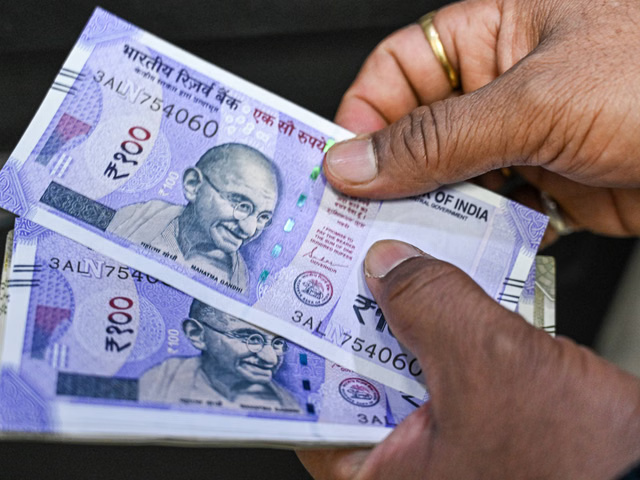
Dubai: The Indian rupee has slipped to a record low, offering UAE-based remitters one of the most favourable exchange-rate windows in recent times, as rising oil prices and continued foreign outflows weigh on Asia’s third-largest economy.
At 8:30am UAE time, Dh1 was trading at Rs25.93, according to XE.com, while the rupee stood at 95.25 against the US dollar. The shift gives Indian expatriates in the UAE more rupees for every dirham sent home, though the currency’s weakness also reflects broader pressures from high oil import costs, subdued capital inflows and strain on India’s balance of payments.
The rupee closed at 94.8450 against the US dollar on Wednesday, down 0.3% on the day, as it drifted back toward record lows following the fading impact of earlier central bank support measures. Traders said dollar sales by state-run banks, likely on behalf of the Reserve Bank of India, helped limit sharper losses.
Remittance value rises for UAE expats
The rupee’s decline means UAE residents sending money to India are now getting close to Rs26 for every dirham, a level that could encourage higher remittance flows from expats managing school fees, family expenses, property payments or loan commitments back home.
A Dh1,000 transfer would fetch about Rs25,930 before exchange-house margins and fees, making the current rate attractive for Indian workers and families who closely track the dirham-rupee exchange.
Exchange houses typically see stronger demand when the rupee hits fresh lows, particularly from customers waiting to remit savings or make larger one-off transfers. However, the benefit comes alongside a weaker macro backdrop, as a falling currency can raise import costs and add pressure on consumer prices in India.
Oil prices add pressure
Brent crude rose more than 3% to nearly $115 per barrel, adding strain on oil-sensitive Asian currencies such as the Philippine peso and the Indonesian rupiah, both of which also slid to record lows on Wednesday.
The rise in crude prices comes as efforts to resolve the Iran conflict remain stalled. Donald Trump has instructed aides to prepare for an extended blockade of Iran, according to a report by the Wall Street Journal citing US officials.
India is particularly vulnerable to higher energy prices due to its heavy reliance on imported oil. As crude rises, the country needs more dollars to pay for imports, putting additional pressure on the rupee and widening the trade deficit.
Analysts and traders expect the rupee to remain under strain as long as oil prices stay elevated, although a move beyond 95 could prompt stronger intervention from the Reserve Bank of India.
Capital flows weaken
India’s efforts to stabilise the rupee are likely to become more challenging in the coming months, as weak capital inflows replace speculative pressure as the main concern.
Economists have begun widening their forecasts for India’s balance of payments deficit, the broadest measure of money flowing in and out of the economy. Kotak Mahindra Bank expects the gap to reach $50 billion this fiscal year, compared with deficits of $39 billion and $5 billion in the previous two years. IDFC First Bank sees the deficit widening to between $40 billion and $50 billion from an estimated $35 billion previously.
“The fundamental balance of payments picture continues to look weak, so pressure on the rupee may persist,” said Rahul Bajoria, head of India economics research at BofA Securities India, in comments to Bloomberg. “The RBI’s steps do provide relief, but it is unclear whether their effectiveness will hold over a longer period.”
The rupee fell 0.3% to 95.1512 per dollar on Thursday, breaching its previous low of 95.1250 seen in late March. The currency has erased gains made after earlier intervention by the Reserve Bank of India, while the 10-year bond yield rose seven basis points to 7.06%.
RBI faces tougher choices
The oil shock has coincided with global funds selling Indian equities, with investors citing high valuations and limited artificial intelligence-linked opportunities. Foreign investors have pulled nearly $20 billion from Indian stocks in the first four months of 2026, surpassing last year’s total outflows.
India’s foreign exchange reserves stand at $703 billion, but a negative $78 billion forward book—reflecting future dollar obligations—limits the central bank’s ability to keep defending the currency through sustained dollar sales.
Most analysts expect the rupee to remain on a weaker trajectory. Bank of America has lowered its forecast to 94 per dollar by mid-year from 89 earlier, while IDFC First Bank sees the currency trading in the 95–96 range despite support from the Reserve Bank of India. Barclays has a year-end forecast of 96.80.
Goldman Sachs this week raised its oil price outlook due to the prolonged disruption in the Strait of Hormuz, with Brent now expected to average $90 a barrel in the fourth quarter, up from an earlier forecast of $80.

