

Riyadh Metro Expansion: New Trains to Begin Operations in 2028 Ahead of Expo 2030 and the 2034 FIFA World Cup.
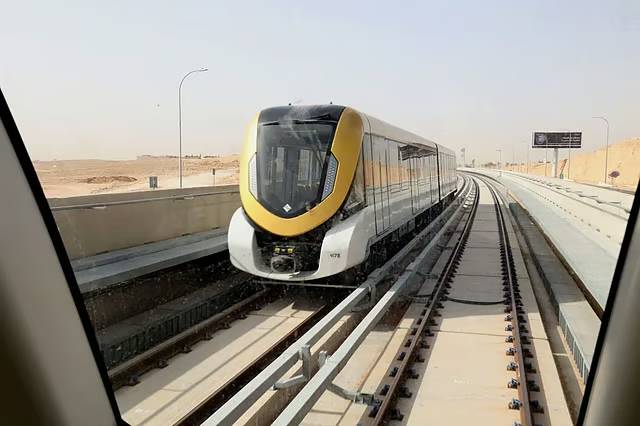
Dubai: Saudi Arabia has unveiled a SR5.5 billion expansion plan for Riyadh Metro, which will introduce 94 additional trains and boost the network’s passenger capacity by 60 per cent. The investment comes as the capital prepares to welcome millions of visitors for Expo 2030 and the 2034 FIFA World Cup.
The Royal Commission for Riyadh City (RCRC) announced that contracts have been awarded to German engineering company Siemens and French rail manufacturer Alstom to supply the new trains.
The expansion will increase the metro’s fleet from 183 to 277 trains, strengthening the city’s public transport infrastructure and supporting growing commuter demand.
The additional trains are scheduled to arrive in stages beginning in 2028. Each train will undergo testing before being introduced into passenger service across the network’s six lines, with deployment determined by ridership requirements.
Riyadh Metro lines to see major capacity increases
The expansion is expected to significantly improve passenger capacity across several routes, with the Red and Yellow lines benefiting from the largest increases.
The Red Line will see a 142 per cent capacity boost, followed by the Yellow Line with a 116 per cent increase.
Capacity on the Blue Line will rise by 60 per cent, while the Orange and Purple lines will experience increases of 27 per cent and 16 per cent, respectively.
The Blue Line’s daily passenger capacity is expected to grow from 340,000 to approximately 533,000 commuters.
Meanwhile, the Red Line will be able to accommodate around 370,000 passengers per day, compared with its current capacity of 154,000.
The Yellow Line will also see a substantial improvement, with its daily capacity more than doubling to exceed 288,000 passengers.
These upgrades are expected to help accommodate rising passenger numbers, ease pressure on existing services and improve the overall commuting experience.
Riyadh Metro surpasses 300 million passengers
RCRC Chief Executive Ibrahim Al Sultan highlighted the metro’s growing popularity, revealing that the network has transported more than 300 million passengers since the start of operations.
He said average ridership increased by 25 per cent between January and September 2026 compared with the corresponding period in 2025.
When metro and bus services are combined, the total number of passenger journeys is approaching 500 million, including more than 20 million trips made by school and university students.
The figures reflect the increasing importance of public transportation in Riyadh as the city continues to expand.
An RCRC survey also found that 83 per cent of metro passengers use the service daily, highlighting its role in residents’ regular commuting routines.
Red Line extension to connect King Saud University and Diriyah
Alongside the fleet expansion, Al Sultan confirmed progress on plans to extend the Riyadh Metro’s Red Line.
The proposed extension will connect King Saud University with Diriyah, introducing five additional stations along the route.
The project is expected to improve connectivity between key destinations and provide more convenient transport options for residents, students and visitors.
Together, the new trains and planned network extension form part of Riyadh’s wider efforts to strengthen its public transport system ahead of major international events, including Expo 2030 and the 2034 FIFA World Cup.
Riyadh expands road infrastructure and green initiatives
Meanwhile, Riyadh is moving forward with an ambitious 700km road infrastructure development programme aimed at improving traffic flow, reducing congestion and strengthening connectivity across the capital.
The project includes upgrades to more than 330 intersections, alongside the development of over 300 bridges and 80 tunnels to support the city’s expanding transport network.
The Royal Commission for Riyadh City is also modernising traffic signal systems at 720 intersections and introducing targeted improvements at 26 critical locations to enhance road efficiency and ease traffic bottlenecks.
Alongside these infrastructure developments, the capital continues to make progress under the Green Riyadh programme, a major environmental initiative focused on expanding urban greenery and improving the city’s sustainability.
More than 4.5 million trees have already been planted across Riyadh as part of the programme, reflecting the city’s efforts to create a greener and more sustainable urban environment.

