

Dammam accelerates as reforms and increased supply reshape housing demand in Saudi Arabia.
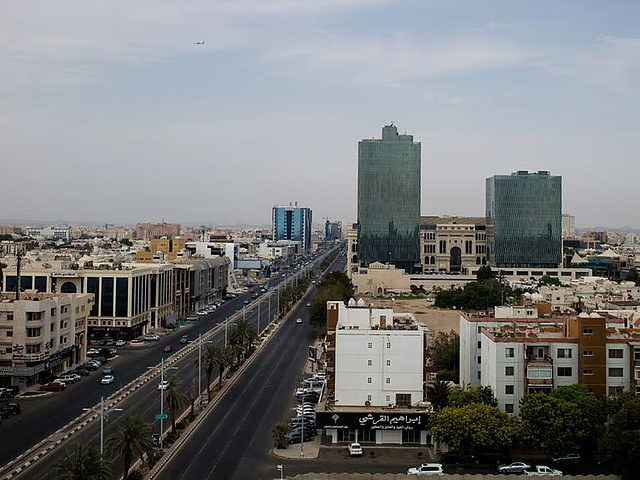
Dubai: Saudi Arabia’s housing market is showing varied trends across cities, with Jeddah experiencing its strongest year in recent memory, Riyadh showing signs of pressure, and Dammam gaining traction due to its attractive pricing.
According to Cavendish Maxwell’s 2025 KSA Residential Real Estate Performance Report, Jeddah recorded 30,500 residential transactions in 2025, with total sales reaching SAR36.6 billion. The average transaction size was SAR1.2 million, indicating steady end-user demand despite shifting market conditions.
In contrast, Riyadh saw slower activity despite higher-priced deals, pointing to a changing approach among buyers in the capital’s housing market.
Dammam attracts buyers with its competitive pricing, emerging as a preferred market for those seeking value.
Sales in Dammam climbed nearly 30% to SAR10.7 billion, with transaction volumes also rising, driven by more accessible pricing and steady economic activity in the Eastern Province.
“KSA’s three major residential markets – Riyadh, Jeddah, and Dammam – showed contrasting performances in 2025. Jeddah demonstrated resilience with its highest sales volumes in several years and is expected to maintain stable growth. Dammam, where property is more affordable than in other cities, emerged as the standout performer, poised for sustained growth supported by competitive pricing and strong regional economic activity,” said Siraj Ahmed, Director and Head of Strategy and Consulting at Cavendish Maxwell.
Riyadh, meanwhile, remains the largest market by value, with SAR96.2 billion in residential sales across 56,600 transactions. However, volumes fell 31% year-on-year, reflecting pressure on buyer activity. Higher property prices and financing costs have reduced purchasing power, even as average transaction values reached SAR1.7 million.
“In Riyadh, affordability challenges and higher financing costs have reduced purchasing power and dampened buyer activity. Although transactions declined year-on-year, population growth, urbanisation, and housing initiatives are expected to support long-term market demand,” Ahmed said.
Policy shifts start to impact the market
Recent policy changes are expected to affect pricing and supply in the coming quarters.
Measures such as the five-year rent freeze introduced last year and adjustments to the White Land Tax are designed to encourage development and enhance affordability, particularly in Riyadh.
“We anticipate a market recalibration as new supply, the five-year rent freeze, and White Land Tax reforms make property more competitively priced and help revive market activity,” Ahmed said.
Supply continues to grow, though delivery timelines remain uneven.
Riyadh added 13,000 units last year, bringing total inventory to 1.93 million, with tens of thousands more planned through 2027. Jeddah’s pipeline is also expanding, while Dammam is expected to see new stock over the same period, providing buyers with more options and stronger negotiating power.
“The increase in supply is further supported by the recent rise in the White Land Tax, which incentivises landowners to develop vacant plots and speed up delivery. The full impact of this reform is expected to unfold this year and beyond, gradually narrowing the gap between demand and supply, easing price pressures, and improving affordability,” Ahmed added.
Foreign ownership expands the investor base
A new foreign ownership law introduced earlier this year is expected to attract a wider range of investors to the market.
The framework permits non-Saudi buyers to acquire property in designated zones, representing a shift from previous restrictions and opening the sector to additional capital.
Demand remains resilient despite risks
While oil price fluctuations and geopolitical developments remain key factors, underlying demand drivers continue to support the market.
“External factors, including oil market volatility and geopolitical tensions, require careful monitoring. However, Saudi Arabia’s residential market remains well-positioned, underpinned by strong demographics, ongoing infrastructure investment, and a continued commitment to Vision 2030,” Ahmed said.

