

Prof. Ayman at Burjeel Medical City identifies rare syndrome impacting children’s brain development
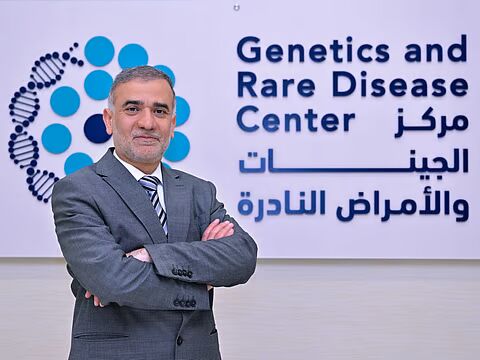
A rare inherited disorder that affects brain development and muscle strength has been officially named after an Abu Dhabi-based specialist at Burjeel Medical City, marking a notable achievement for the UAE’s medical research sector.
The condition, now called El-Hattab-Schmidts syndrome, was discovered through research led by Prof. Ayman W. El-Hattab, Consultant in Clinical Genetics and Director of the Genetics and Rare Disease Center at Burjeel Medical City. This marks the third rare medical condition in scientific literature to bear his name.
Implications for families
El-Hattab-Schmidts syndrome is a genetic neurodevelopmental disorder that impacts a child’s brain and physical development from early life, affecting both cognitive and motor functions. Families may face challenges related to delayed milestones, muscle weakness, and the need for ongoing medical and therapeutic support. Early diagnosis and multidisciplinary care can help manage symptoms and improve quality of life.
Key features of El-Hattab-Schmidts syndrome
Children with El-Hattab-Schmidts syndrome often present with:
- Global developmental delay and intellectual disability – affecting overall learning and cognitive skills.
- Low muscle tone (hypotonia) – infants may appear floppy, which can cause feeding difficulties early on.
- Motor and coordination challenges – difficulties with movement, balance, and daily activities as they grow.
- Neurological concerns – some children may experience seizures.
- Distinctive physical traits – including characteristic facial features and structural brain differences visible on imaging.
- Other potential health issues – eye problems, breathing difficulties, or heart anomalies that require ongoing monitoring.
The syndrome follows an autosomal recessive inheritance pattern, meaning both parents usually carry one silent copy of the gene mutation without showing symptoms. Diagnosis requires genetic testing to confirm the presence of the gene change.
This underscores the importance of early detection, multidisciplinary care, and family genetic counseling.
Although there is currently no cure for El-Hattab-Schmidts syndrome, early diagnosis is crucial. Prompt identification allows children to benefit from:
- Targeted therapies – including physiotherapy, occupational therapy, and speech therapy to support motor skills, coordination, and communication.
- Neurological care – monitoring and managing seizures or other brain-related issues.
- Developmental support – educational interventions tailored to learning abilities and needs.
- Regular medical monitoring – for associated heart, respiratory, or eye concerns.
With coordinated care from a multidisciplinary team, early intervention can significantly improve a child’s quality of life and developmental outcomes, helping families navigate challenges more effectively.
The discovery of El-Hattab-Schmidts syndrome traces back to 2018, when Prof Ayman El-Hattab’s team investigated three children presenting with similar unexplained neurological and developmental issues. Standard genetic tests failed to identify any known disorder. However, the researchers found variants in the PPP1R21 gene, which had not previously been associated with any human disease, marking the first step toward defining a completely new syndrome.
“The consistency of the clinical features, combined with the critical role of the gene, indicated we were observing a previously unrecognised syndrome,” said Prof. Ayman El-Hattab, originally from Jordan and now based in Abu Dhabi.
In 2019, a multinational research team led by Dr. Schmidts reported a separate cohort of patients with similar symptoms and PPP1R21 gene variants, reinforcing the findings. Additional studies from other groups confirmed it as a distinct condition, ultimately leading to its official designation as El-Hattab-Schmidts syndrome, honouring the contributions of both researchers.

