

Careful cleaning, greasing, and practice over weeks ensure the safe firing of Ras Al Khaimah’s cannon at sunset.
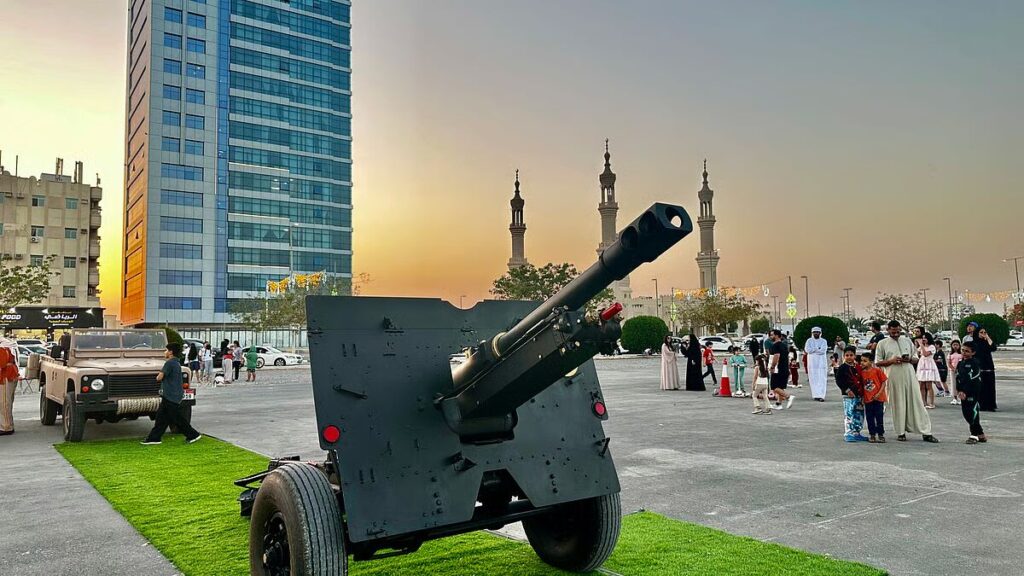
Long before its thunderous boom echoes across Al Qawasim Corniche at sunset, Ras Al Khaimah’s Ramadan cannon undergoes weeks of meticulous preparation.
Overseeing the tradition is Lieutenant Abdullah Mohammed Almazrouei, supervisor of the emirate’s Ramadan cannon. In a rare behind-the-scenes glimpse, he explained that firing the cannon is far more than a simple ceremonial act.
“This cannon is not new,” Almazrouei explained. “It dates back to the era of Sheikh Zayed bin Sultan Al Nahyan, may God have mercy on him, when the Abu Dhabi Defence Force was first established.”
The historic artillery piece is meticulously cleaned, greased, inspected, and rehearsed by trained officers well before the holy month begins. By the time families gather to witness the blast that signals iftar, a carefully coordinated, military-style operation has already been in motion for weeks. Today, the cannon serves not only as a Ramadan symbol but also as a living artifact from the early foundations of what would become the UAE Armed Forces.
The cannon is transported from Abu Dhabi roughly two to three weeks before Ramadan. Upon arrival in Ras Al Khaimah, it undergoes intensive servicing.
“We grease it, clean it, and make sure everything is ready,” explained Almazrouei. “If you don’t maintain it properly, it won’t function.”
Maintenance is not a one-time task. After every sunset firing, the cannon is cleaned and lubricated again using special oils and dedicated tools to ensure it is ready for the following day.
Training begins well before Ramadan
From 7:30am until noon during official working hours, officers rehearse firing procedures for up to two or three weeks ahead of Ramadan, ensuring precision and safety.
A team operation, not a one-man task
While spectators witness a single blast, the operation involves carefully coordinated teamwork. Firing is carried out by teams of four to five officers under the supervision of a designated officer, overseen by the overall supervisor. Officers rotate weekly in organised groups to maintain readiness throughout the month.
The team arrives at the site around 5pm and remains until approximately 7pm, completing both the firing and post-operation duties.
Coordinated to the second
Despite the availability of modern prayer apps and digital alerts, the cannon’s timing remains precise and officially coordinated.
In Ras Al Khaimah, authorities work closely with the Awqaf office and nearby mosques—including the Sheikh Zayed Mosque, located across from the cannon site—to ensure the blast coincides exactly with the Maghrib adhan.
Strict safety measures
While the cannon’s boom is both powerful and symbolic, safety is the top priority.
Public access near the firing zone is tightly controlled. Spectators are instructed to maintain a safe distance, and the cannon’s manufacturing standards are described as robust and reliable. Police are on site to ensure crowd control and secure surroundings.
“We ensure no one gets close to the firing area,” said Almazrouei.
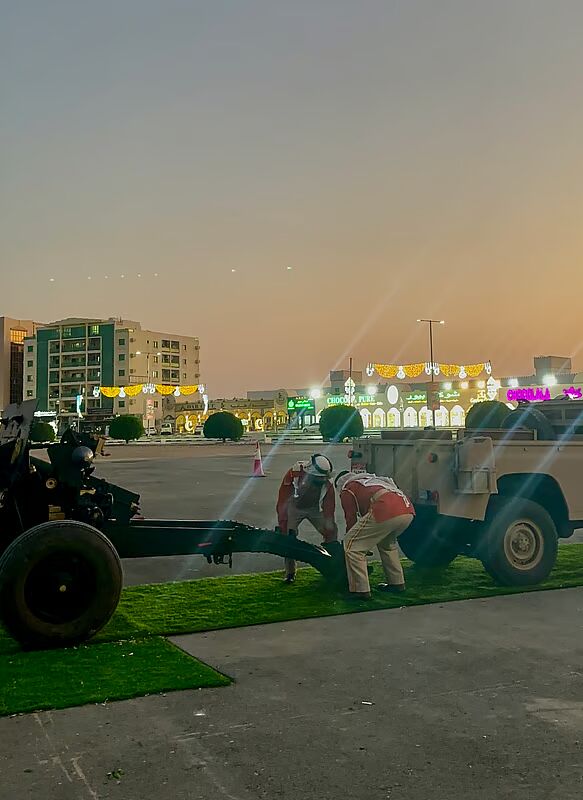
After each evening firing, the cannon is immediately cleaned, lubricated, and carefully covered before being secured at the palace grounds in Ras Al Khaimah. A guard remains on site, and the cannon is stored in a designated garage under strict supervision.
Transporting the cannon follows a precise routine. It is loaded lengthwise onto a jeep and moved with extreme care to prevent any shifting or accidental opening during transit. Police patrols temporarily close and secure roads to guarantee public safety.
“Anything can happen, so every step is calculated,” Almazrouei explained, noting that strict procedures are followed to prevent any incidents.
A legacy preserved
For Almazrouei, the cannon is more than a ceremonial device—it is a tribute to the UAE’s founding generation and a symbol of national heritage.
“This is part of our heritage,” he said. “Our ancestors established it, and our leadership continues to preserve it so the tradition does not disappear.”
The deep boom resonates across Ras Al Khaimah, marking not only the end of the fast but also reflecting decades of discipline, history, and dedication behind the scenes.

