

With ambitious growth plans in motion, Phillipa Harrison’s strategy starts by preserving the emirate’s unique identity.
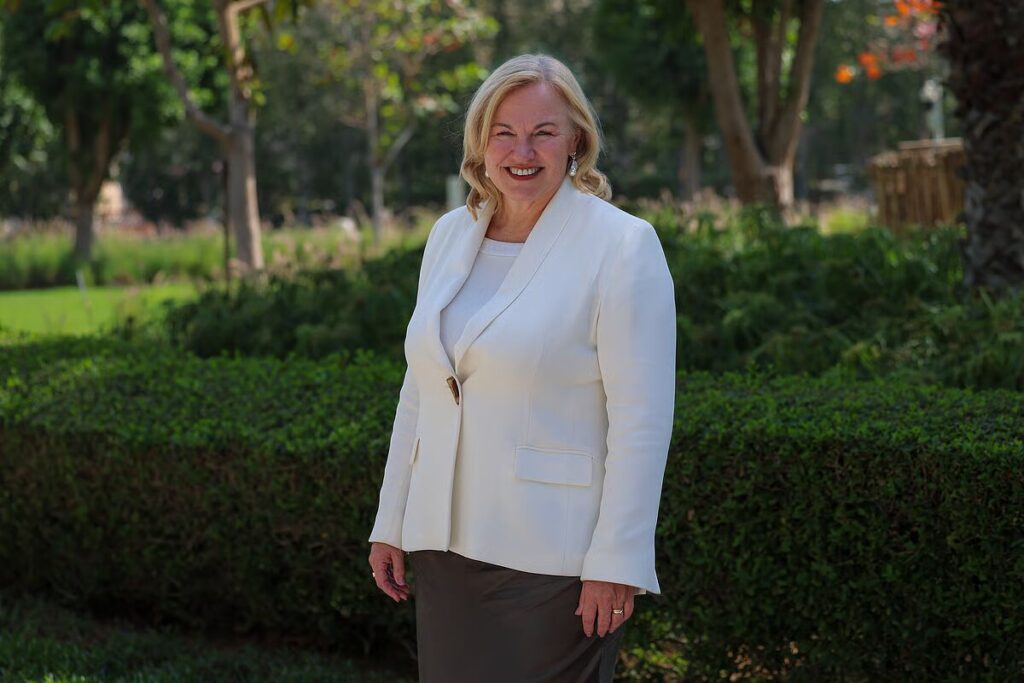
Dubai: At a time of pivotal change for tourism in Ras Al Khaimah, you might expect its leader to be loud, flashy, and relentlessly high-octane.
Instead, Phillipa Harrison enters — warm, composed, and quietly formidable. Her open, unfiltered laugh draws you in, a warmth that contrasts with the ambitious scale of the plans she is laying out.
The new CEO of the Ras Al Khaimah Tourism Development Authority (RAKTDA) arrived from Australia just five months ago. She had spent six years leading tourism initiatives there when, as she puts it, “the usual way — you get a phone call out of the blue” brought her to the UAE.
What she discovered upon arrival left a strong impression.
“I was so blown away,” she says. “A couple of things really stood out — first, the sheer beauty of the emirate.”
Now, as Ras Al Khaimah prepares for rapid growth, her goal is clear: to ensure the world not only hears about the emirate but truly understands it.
“I want to make sure that the world knows about Ras Al Khaimah and understands what a special place it is to visit.”
Defining distinction
Phillipa’s top priority is positioning.
Ras Al Khaimah sits just up the road from two global heavyweights — Dubai and Abu Dhabi. The challenge, she says, is obvious: how can the emirate complement them without trying to replicate them?
“We have two incredibly powerful, large, global, world-class destinations on our doorstep… And the challenge for me is, how does Ras Al Khaimah fit into that?”
Her answer lies in nature, space, and what she calls “quiet luxury.”
“When you drive up the road, you just feel your shoulders dropping. You breathe deeper. There’s a really lovely relaxation about being in Ras Al Khaimah.”
Less urban density. More mountain air. Long beaches framed by desert and heritage.
Her tone is thoughtful, but there’s steel beneath it. Tourism, she notes, is “so, so competitive.” A destination must understand “what your point of distinction is and why people are going to choose you from the hundreds of other places they could go for their holiday.”
Ambitious targets
The numbers are bold. Last year, Ras Al Khaimah recorded its strongest tourism performance to date, welcoming 1.35 million overnight visitors, a 6 percent year-on-year increase. Tourism revenues grew even faster, rising 12 percent, as the emirate prepares to launch the Wynn Al Marjan resort — the UAE’s first integrated gaming resort — in 2027.
“We’re going to double the hotel keys in the emirate in the next three years. We’re going to triple our visitation by 2030,” Phillipa Harrison said.
Achieving growth at this scale requires precision. Eight key markets already generate 80 percent of business and revenue, and these will remain the main focus.
Currently, half of Ras Al Khaimah’s visitors are domestic, and that focus will continue.
“We are going to double down and tell the new story of Ras Al Khaimah to the domestic audience,” she explained.
Regionally, Saudi Arabia remains a priority. In Europe, Russia, Kazakhstan, and the CIS markets continue to perform strongly, with Russia alone growing 20 percent in visitor arrivals last year — and 40 percent in revenue, highlighting higher-spending travellers. Germany and the UK also remain key markets.
Emerging markets such as India and China are smaller currently but growing fast, representing major opportunities for the future.
Her strategy is disciplined: targeting 30 markets in total, with laser focus on the eight that matter most.
Access and expansion
Connectivity underpins Ras Al Khaimah’s tourism ambitions.
The emirate’s airport surpassed one million arrivals last year for the first time, with ten new routes added over the past year. Scheduled services connect to Saudi Arabia and India, alongside charter flights from Poland, Romania, Russia, and Uzbekistan.
Looking ahead, Harrison sees further opportunities. “There’s a lot of opportunity in arriving by water,” she notes almost casually — signaling longer-term strategic thinking.
Ease of access is already a key advantage. “It’s very easy to arrive here,” she emphasizes.
Culture forward
If there is one personal mark Phillipa Harrison wants to leave, it is depth.
“We’ve got incredible sun and sand; we’ve got incredible nature. I think people know about that, but I really want to bring the culture and heritage to the forefront,” she says.
She speaks passionately about Emirati culture — mountain tribes, desert tribes, and sea tribes — and Ras Al Khaimah’s 7,000-year trading history.
“We used to be an incredible trading town on the Silk Route.”
She also highlights the emirate’s cuisine, dates, honey, and what she calls an “agri-tourism element” she wants to elevate.
“It’s all there. It’s just bringing it to the forefront.”
For Phillipa, the real risk isn’t competition — it’s misrepresentation.
“The risk is not being authentic and not telling the right story of RAK.”
New hotels
Phillipa Harrison also highlighted a robust pipeline of hotel developments set to define Ras Al Khaimah’s next growth phase.
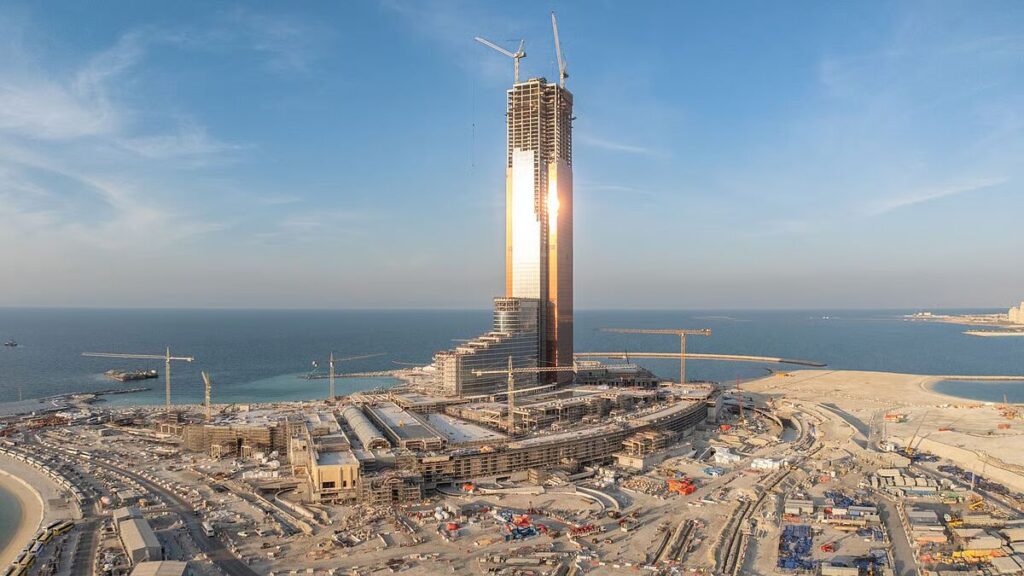
On Marjan Island, home to the UAE’s first integrated gaming resort, Wynn Al Marjan, around six resorts are already complete, with several more under construction.
Within the next year, Janu Al Marjan Island is expected to open, alongside lifestyle properties such as Armani Beach Residences Ras Al Khaimah, Fairmont, and The Unexpected, further expanding the island’s mix of residential and resort offerings.
Beyond the coast, the emirate is also investing in boutique mountain luxury, with Saij Mountain Lodge — a 70-room property managed by Mantis — set to open in October.
Collectively, these projects illustrate the scale of expansion underway as Ras Al Khaimah prepares to double its hotel keys in the coming years.
Growth with integrity
Rapid expansion can risk diluting a destination’s soul, and Phillipa Harrison is acutely aware of this. “The way that you manage that is through very thoughtful planning,” she says.
Even as the emirate doubles in size, she insists, “we’re still going to be small and boutique.”
She highlights master planning that prioritises walkability, green spaces, and livability — for residents as much as for visitors.
“We build on that; we don’t destroy that.” Her language often returns to alignment — industry, leadership, hotels, stakeholders — all moving in the same direction.
Asked about the kind of leader she wants to be, she avoids talk of spectacle or legacy projects.
“The best success that I’ve had is when everybody is pulling in the same direction.”
Her ultimate goal is straightforward:
“Leave a destination that is world-class, that people love, but is also an incredible place for people to live and prosper as well.”
It’s not hype. It’s steadier.
In an era of rapid growth and rising global attention, Phillipa’s style mirrors the emirate itself: calm on the surface, ambitious underneath, and very clear about where it’s heading.

