

Calmer market screens are masking thin flows through the Strait of Hormuz, leaving markets primed for sudden shocks.

Oil prices slipped on Thursday in Asian trading, though the pullback appeared more like a pause than a shift in underlying direction.
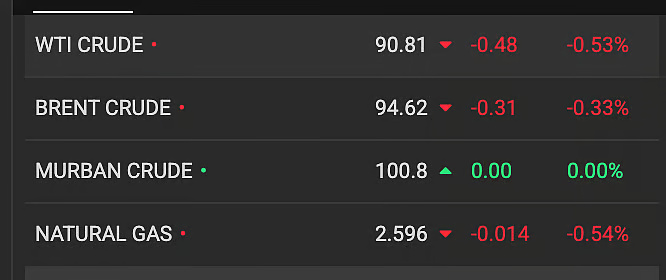
Brent crude eased toward the $95 mark, while WTI traded around $90.63 at 9:38 a.m. Tokyo time (April 16, 2026). Murban was steady at $100.85, as traders weighed fragile ceasefire hopes, ongoing tensions in the Strait of Hormuz, and the possibility of renewed US–Iran talks.
The move came despite a broadly tight market backdrop, even as the warring sides have agreed to give diplomacy another chance.
Reuters reported that shipping traffic through the Strait of Hormuz has dropped to well below normal levels, as Iran continues to pressure vessels to keep close to its waters. In response, the U.S. military said it is “setting conditions” to clear mines and help secure the key maritime route.
Oil had already surged earlier in the week after the collapse of initial US–Iran talks in Islamabad and the subsequent announcement of a US naval blockade, which pushed tensions sharply higher in the Strait of Hormuz. Tehran responded with threats to shut down the Gulf of Oman and the Red Sea, further stoking supply fears, before prices later eased as markets began to reprice the situation on expectations that diplomacy could still be revived.
Multiple levers
Washington is simultaneously deploying several tools: military pressure via the blockade, diplomatic engagement with allies, and the potential use of strategic reserve releases or sanctions relief to bring additional barrels back to the market.
This combination has helped temper the immediate price spike, but it has not altered the underlying supply risk.
Physical oil flows through the Strait of Hormuz remain constrained, limiting normal market functioning and removing key balancing capacity.
Any prolonged disruption in this strategic chokepoint would likely keep a floor under prices and leave markets vulnerable to sharp spikes from any additional shock.
Supply disruption
Brent crude began to surge following military developments in the region.
In March, prices surged sharply following the closure of the Strait of Hormuz, which triggered a major supply disruption of around 10.1 million barrels per day.
On April 7, 2026, Brent crude traded at approximately $107.13 per barrel, while WTI stood at $110.34 per barrel.
By mid-April 2026, prices had eased to around $94 per barrel for Brent, as of April 15–16, on expectations of potential diplomatic progress, including US–Iran talks, with WTI falling to $90.63 on Thursday.
Fuel markets also reacted strongly to the disruption, with gasoline prices rising by more than 50% and diesel by about 78%. In the Philippines, retail petroleum prices reached record highs in the second week of April 2026.

