

Benchmark oil prices diverge as WTI and Murban fall while Oman and regional crudes surge.
Oil prices showed mixed but highly volatile movements on May 4, 2026, following reports that a crude tanker was struck by unidentified projectiles in the Gulf.
Global energy markets are grappling with heightened uncertainty as a continued blockade of the Strait of Hormuz has effectively stranded nearly 20 million barrels per day of crude and LNG supplies.
As of 10:23am on Monday, May 4, Brent Crude was trading around $107, down about 0.40 per cent from the previous session, reflecting concerns over a potential large-scale supply shock.
Mixed reaction
Market responses remain uneven as countries scramble to mitigate disruptions, including rerouting supplies through Saudi Arabia’s East-West pipeline and exploring alternative land corridors via Syria.
Despite these efforts, Asian refineries — which depend heavily on Gulf imports — are cutting throughput, adding to global inflationary pressures and prompting major international institutions to downgrade their 2026 growth forecasts.
Major benchmarks
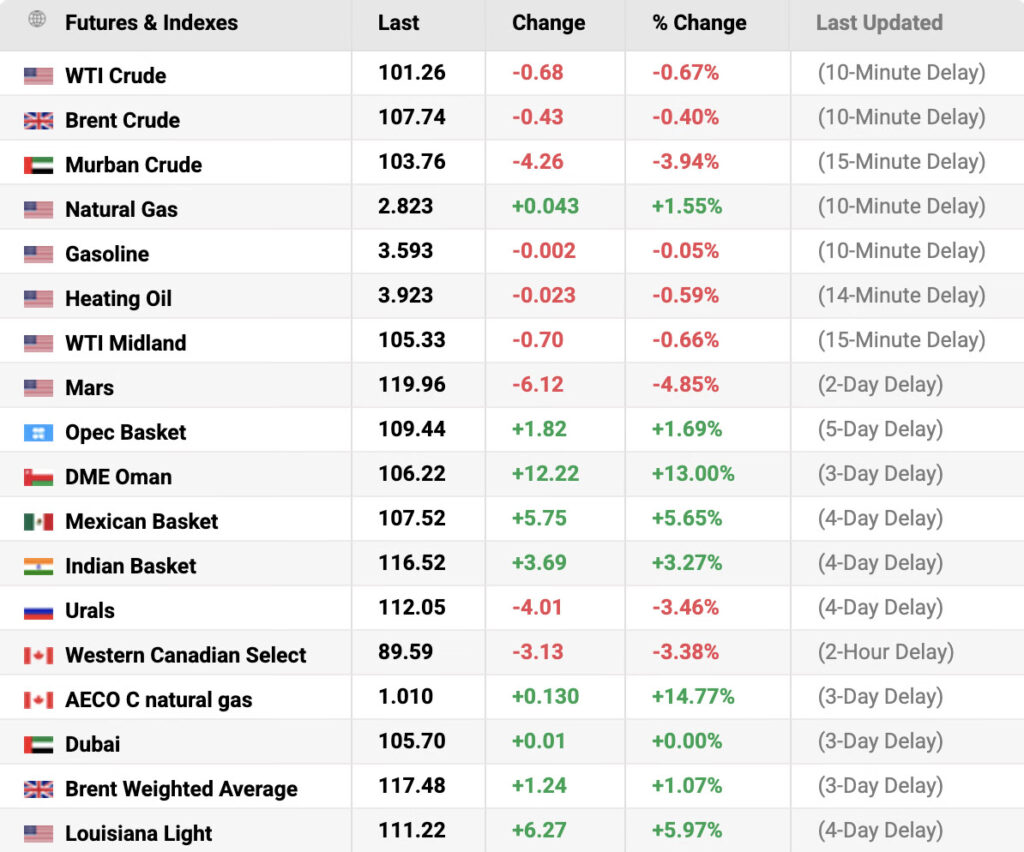
- West Texas Intermediate (US): $101.26 (−0.67%)
- Brent Crude: $107.74 (−0.40%)
- Murban crude (UAE): $103.76 (−3.94%) — the steepest drop among major grades
Other notable moves
- DME Oman crude surged +13.00% (reflecting delayed data)
- Louisiana Light Sweet crude rose +5.97%
- Mexican crude basket and Indian crude basket gained +5.65% and +3.27% respectively
- Natural gas increased +1.55% to $2.823
Several other grades, including Mars crude, Urals crude and Western Canadian Select, traded lower, while some benchmarks with multi-day reporting delays posted sharp upward revisions.
Prices elevated
Oil prices remain firmly above $100 for West Texas Intermediate and above $107 for Brent Crude — levels that point to sustained geopolitical tension, tight supply conditions, or strong demand expectations in 2026.
Traders highlight the wide divergence between benchmarks — with some falling nearly 4% while others rise by 5–13% — typically driven by:
- Regional supply disruptions
- Differences in crude quality (sour vs sweet, heavy vs light)
- Reporting delays across pricing agencies
- Shifts in refinery demand and OPEC+ production decisions
Whipsawing: erratic volatility
The oil market is currently “whipsawing,” with sharp, unpredictable swings that create opportunities for speculative trading while increasing uncertainty for consumers and businesses.
These elevated energy prices act as a double-edged sword: they weigh on global growth by keeping inflation persistently high, even as they deliver a windfall for oil-producing nations.

